Inzonex Carbon Hubpowered by inzonex.co.uk
Every industrial sector · 2026

Emissions rules tighten every year. Here's what they cost you — and what cuts them.

Whether you run a brewery, a textile mill or a steel plant: carbon now has a price (EU ETS €77.4/t, live), reporting is mandatory (SECR, CSRD, ESOS), and Germany even pays for reductions.

What's happening

Two schedules, one squeeze

Inside the EU, industry loses free allocation year by year. Outside, exporters of cement, steel, aluminium and fertilizers pay CBAM certificates at the EU-linked price (€75.36/t in Q1 2026) on a share of embedded emissions that rises from 2.5% to 100%. Either way, every tonne of CO2 turns into a recurring invoice — at €77.4/t and rising.

This hub tracks the prices, shows the exposure of 30,000+ real facilities, and calculates what it means for your plant.

Today's benchmark — 11 Jun 2026
EU ETS €77.4/t
Trading Economics · updated daily · CBAM certificate €75.36 (Q1 2026, official)
Carbon price by market
EU ETS€77.4
UK ETS£55.0
California$29.27
China ETS¥86.13
Gulf / no price → CBAM at EU border€0 → €75.36
Price your carbon exposure →
The solution starts with knowing your number

What will YOUR carbon bill be in 2030?

Pick a preset or your own numbers — move the year slider and watch free allocation vanish (it ends completely in 2034).

20160
20262034
Your annual carbon cost — year
in 2030
in 2034 — full price
estimated emissions
payable share now
How Inzonex removable insulation does it →

or get the exact saving for your plant (free study) →

How is this calculated?
Emissions = production × typical sector intensity (cement 0.70, steel BF-BOF 1.90, EAF 0.40, aluminium 1.60 direct, ammonia 2.00 t CO2/t; gas power 0.37, coal 0.95 t/MWh — IEA/EC benchmark ranges). Cost = emissions × price × payable share. Inside the EU ETS the payable share follows the official free-allocation phase-out; for exporters without a domestic price it follows the CBAM phase-in. Your verified (MRV) emissions give the exact figure.
Why does my bill explode by 2030?
Not a forecast — a law. Regulation (EU) 2023/956 cuts free allocation for CBAM sectors from 97.5% (2026) to 48.5% payable in 2030 and 100% in 2034. A plant paying for 2.5% of its benchmark emissions today pays for 48.5% in 2030 — ~19× more certificates at the same price.
What is CBAM and does it apply to me?
The EU Carbon Border Adjustment Mechanism prices the embedded CO2 of cement, iron & steel, aluminium, fertilizers, hydrogen and electricity imported into the EU. If you export these to the EU and have no domestic carbon price, your importer buys CBAM certificates at the EU ETS-linked price (€75.36 in Q1 2026) on a rising share of embedded emissions — 2.5% in 2026 → 100% in 2034.
Where do the prices and data come from?
EU ETS: Trading Economics (10 Jun 2026). CBAM certificate: European Commission Q1 2026 official price. UK ETS: ICE/Statista (2025). China: Argus (Mar 2025). California: CARB auction (Feb 2025). National taxes: World Bank State & Trends of Carbon Pricing 2025 / ICAP 2025. Facility emissions: Climate TRACE satellite estimates (2023) — indicative, not verified declarations.
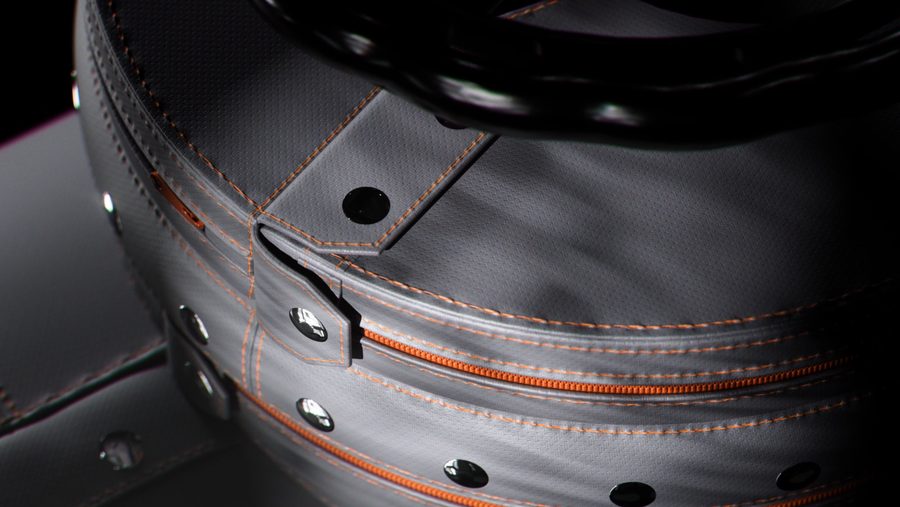
Inzonex removable modular insulation on industrial equipment
Cut the tonnes at the source

Hot industrial equipment? Cut the heat loss.

Boilers, kilns, heat exchangers, valves and steam lines lose energy continuously. Inzonex makes patented (UK GB2508992.1) removable modular insulation — snap-fastened covers engineered per temperature tier, not generic off-the-shelf jackets:

  • Up to 90% less heat loss from insulated surfaces
  • Surface temperature ≤45 °C — touch-safe for workers (EN ISO 13732-1)
  • 6× faster maintenance access than fixed cut-and-weld lagging — unclips and refits in minutes, no destruction
  • Inspectable — comes off to check for corrosion under insulation, then refits like-new (generic jackets often don't survive removal)
  • Typical payback under 2 years (some 9–11 months)
Exporting to the EU without a carbon price?

CBAM is your carbon price — and it's ramping up

Saudi Arabia, the UAE, Qatar, Oman, Kuwait, Bahrain and Egypt have no domestic carbon cost. But the EU border does: an importer of your steel, aluminium or fertilizer buys CBAM certificates at €75.36/t on a share of embedded emissions that rises every year.

2%
2026
5%
2027
10%
2028
22%
2029
48%
2030
61%
2031
74%
2032
86%
2033
100%
2034

Share of embedded emissions in your EU-bound exports that must be covered by CBAM certificates — same official schedule, applied at the border. Source: Regulation (EU) 2023/956.

Inside the EU ETS

The 2026→2034 cliff: share of emissions EU industry must pay for

2%
2026
5%
2027
10%
2028
22%
2029
48%
2030
61%
2031
74%
2032
86%
2033
100%
2034

Share of industrial emissions EU plants must PAY for (free allocation phased out). Source: Regulation (EU) 2023/956.

Carbon pricing by country

EU ETS members

Other carbon markets & taxes

By industry & by measure

Your industry. Your pathway. Priced.

Guides & analysis

Understand the squeeze

CBAM — the complete guide
Sectors, phase-in table, default values, who actually pays.
Why this affects YOU
EU producer, Gulf exporter, US plant, power utility — your scenario.
Prices & data methodology
Where every number comes from, how to verify it, what we don't know.
EU vs China carbon price
€77 vs ≈€11 — why the gap exists and how CBAM closes it.
EU vs UK carbon price
Two linked-in-spirit markets, one looming linkage deal.
Governance: regulators & grants
Who regulates carbon in 18 countries — and the named programmes that fund efficiency (BAFA, IETF, 48C…).
Environmental impact
Beyond CO2: NOx, particulates, thermal pollution — what a wasted GJ really emits.
Social impact
Safety (≤45 °C surfaces), heat stress, retrofit jobs — the S in industrial ESG.
Free allocation table 2026–2034
The official schedule + payable €/t per year.
ETS2 (2027)
The second carbon market — fuels, ≈€45 soft cap, who pays.
CBAM default values
When they apply and why verified data beats them.
UK CBAM 2027
The second border — levy-style, UK ETS-priced.
Embedded emissions
The CBAM calculation, step by step, with a steel example.
Carbon price 2030
Published ranges, drivers — and the scenario tool.
CO2 cost per MWh
≈€29 on CCGT, ≈€74 on coal — the conversion table.
CBAM calculator
Certificates by year, shareable results.
ISO 50001 vs 14001
Which first — the practical comparison.
🇩🇪 Deutsch
CO2-Preise, CBAM-Leitfaden, Scope-1 — auf Deutsch.
All questions, answered
20+ real questions on prices, exemptions, deadlines and forecasts.
Scope 1 emissions
Definition, calculation by fuel, what a tonne costs now — and the cheapest cuts.
Industrial decarbonization
Strategies ranked by €/t abated — efficiency first, CCS last.
Heat recovery systems
Technology by temperature band: economizers, heat pumps, ORC.
Waste heat recovery
The 2026 business case: every MWh now pays twice.
Carbon credit prices
Compliance €77 vs voluntary $0.25–27 — two different worlds.
ESG reporting requirements
CSRD vs ISSB vs SEC vs UK — one comparison table.
ISO 50001
The energy-management standard, practically — with measured savings data.
FAQ

Carbon pricing, answered

What is the EU ETS carbon price today?
€77.4 per tonne of CO2 (11 Jun 2026, Trading Economics). The official CBAM certificate price for Q1 2026 is €75.36/t.
Which countries have a carbon price in 2026?
About 80 instruments operate worldwide — 43 carbon taxes and 37 emissions trading systems covering ~28% of global emissions (World Bank, 2025). The EU, UK, China, South Korea, California and New Zealand run the largest ETS markets; Gulf states have none — their EU-bound exports pay CBAM instead.
How much will EU industrial carbon costs rise by 2030?
Free allocation for CBAM sectors falls from 97.5% in 2026 to 51.5% in 2030 and 0% in 2034 (Reg. 2023/956). At a constant price, a cement plant's payable bill grows ~19× between 2026 and 2030.
Do Gulf exporters pay for carbon?
Not domestically — Saudi Arabia, the UAE, Qatar, Oman, Kuwait and Bahrain have no carbon price. But their steel, aluminium and fertilizer exports to the EU pay CBAM at the EU price on a rising share of embedded emissions: 2.5% in 2026 → 100% in 2034.
How can industry cut its carbon bill fastest?
Cut the emissions, not just the paperwork: eliminating heat loss on hot equipment via removable insulation typically saves 2–5% of fuel-related CO2 with payback under 2 years — before any process change.

Explore the data behind this hub: 42,000+ power plants · 30,000+ industrial facilities · free CO2 dataset (CSV).

Source: Inzonex Carbon Hub — inzonex.co.uk/carbon · prices dated as shown on each figure · schedule per Regulation (EU) 2023/956 · indicative analytics, not compliance advice.