Inzonex Carbon Hubpowered by inzonex.co.uk
Carbon Hub → Why this affects YOU — four scenarios
Analysis

Why this affects YOU — four scenarios

«We've always had free allowances» and «we have no carbon price here» are both about to stop being true. Find your scenario.

Scenario 1 — EU industrial producer (cement, steel, chemicals, glass…)

Until 2025 free allocation covered most of your benchmark emissions, so the EUA price was mostly someone else's problem. From 2026 the payable share is real money: at €77.4/t, a 500,000 t/yr cement plant (~350,000 t CO2) pays ≈ €0.7M in 2026, ≈ €13M in 2030 and ≈ €27M in 2034. That line item will outgrow your maintenance budget. Every tonne of CO2 you eliminate now compounds for nine years.

Scenario 2 — exporter to the EU without a domestic carbon price (Gulf, Egypt, others)

You pay nothing at home — your importer pays CBAM at €75.36/t on a rising share of the embedded emissions in your product. In practice the cost lands in your price negotiations immediately: EU buyers already ask for verified emissions per tonne. Lower embedded CO2 is becoming a commercial spec, like purity or tolerance. The exporter with 1.6 t/t aluminium beats the one with 2.1 t/t by €75.36×0.5×phase-in on every tonne.

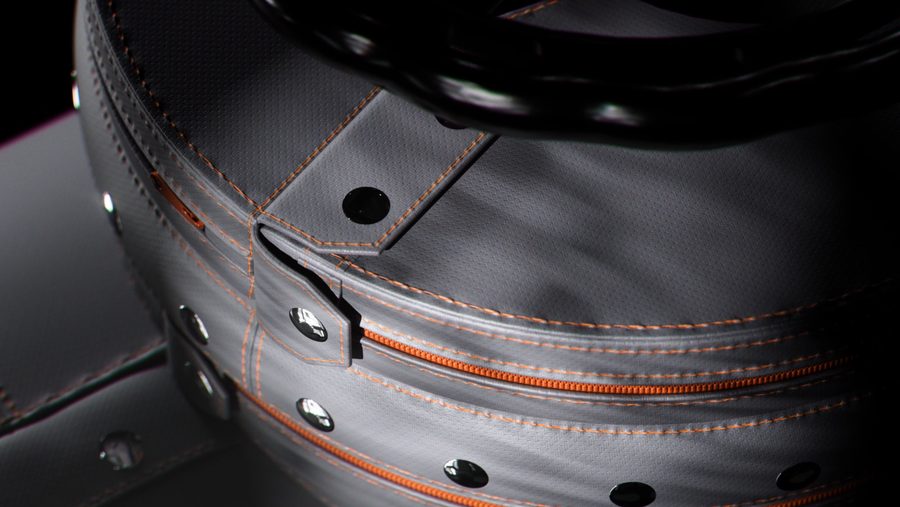
Inzonex removable modular insulation on industrial equipment
Cut the tonnes at the source

Hot industrial equipment? Cut the heat loss.

Boilers, kilns, heat exchangers, valves and steam lines lose energy continuously. Inzonex makes patented (UK GB2508992.1) removable modular insulation — snap-fastened covers engineered per temperature tier, not generic off-the-shelf jackets:

  • Up to 90% less heat loss from insulated surfaces
  • Surface temperature ≤45 °C — touch-safe for workers (EN ISO 13732-1)
  • 6× faster maintenance access than fixed cut-and-weld lagging — unclips and refits in minutes, no destruction
  • Inspectable — comes off to check for corrosion under insulation, then refits like-new (generic jackets often don't survive removal)
  • Typical payback under 2 years (some 9–11 months)

Scenario 3 — US / non-EU manufacturer

No federal price, and California/RGGI may not touch you. Two ways this still reaches you: (1) anything you ship to the EU in CBAM sectors gets the border price; (2) buyers' Scope-3 programmes (CSRD-driven) increasingly require supplier emissions data — your CO2 per tonne is being compared today even where it isn't priced.

Scenario 4 — power utility

Power never had free allocation in the EU — you already pay full price, ≈€28/MWh on gas CCGT and ≈€73/MWh on coal at €77.4/t. What changes is the merit order and the heat-rate math: every 1% of efficiency (or recovered heat) is now worth ≈€0.3-0.7/MWh in carbon alone. Efficiency projects that missed hurdle rates at €30/t clear them at €77/t.

The common thread

In all four scenarios the cheapest response is the same: cut the tonnes that cost nothing to cut. Heat loss from uninsulated valves, flanges and equipment is typically 2–5% of fuel-related CO2, recoverable with removable insulation at <2-year payback — before any process redesign, fuel switch or CCS. Run the numbers for your plant.

FAQ

Questions on this topic

I get free allowances — why should I care now?
Free allocation for CBAM sectors falls on a published schedule: 97.5% (2026) → 51.5% (2030) → 0% (2034). Budgets are set years ahead; the plants locking in efficiency measures now are buying 2030 carbon at today's cost of capital.
We export to the EU but our country has no carbon price. Who actually pays?
Formally, the EU importer buys the certificates. Commercially, the cost moves into your negotiated price — and importers are already demanding verified embedded-emissions data from suppliers.
We're a US plant selling only domestically. Are we really affected?
Not by CBAM directly. But CSRD-driven Scope-3 reporting by your multinational customers, plus state-level programmes, mean your emissions per tonne are already part of procurement scoring.
What's the single fastest way to cut the bill?
Eliminate standing heat losses: uninsulated/badly lagged hot surfaces typically waste 2–5% of fuel. Removable insulation recovers it with payback under 2 years and no process downtime.
Source: Inzonex Carbon Hub — inzonex.co.uk/carbon · prices dated as shown on each figure · schedule per Regulation (EU) 2023/956 · indicative analytics, not compliance advice.