Inzonex Carbon Hubpowered by inzonex.co.uk
Carbon HubPractices → Savings calculator
Universal · every industry

Universal savings calculator — what efficiency is worth at YOUR plant

Enter your annual energy in universal units (MWh), tick the practices you haven't done yet, and get the saving in MWh first — then priced in your currency at your own €/MWh. Every percentage comes from the evidence table; nothing invented, assumptions on the table.

Prices, currency & CO₂ factors (edit to your tariff)

Defaults: gas ≈€50/MWh, EU industrial electricity ≈€120/MWh (mid-2026, edit to your contract); fuel factor 0.183 t/MWh = natural gas (UK DESNZ 2024); electricity 0.25 t/MWh ≈ EU grid average (varies by country/year).

Energy saved per year — the durable number
MWh heat / yr
MWh electricity / yr
Priced at your tariff (derived)
/yr
CO₂ avoided / yr
carbon value at live EU ETS
Water saved: /yr
Per-practice breakdown (energy):
Get the exact figures — free plant study →

or per-measure report figures: Carbon Savings Certificate →

Methodology & sources (read before quoting)
Method. Each practice applies its published savings range to the relevant ENERGY base (MWh), not a money figure — so the primary result is price-independent. Money = MWh saved × your €/MWh; CO₂ = MWh saved × your emission factor. Ranges: insulation 2–5% of fuel (survey practice; per-surface reduction ≈90% to ASTM C680); steam programme 5–12% of fuel (DOE/LBNL economic potential 18–20% of boiler energy — conservative share of total fuel applied); waste-heat recovery 3–8% of fuel (DOE 2008: 20–50% of input energy lost as heat, recoverable share site-specific); compressed-air 2–5% of electricity (DOE/Energy Star: leaks 20–30% of compressor output; compressed air ≈10% of industrial electricity); VSDs 3–8% of electricity (DOE: 20–50% on affected drives); LED 2–6% of electricity (50–60% of lighting energy; lighting 5–30% of facility electricity); water 10–30% of water use (Envirowise/WRAP audit practice). 'Maintained plant' multiplies ranges by 0.4–0.5 (bring-to-ideal).

Unit conversions (for cross-checking against any other source): 1 MWh = 1,000 kWh = 3.6 GJ ≈ 3.41 MMBtu. €50/MWh = €0.05/kWh = €14.65/MMBtu. Natural gas 0.183 t CO₂/MWh = 0.0507 t/GJ; coal ≈0.34 t/MWh; EU grid electricity ≈0.20–0.30 t/MWh (2024, falling). These are screening figures for prioritisation, not guarantees — for report-grade per-measure numbers use the Carbon Savings Certificate.
FAQ

Questions on this topic

How does the universal savings calculator work?
You enter your annual energy use in universal units — MWh of fuel/heat and MWh of electricity (and m³ of water). Each selected practice applies its published savings range (sourced on the practices page — DOE, LBNL, Energy Star, Envirowise) to the relevant energy base. The primary result is energy saved in MWh — independent of price. Money and CO2 are then derived from YOUR currency, YOUR price per MWh and YOUR emission factor, all editable, because prices move and emission factors differ by grid and fuel.
Why does the calculator show MWh first, not money?
Because MWh saved is the physical, durable number — it doesn't change when gas prices or the exchange rate move. A €/MWh price and a currency are inputs you set, so the same saving can be priced at any tariff. This mirrors how our heat-loss calculator works and keeps the result honest as markets change.
How is the CO2 figure calculated?
Directly: MWh of fuel saved × your fuel emission factor (default 0.183 t CO2e/MWh — natural gas, UK DESNZ 2024) + MWh of electricity saved × your grid factor (default 0.25 t/MWh, editable — it varies by country and year). No currency round-trip. The carbon value is that tonnage at the live EU ETS price shown on this hub.
Are these savings additive?
Mostly, because they act on different energy bases or different parts of one (standing losses vs steam generation vs drives vs lighting). Interaction effects exist (less steam demand → smaller boiler-savings base), which is one reason we show a range and round conservatively.
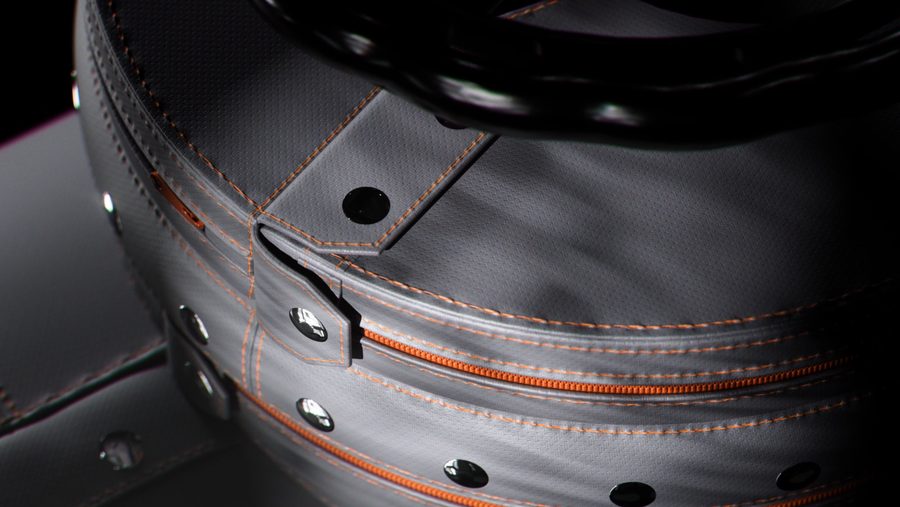
Inzonex removable modular insulation on industrial equipment
Cut the tonnes at the source

Hot industrial equipment? Cut the heat loss.

Boilers, kilns, heat exchangers, valves and steam lines lose energy continuously. Inzonex makes patented (UK GB2508992.1) removable modular insulation — snap-fastened covers engineered per temperature tier, not generic off-the-shelf jackets:

  • Up to 90% less heat loss from insulated surfaces
  • Surface temperature ≤45 °C — touch-safe for workers (EN ISO 13732-1)
  • 6× faster maintenance access than fixed cut-and-weld lagging — unclips and refits in minutes, no destruction
  • Inspectable — comes off to check for corrosion under insulation, then refits like-new (generic jackets often don't survive removal)
  • Typical payback under 2 years (some 9–11 months)
Source: Inzonex Carbon Hub — inzonex.co.uk/carbon · prices dated as shown on each figure · schedule per Regulation (EU) 2023/956 · indicative analytics, not compliance advice.