04 / PROOF · REAL INSTALL
See it on a real boiler house
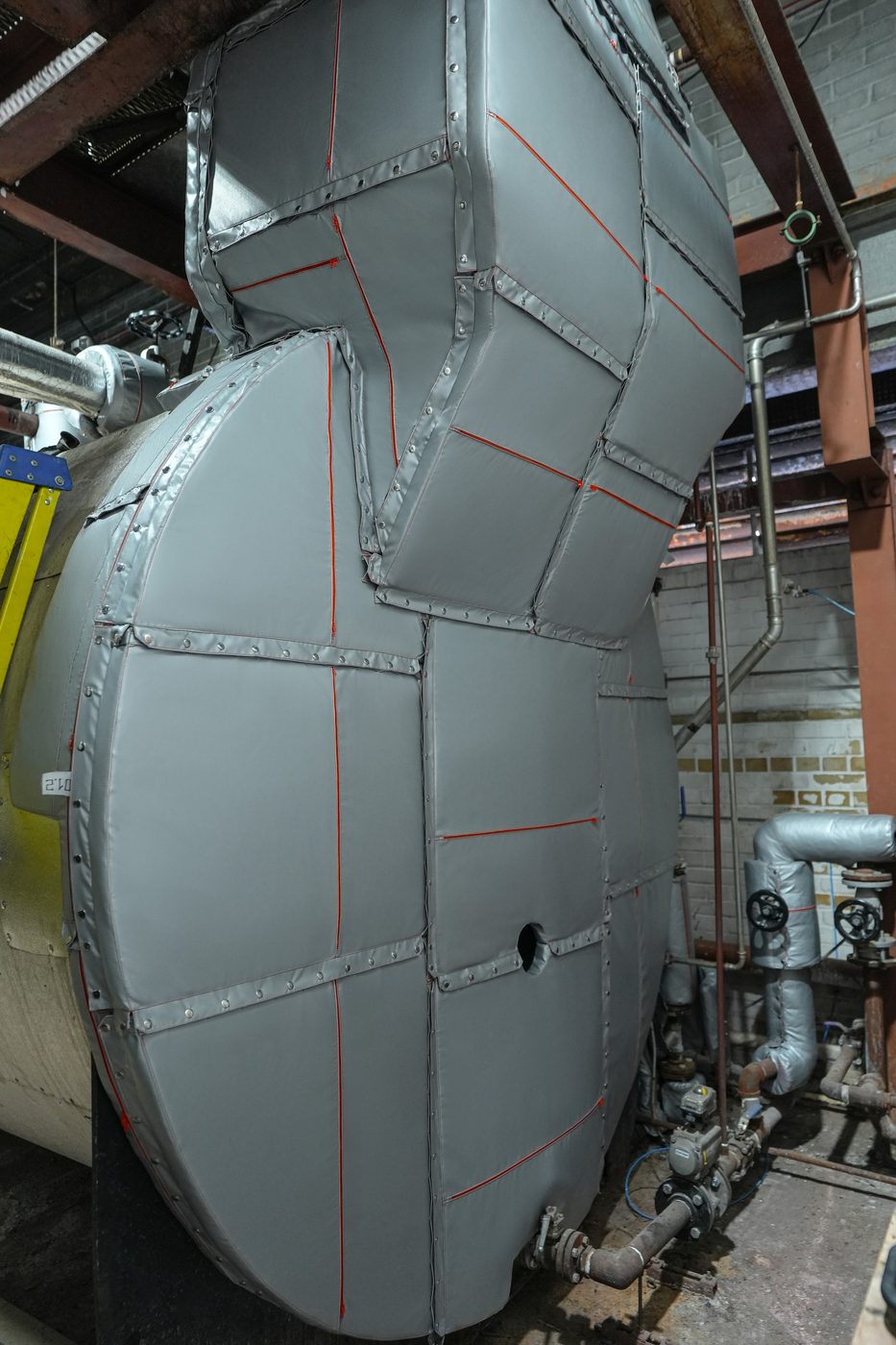
A Bosch steam boiler insulated end-to-end — door, burner flange and steam valves. FLIR-verified surfaces from up to 190 °C down to touch-safe. The measured before / after:
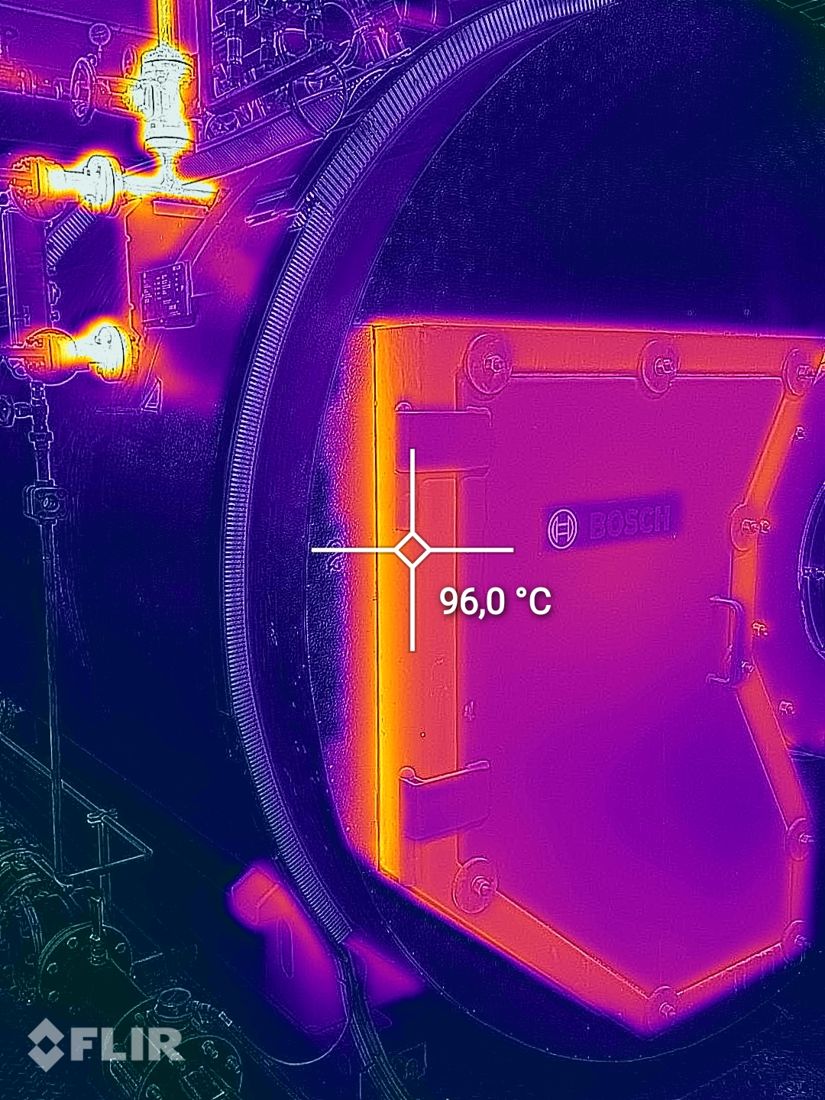
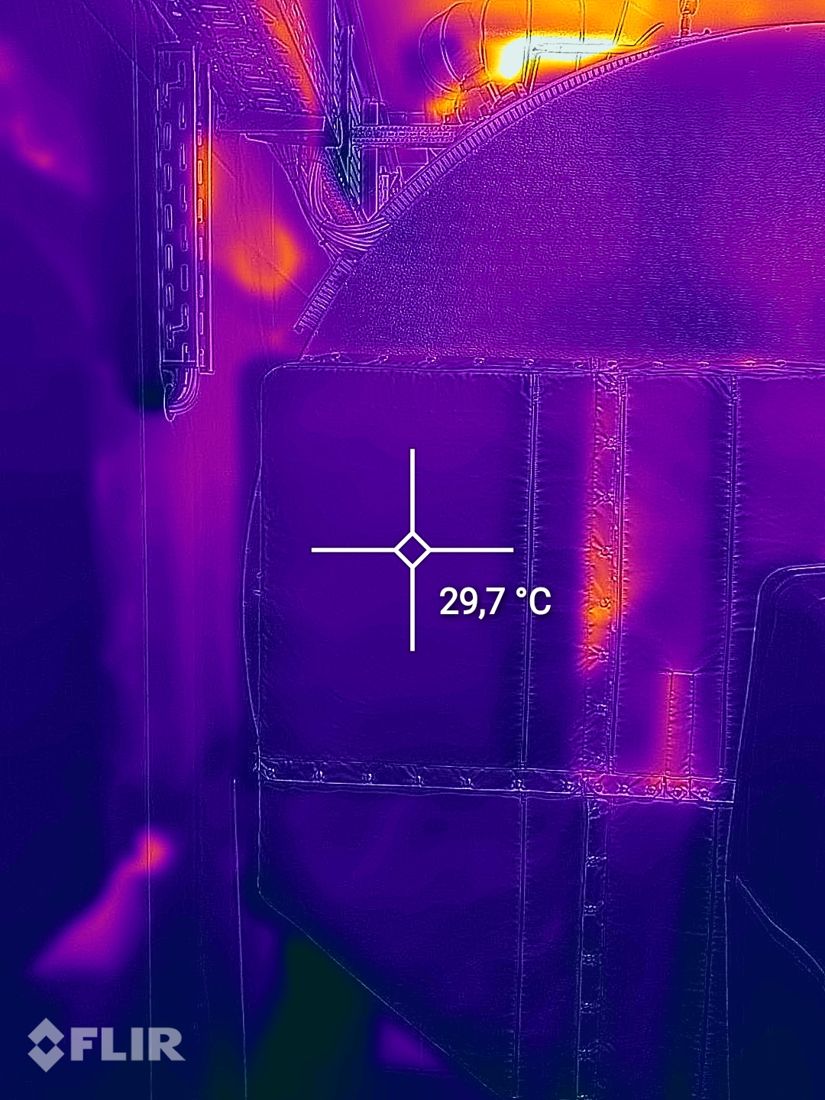
Boiler doors, feed pumps, manways and safety valves are the items an engineer opens, and they are the items usually left bare: traditional removable insulation is sold on that access and still needs tools and time to give it back. Inzonex covers them and still opens by hand — fuel saved, the boiler house cooler, and every one of them serviceable.
In a boiler house the hottest surfaces are the ones engineers open most — doors, valves, pumps, manways. Traditional insulation blocks that access, gets stripped off to service the equipment, and rarely goes back. The high heat-loss components stay permanently exposed.
Wraps collapse inward and lose contact with the surface. Hot spots grow inside — unnoticed.
Cut open for every inspection. Heavy, rigid, and rarely reinstalled — so the surface stays bare.
Boiler doors, manways and pump bodies — nothing off-the-shelf fits.
Explore our CAD models, with measured surface pages for the surveyed Cochran and Bosch UL-S. The ZFR is a modelled study. Rotate it, toggle bare vs insulated, and open a measured page for every surface.
6 surveyed views, 28 components — end plate, economiser, valves, feedwater. 49.8 → 2.6 kW.Cochran · shell boilerOpen the 3D model
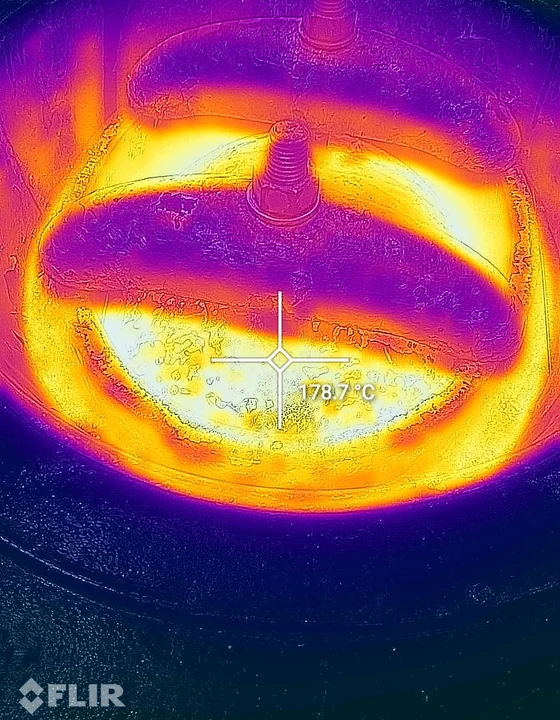
→/ 02Front door 96 °C, burner flange 146 °C, steam valves 190 °C — 3 quantified surfaces.Bosch UL-S · packageOpen the 3D model
→/ 03Twin-furnace — 53.4 → 4.0 kW. 5 modelled element groups: door, flange, frame, valves, hatch.Bosch ZFR · double-flameOpen the 3D model
→Doors, valves, pumps and manways, all opened on a cycle. Three details that keep a removable module working on doors, valves, pumps and manways.
Stainless snap buttons fasten and release each module by hand — no tools, no fixings drilled into the equipment. Modules go on fast at install and unclip in seconds for valve operation, manway access or inspection, then snap back exactly.
The module unzips so the mineral-wool core lifts out — to clean the outer fabric or renew the insulation without scrapping the whole module. The shell stays in service; only the core is replaced, so the module lasts for years.
Modular sections connect to one another and wrap the exact geometry — boiler doors, valves, flanges and pump bodies — minimising creases and gaps that leave hot bridges or let moisture sit. The tailored fit holds the surface ≤45 °C and survives repeated access.
A Bosch steam boiler insulated end-to-end — door, burner flange and steam valves. FLIR-verified surfaces from up to 190 °C down to touch-safe. The measured before / after:
Selected through Innovate UK Business Connect. Ambient temperature in the boiler house dropped by 8 °C at the same load.
Inzonex was selected through the Industrial Laundry Thermal Energy challenge, delivered by Innovate UK Business Connect through its Innovation Exchange programme with the Textile Services Association. The site is a London commercial laundry.
The work covered the parts flat lagging never fits: end plates, economiser chambers, feed-water pumps, valves and manholes. Twenty-eight covers, every one held at or below 45 °C.
The boiler house was read on a six-point FLIR grid across walls and ceiling, at the same load before and after, with no change to ventilation. It fell from 28 °C to 20 °C.
Published by Innovate UK Business Connect, August 2026. Turning down the heat: how Innovation Exchange is helping industrial laundries cut energy waste · the report, 8 pages, PDF.
A package boiler running at 6–10 bar sits at a saturation temperature around 165–185 °C. Every bare surface at that temperature loses heat to the boiler-house air without stopping. Three mechanisms move that heat, and each has a standard that quantifies it.
A hot bare surface warms the air right next to it, and any draught carries that warm air away. A real boiler house always has some air movement (≈0.5 m/s), which pushes the loss above the still-air figure, so 0.5 m/s is what we calculate at.
At 120–180 °C the bare metal also radiates heat away as infrared — this happens even in completely still air. We add that radiation explicitly (ε≈0.9 for bare steel); a single lumped coefficient under-counts it on hot surfaces.
Economiser, end plate, valves, flanges and the boiler door, burner flange and pumps — the large or awkward shapes a standard jacket skips. On the surveyed Cochran these few surfaces hold most of the 49.8 kW.
Method: ISO 12241 / ASTM C680 steady-state, convection at 0.5 m/s plus explicit radiation. “Touch-safe” means a clad surface at ≤45 °C (ISO 13732-1 contact-burn guidance for metal). These are the same equations behind every number on this site.
Data: FLIR survey of a UK commercial boiler house, CAD surface areas ×1.4, ISO 12241 steady-state.
Pick a boiler. Each surveyed surface becomes a page that answers a real engineering question with FLIR temperatures and ISO 12241 heat loss — then links back here.
Largest single loss — economizer 18.3 kW bare.● Live pageOpen the measured page
→/ 02Check/main/safety valves, manhole, flanges — 9.1 kW.● Live pageOpen the measured page
→/ 03Feed pump, valves, returns, blowdown — 6.2 kW.● Live pageOpen the measured page
→/ 04Front burner door — 5.3 m², 8.0 kW bare.● Live pageOpen the measured page
→/ 05Rotate, toggle bare/insulated, jump to any view.● LiveOpen the measured page
→Door 96 °C + burner flange 146 °C — 4.3 kW bare.● Live pageOpen the measured page
→/ 02Hottest surface — 1.4 kW bare, cut ~95%.● Live pageOpen the measured page
→/ 03Rotate, toggle bare/insulated, jump to any surface.● LiveOpen the measured page
→Front three-quarter — door & burner flange (≈44 kW bare).● 3D viewOpen the measured page
→/ 02Rear three-quarter — support frame ×4 (4.9 kW).● 3D viewOpen the measured page
→/ 03Burner front — twin-furnace door, 32.9 kW.● 3D viewOpen the measured page
→/ 04Steam & feed connections — valves and flanges.● 3D viewOpen the measured page
→/ 05Crown — safety valves ×2 (3.0 kW) and hatch.● 3D viewOpen the measured page
→Panel the bare surfaces first, starting with the ones that carry the most area at the highest temperature. A standard jacket leaves these open, and they pay back first.
Up to 96% heat-loss reduction on a fully insulated surface; surface temperature ≤45 °C; payback typically under two years.
On a surveyed Cochran package boiler, 28 bare hot components lose about 49.8 kW continuously (FLIR-measured, ISO 12241). Removable insulation cuts that to ~2.6 kW — roughly a 95% reduction.
Yes. Inzonex modular panels are shaped to each part and unbutton in seconds, so boiler doors, valves, manways and pumps stay insulated and serviceable — unlike rigid cladding, which gets cut off at the first service and rarely replaced.
Below 45 °C — our ≤45 °C design target, contact-burn risk assessed to ISO 13732-1 — down from 120–190 °C on the bare metal.
Typically under two years; on high-loss boiler houses it is often 9–12 months.
Any make or type — Cochran, Bosch UL-S, Bosch ZFR and others; steam, hot-water and thermal-oil boilers.
A FLIR thermal survey of your boiler house and a measured 3D before/after model with energy, money and CO₂ saved per component.
Send photos and equipment data for one boiler — we return a measured before/after model and your verified saving in 7–10 days. Free.
Three quick questions — we reply with a measured 3D before/after and an interactive ROI built for your boiler. No call, no spreadsheet.
| Machine | Surveyed items | Bare | Panelled | Cut |
|---|---|---|---|---|
| Cochran package boiler | 28 components | 49.75 kW | 2.58 kW | 94.8 % |
| Bosch UL-S, 6-ton | 28 pieces | 23.43 kW | 1.20 kW | 94.9 % |
| Bosch ZFR, double flame tube | 9 items | 53.39 kW | 3.99 kW | 92.5 % |
Surface temperatures from FLIR surveys of three working machines; areas from CAD with a geometry allowance; heat loss calculated to ISO 12241. Each machine has its own page with the reading behind every line. The method in full.
Three pages that answer the questions asked around the machines rather than about one surface.
The classic vertical machine part by part, and the package boiler we surveyed beside it.Open
→/ 02Both methods. Surface loss calculated from the survey: 49.8 kW.Open
→/ 03PSSR 2000, the written scheme, and what gets opened.Open
→/ 04Which side of the tube carries the gas.Open
→