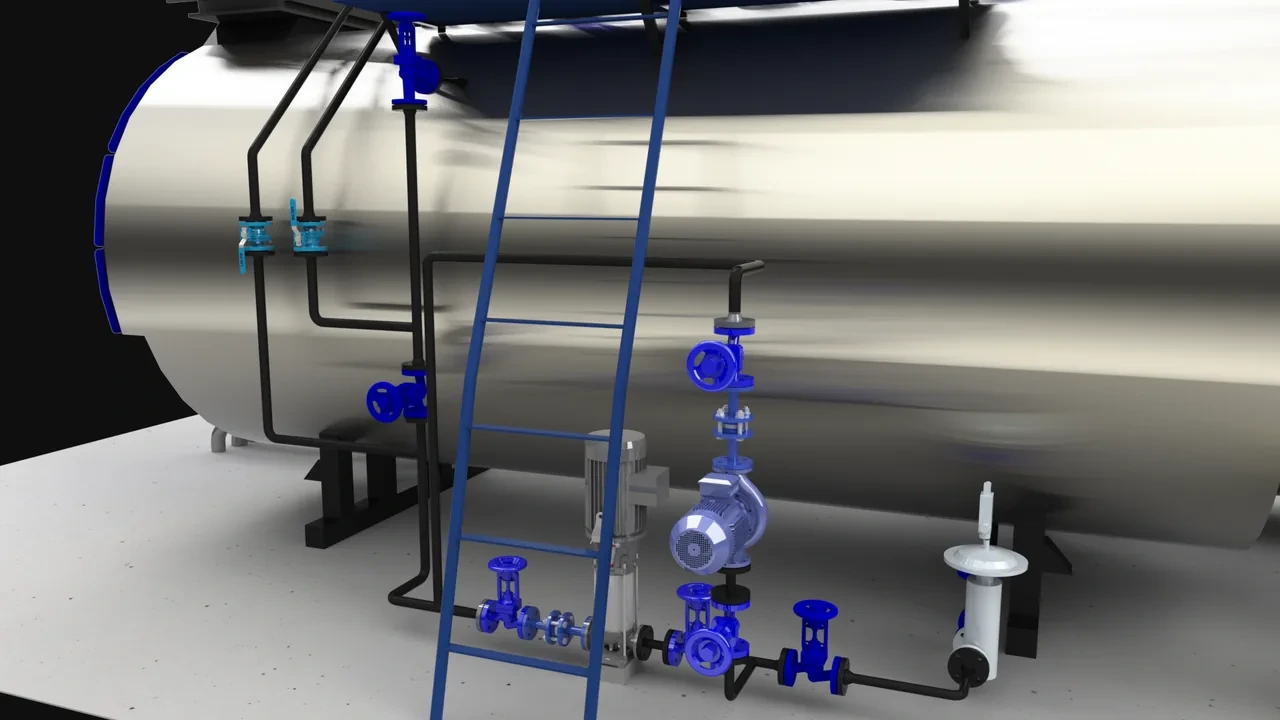
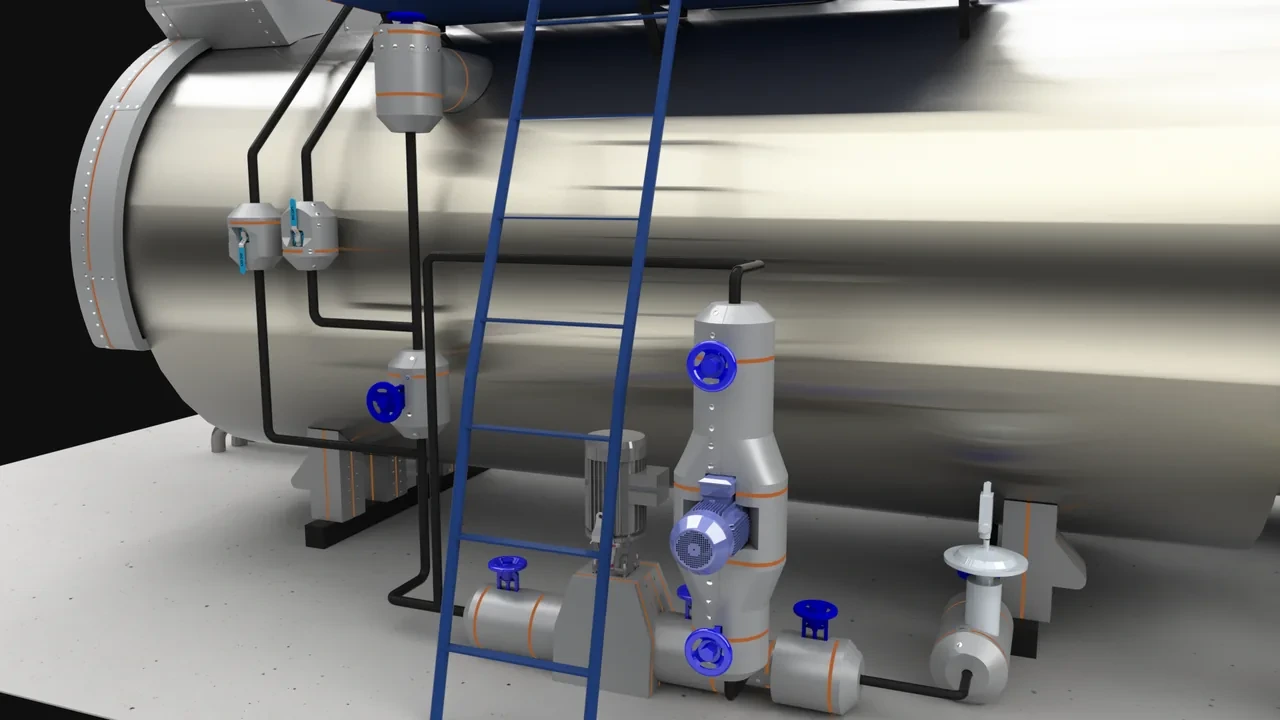
Feed pump · 100 °C · 1.7 kW bare
The boiler feed pump body and its casing run near 100 °C. A removable cover insulates the volute while leaving the seal, bearings and coupling accessible for service.
Cover: Silicone shell + PAROC stone-wool core (50 mm) · touch-safe design target ≤45 °C (ISO 13732-1 guidance)
Globe valve · 100 °C · 0.4 kW bare
Feed-line isolation valve at ~100 °C — another small cast body left bare. A shaped cover insulates it without seizing the handwheel.
Cover: Silicone shell + PAROC stone-wool core (50 mm) · touch-safe design target ≤45 °C (ISO 13732-1 guidance)
Return lines · 100 °C · 0.9 kW bare
Condensate and return runs at ~100 °C. Individually minor, but several short bare sections in the feed set add up to real continuous loss.
Cover: Silicone shell + PAROC stone-wool core (50 mm) · touch-safe design target ≤45 °C (ISO 13732-1 guidance)
Feed piping · 100 °C · 1.3 kW bare
Multiple short bare pipe sections around the feed set. Removable pipe sleeves insulate them and still allow union and flange access.
Cover: Silicone shell + PAROC stone-wool core (50 mm) · touch-safe design target ≤45 °C (ISO 13732-1 guidance)
Filter / strainer · 100 °C · 0.4 kW bare
The feed strainer body sits at ~100 °C and must open for cleaning — a textbook case for a removable, re-openable cover rather than fixed lagging.
Cover: Silicone shell + PAROC stone-wool core (50 mm) · touch-safe design target ≤45 °C (ISO 13732-1 guidance)
Blowdown flanges · 180 °C · 1.5 kW bare
Blowdown connections see boiler-pressure temperature in bursts and are left bare for safety access. A removable shroud insulates the standing loss while keeping the valve operable.
Cover: Silicone shell + PAROC stone-wool core (50 mm) · touch-safe design target ≤45 °C (ISO 13732-1 guidance)
Every module here re-opens for access.