
The surfaces ready-made covers leave bare
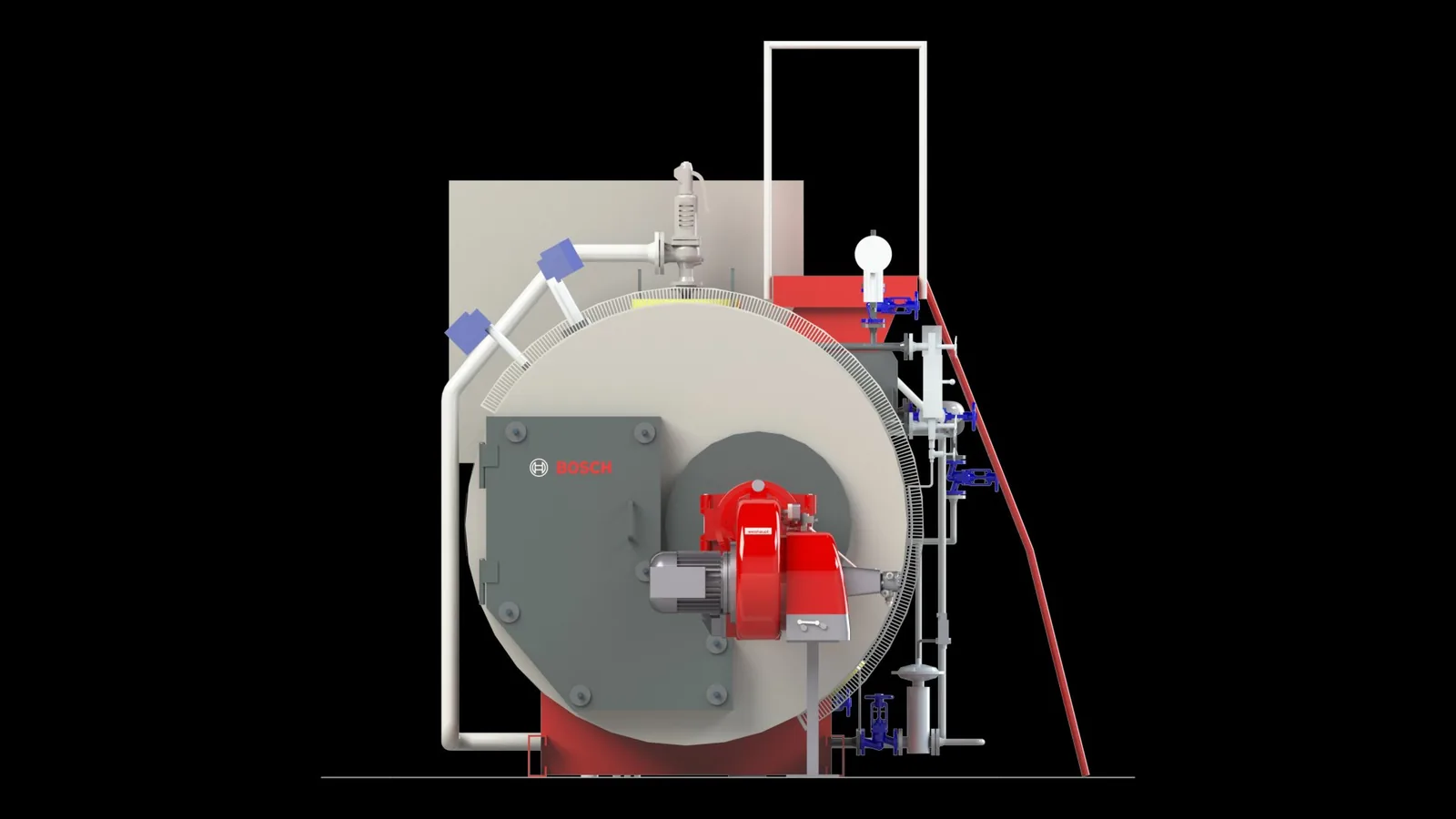
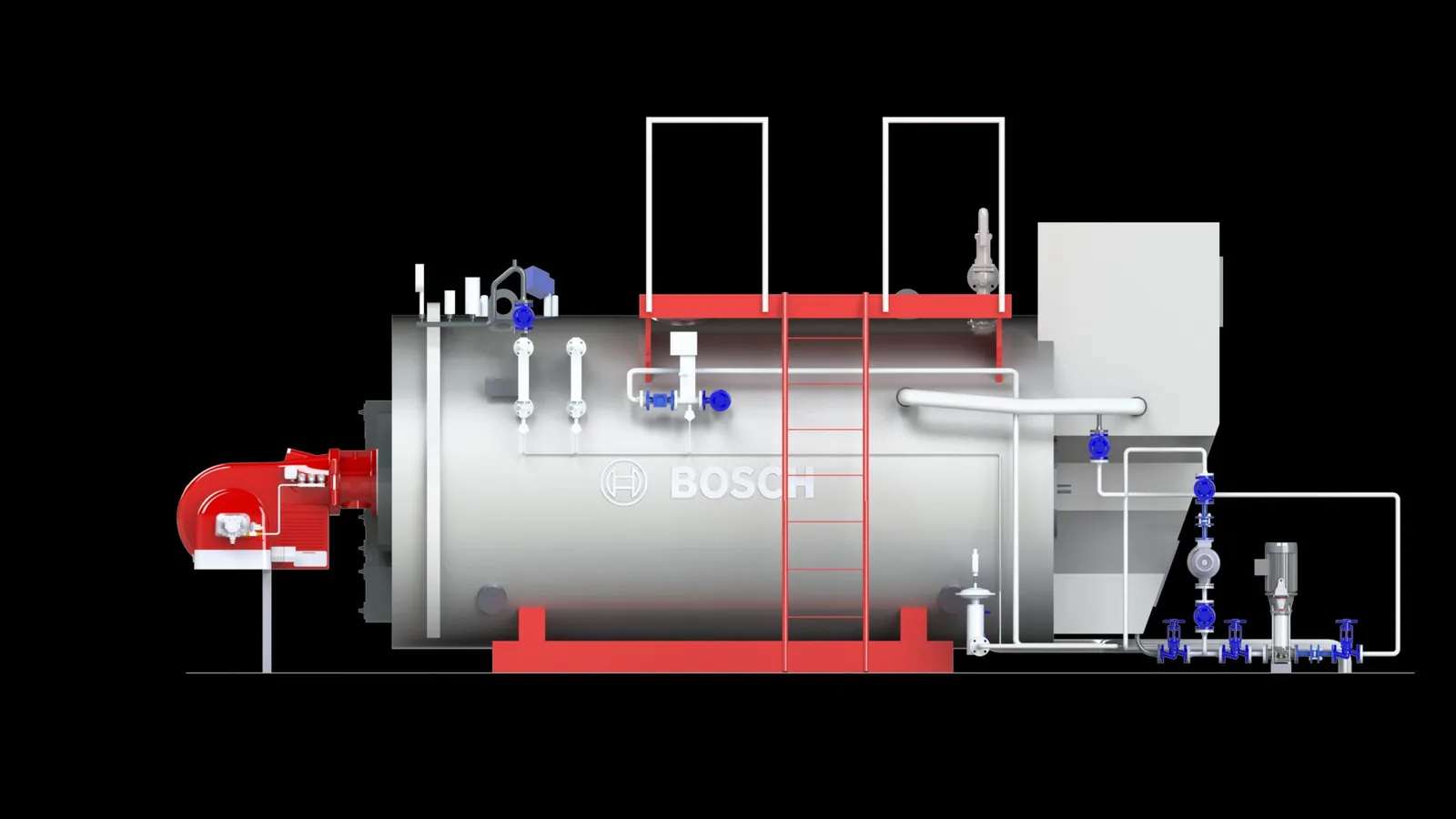
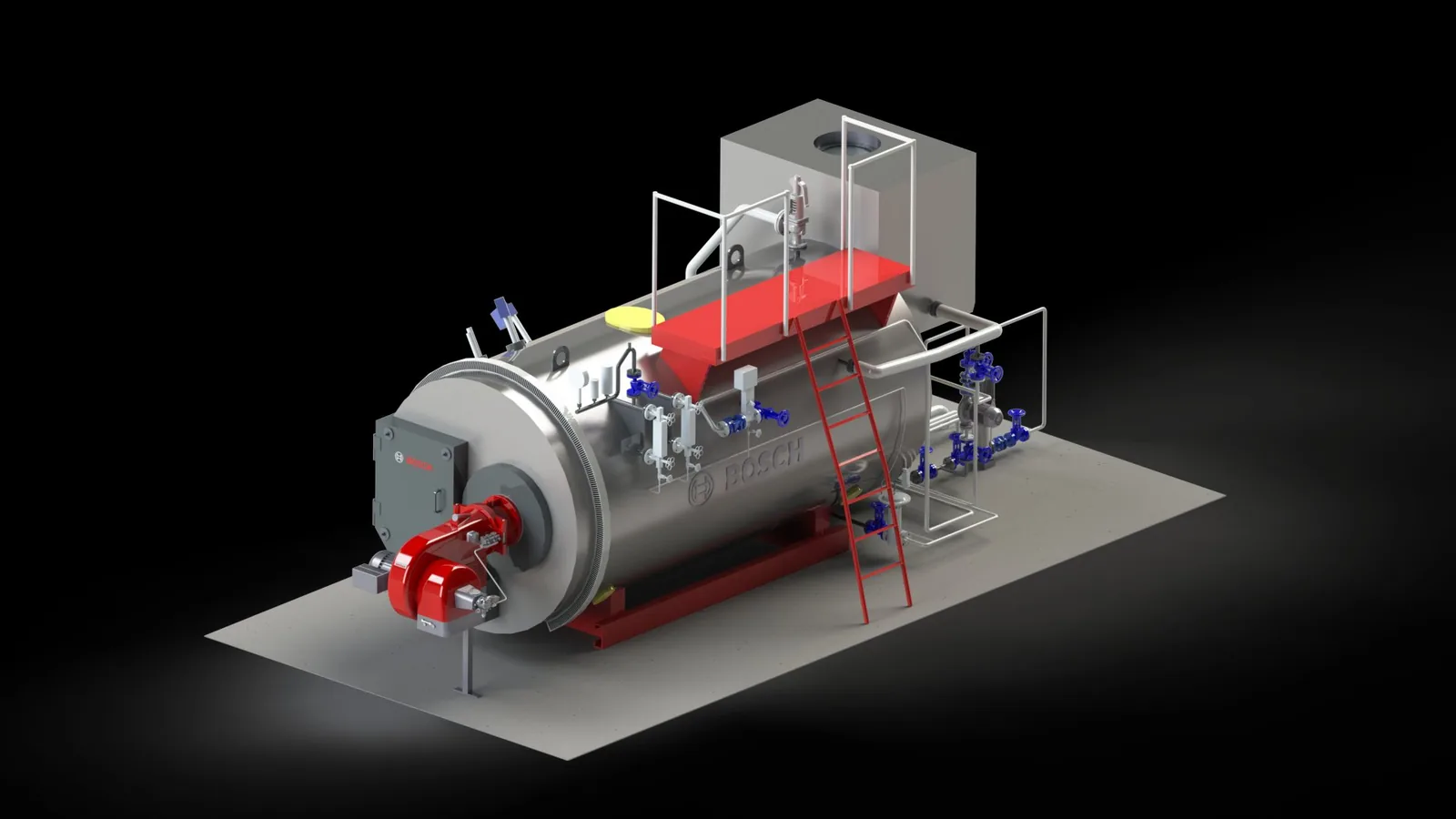
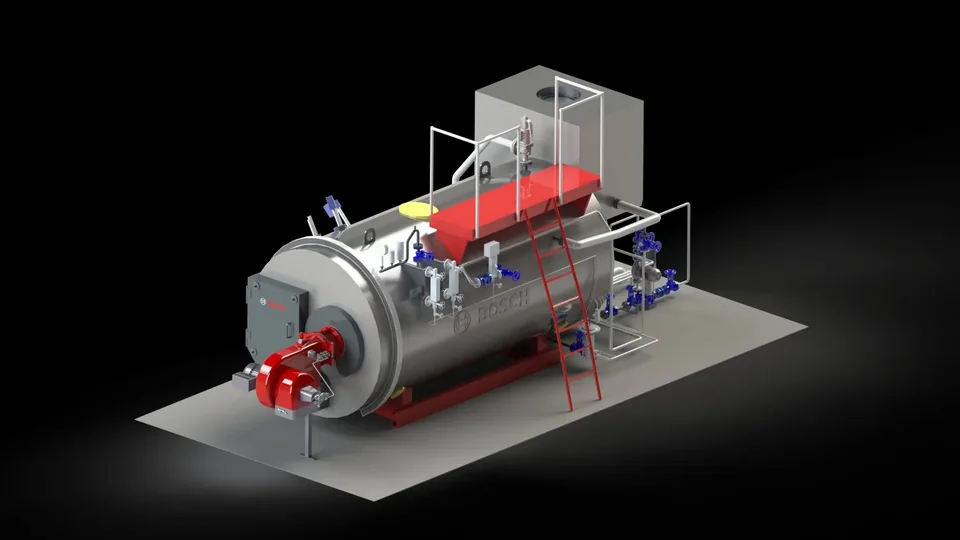
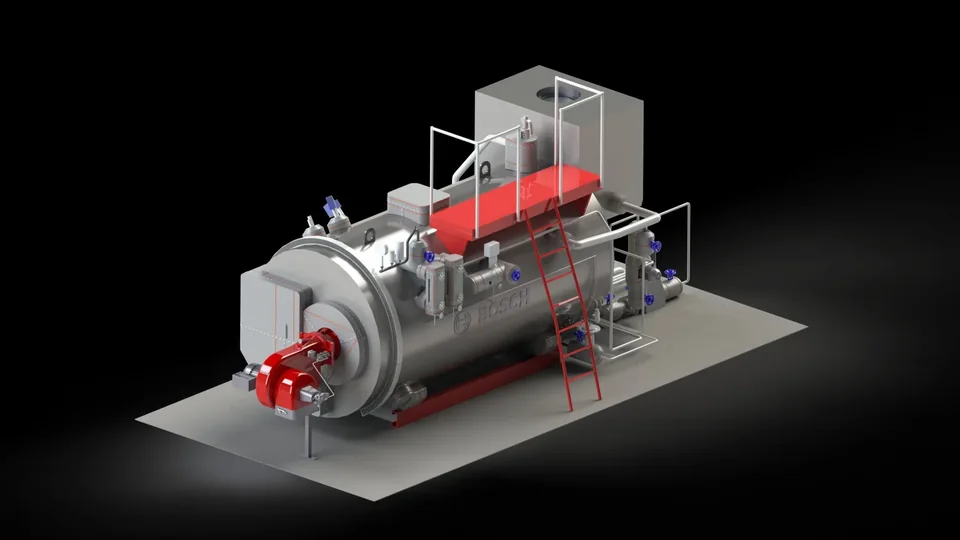
This is the boiler behind the infrared case on this site — a Bosch UL-S package unit, surveyed with a radiometric camera and then modelled surface by surface. Across 12 element types over 28 pieces — door, burner flange, frame supports, flanges, manhole, safety valves, steam piping, economiser, feed and condensate lines, CR pump, blowdown — the bare set sheds 23.4 kW continuously.
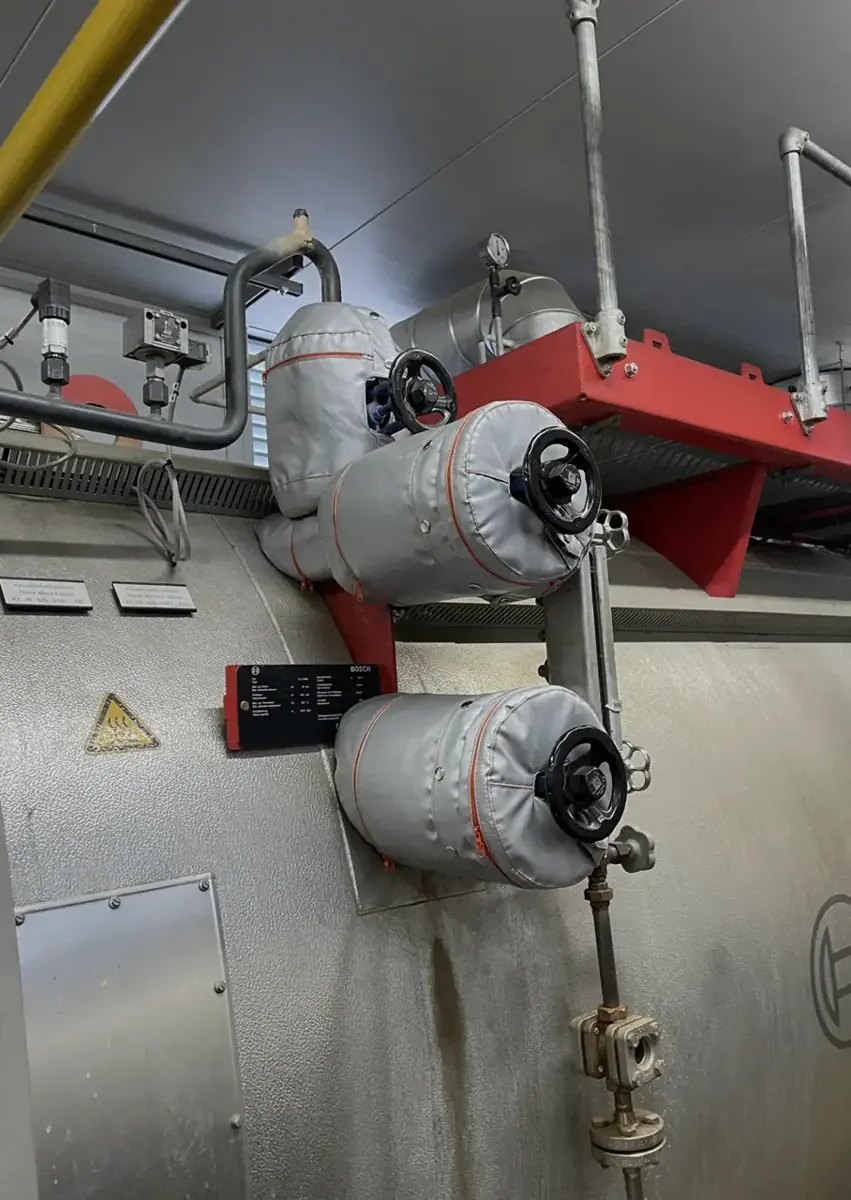
With removable panels the same set holds 1.2 kW: a 94.9 % cut, every outer surface at or below 45 °C. Of the 38 infrared frames taken that day, 35 showed exposed metal above 60 °C — which is the real finding. The boiler shell was clad from the factory; everything that opens, moves or gets serviced was not.
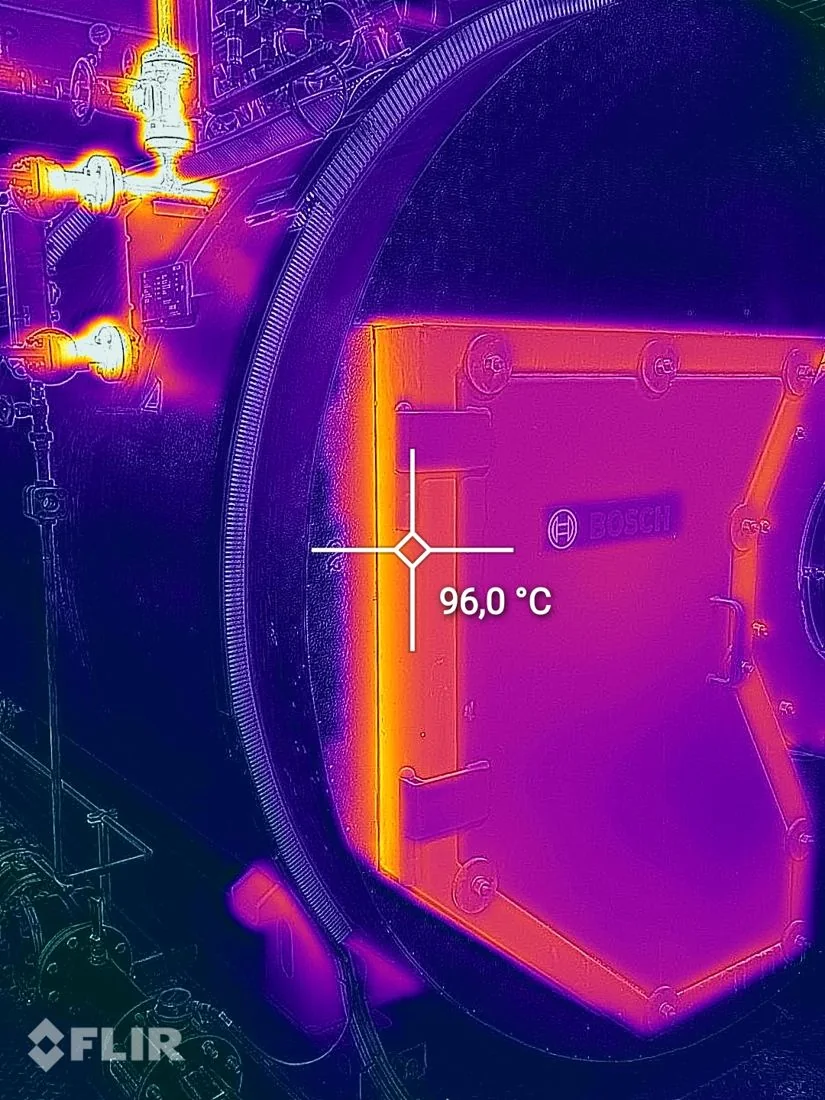
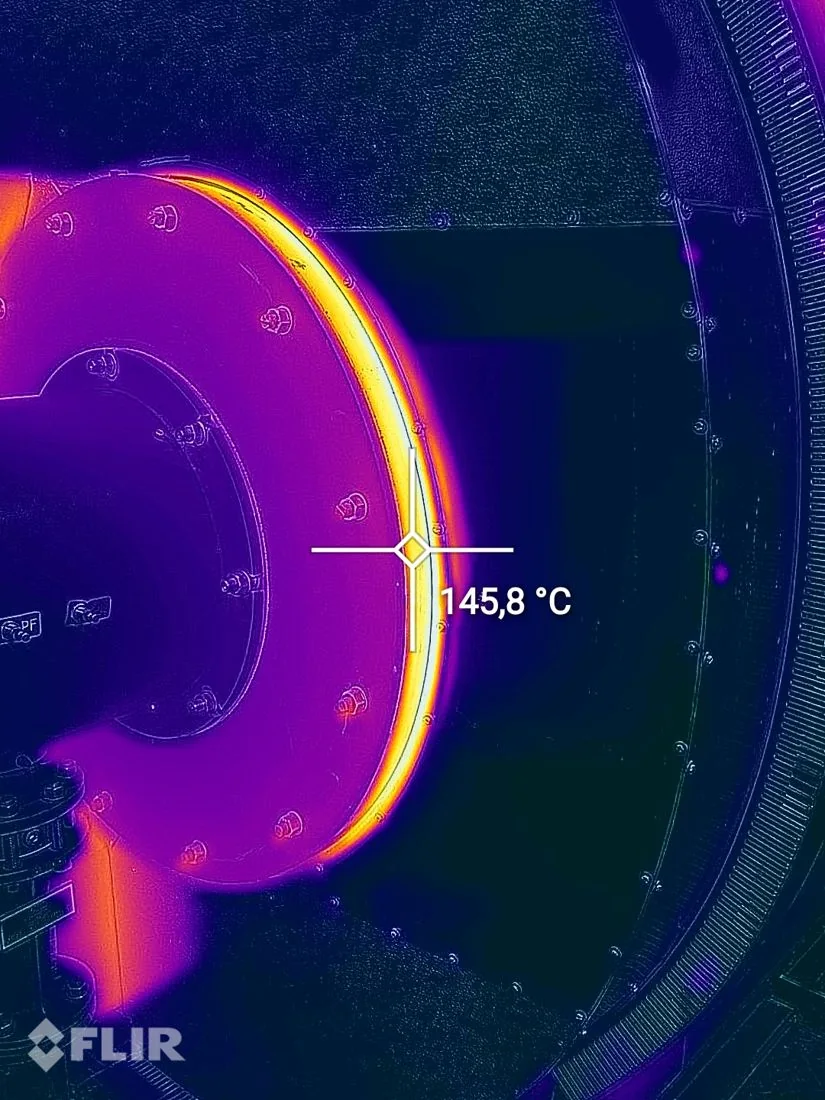
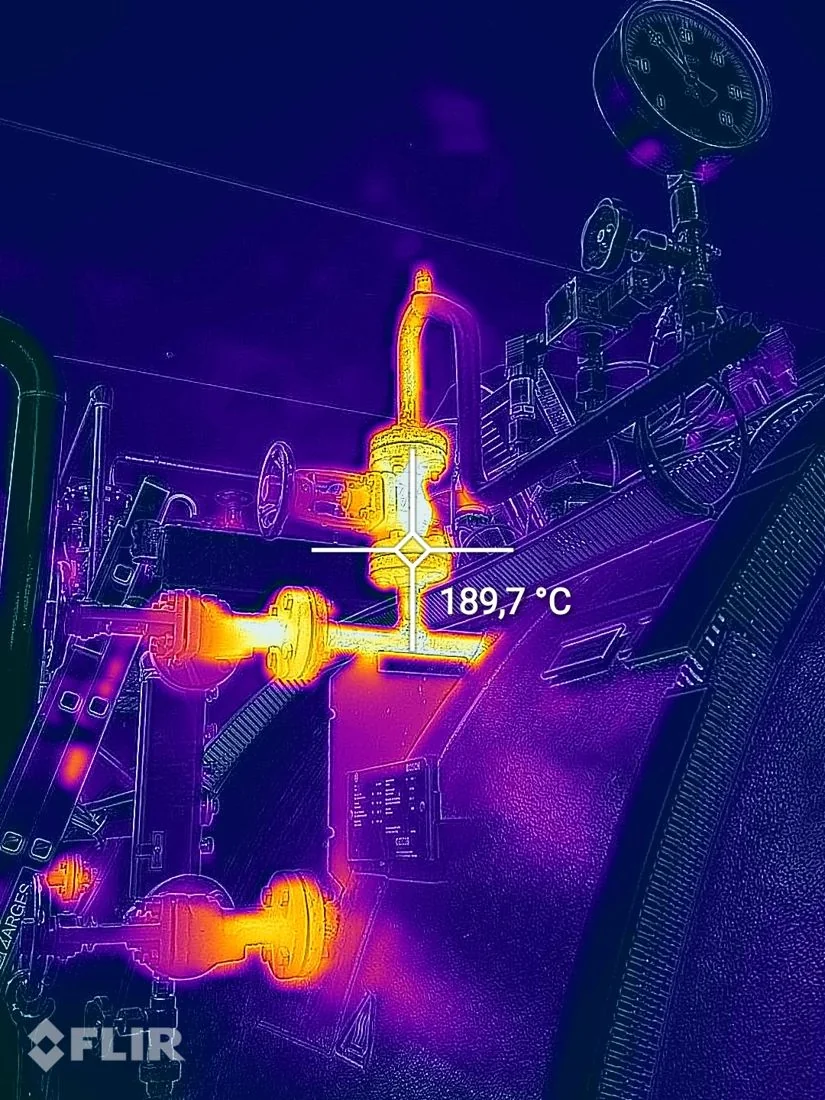
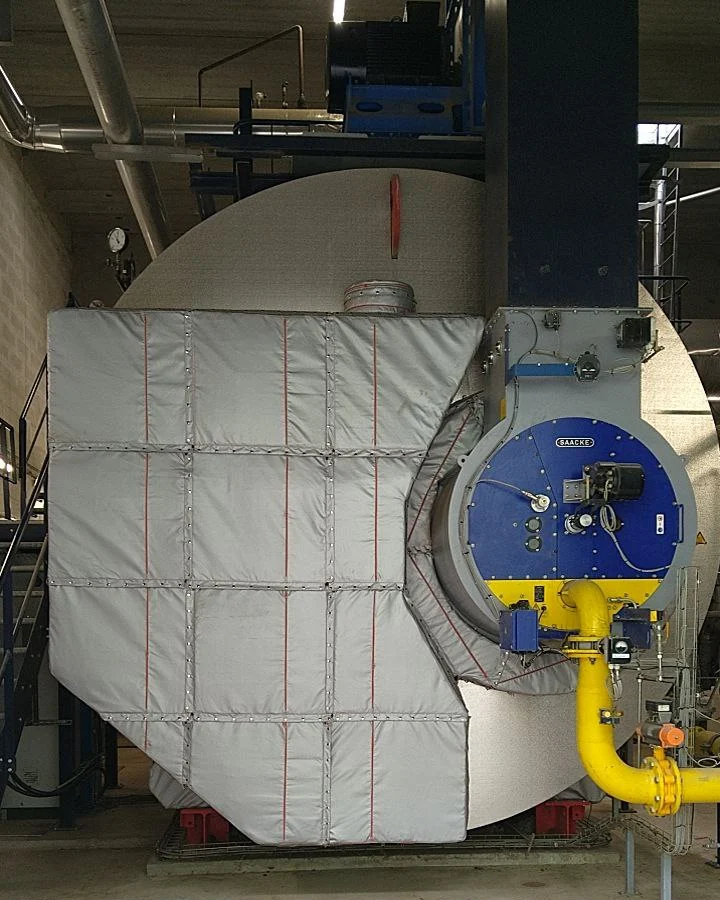
FLIR S62 Pro, 13 October 2025. Temperatures recomputed per pixel from each file's raw thermal matrix and Planck constants, not read off the JPEG palette (ε 0.90, reflected 25 °C, 50 % RH, 3 m). Camera accuracy ±2 °C / ±2 %.
Model inputs: ISO 12241 / ASTM C680 steady state, ambient 25 °C, 50 mm mineral-wool core, combined outer coefficient h₀ ≈ 10 W/m²K, each measured surface used as its own boundary condition. Fuel from heat via 85 % boiler efficiency.
The three quantified surfaces
These three were measured and modelled individually. The rest of the 28 pieces are carried in the whole-boiler figure below.
| Surface | Bare | Panelled | Cut |
|---|---|---|---|
| Steam valves | 190 °C | 36 °C | 93 % |
| Burner flange | 146 °C | 30 °C | 96 % |
| Boiler door | 96 °C | 30 °C | 93 % |
| Those three together | 5.7 kW | 0.28 kW | 95 % |
| Whole boiler, 28 pieces | 23.4 kW | 1.2 kW | 94.9 % |
Two scopes, both real: the three surfaces are what the infrared survey quantified directly; the 23.4 kW panels the full element set including the economiser, feed and condensate lines and the pump.
| At 7,700 h/yr | Value |
|---|---|
| Heat not lost | 171 MWh |
| Gas avoided at 85 % efficiency | 201 MWh |
| CO₂ avoided case basis, 0.20 kg/kWh | 40.3 t |
| Plant-room air | ~6 °C cooler |
Move every one of these in the calculator — fuel, price, hours, efficiency and access cycle are all yours to set.
The access problem, in minutes
Every one of these surfaces is opened on a schedule. What changes with the panel is not whether it opens — it is what opening costs.
| Conventional cladding, per access | |
|---|---|
| Unscrew or cut the sheet panels | |
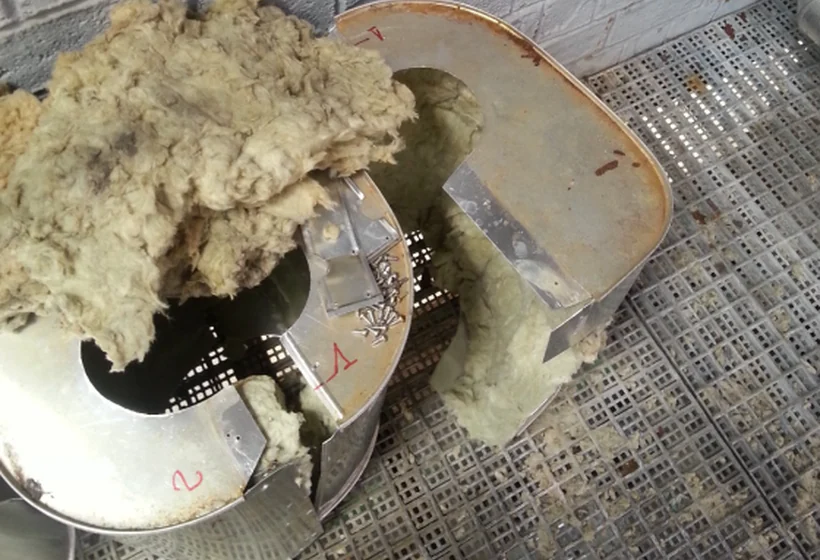
| Dig out the wool — settled and degraded by heat and vibration | |
| Rebuild the wool, cut and fasten new sheet | |
| Cycle per access | 10+ min* |
| Inzonex cycle, per access | |
|---|---|
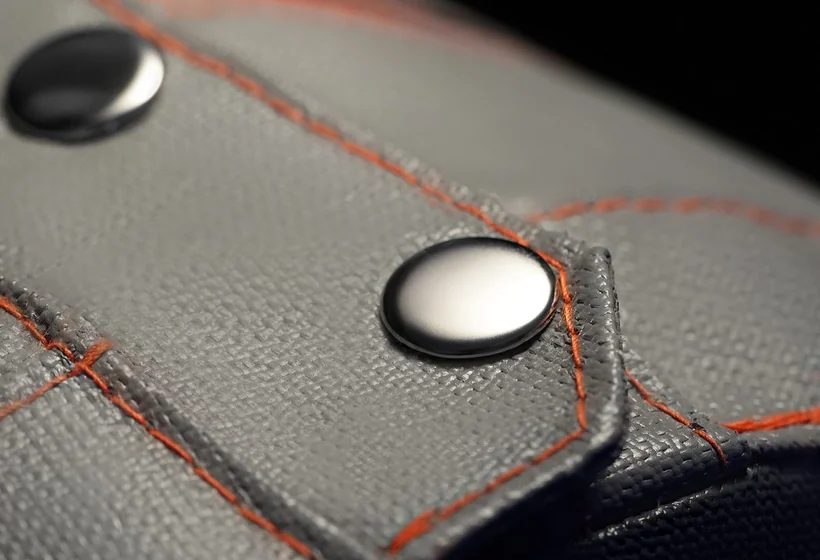
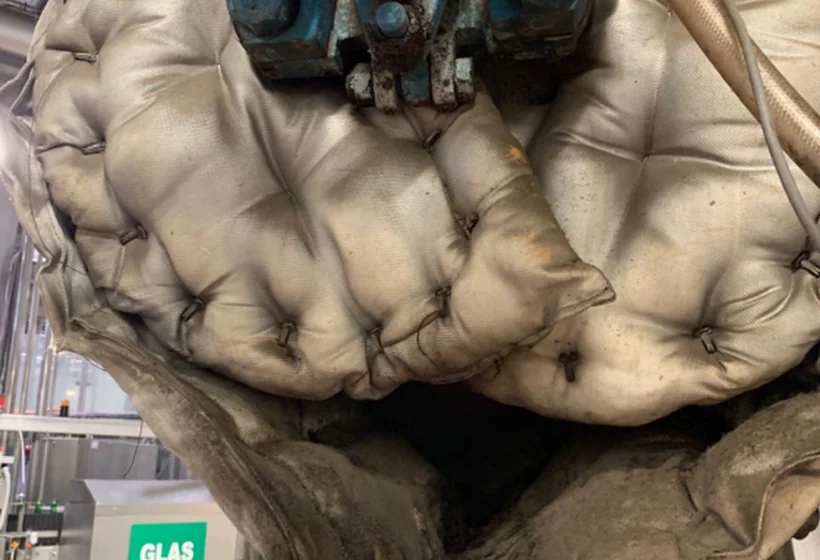
| Release the snap buttons by hand — no tools | |
| Lift the section clear | |
| Snap the same section back | |
| Cycle per access | ~1.5 min* |
*Access-cycle assumptions, not timed trial results — treat them as inputs to check against your own crew, not as measured performance. Cut sheet and compacted wool are scrapped, so conventional access also carries a material cost every time. The panel is designed to come off and go back on; nothing is consumed.
Weight, over the whole set
A sheet-metal casing has to span every surface these panels span. Same job, same surfaces — the difference is what a technician lifts.
| Outer layer, whole set | Weight | Basis |
|---|---|---|
| Steel sheet 0.6 mm lightest gauge used | 128 kg | 7850 kg/m³ + Z275 zinc |
| Steel sheet 0.8 mm common on plant — basis | 170 kg | same, 0.8 mm |
| Steel sheet 1.0 mm walked-on / wind-loaded runs | 213 kg | same, 1.0 mm |
| Inzonex outer fabric | 14.3 kg | our spec |
About 12× lighter on the 0.8 mm basis. The mineral-wool core is identical in both systems — it is the outer layer, and only the outer layer, that the design can change. That is what a technician lifts, at height, next to a live boiler.
Where the heat actually goes
Heat lost from a bare surface does not leave the building. It goes into the plant-room air, every hour the boiler runs. On this boiler that is 22.2 kW — the difference between 23.4 bare and 1.2 insulated — delivered continuously into a room nobody is trying to heat. Seven three-kilowatt fan heaters, never switched off.
Here that was measured rather than argued: after the bare components were panelled the plant room ran about 6 °C cooler.
| Consequence | What it looks like |
|---|---|
| Fuel | The boiler regenerates the heat it just threw away. |
| Working conditions | Plant-room air climbs; in summer the room becomes somewhere work gets rushed or deferred. |
| Contact burns | Surfaces at 96–190 °C at working height, next to the valves an operator reaches for. |
The 45 °C touch-safe design target and ISO 13732-1
ISO 13732-1 sets the contact-burn thresholds for hot surfaces. Bare steel at 100 °C burns on contact in about a second; at 190 °C it is immediate. Panelled to ≤45 °C the same surface can be held indefinitely — and the survey confirmed 30–36 °C on the finished panels.
35 of 38 infrared frames showed exposed metal above 60 °C before the work. The full measured case →
Same surfaces, measured twice
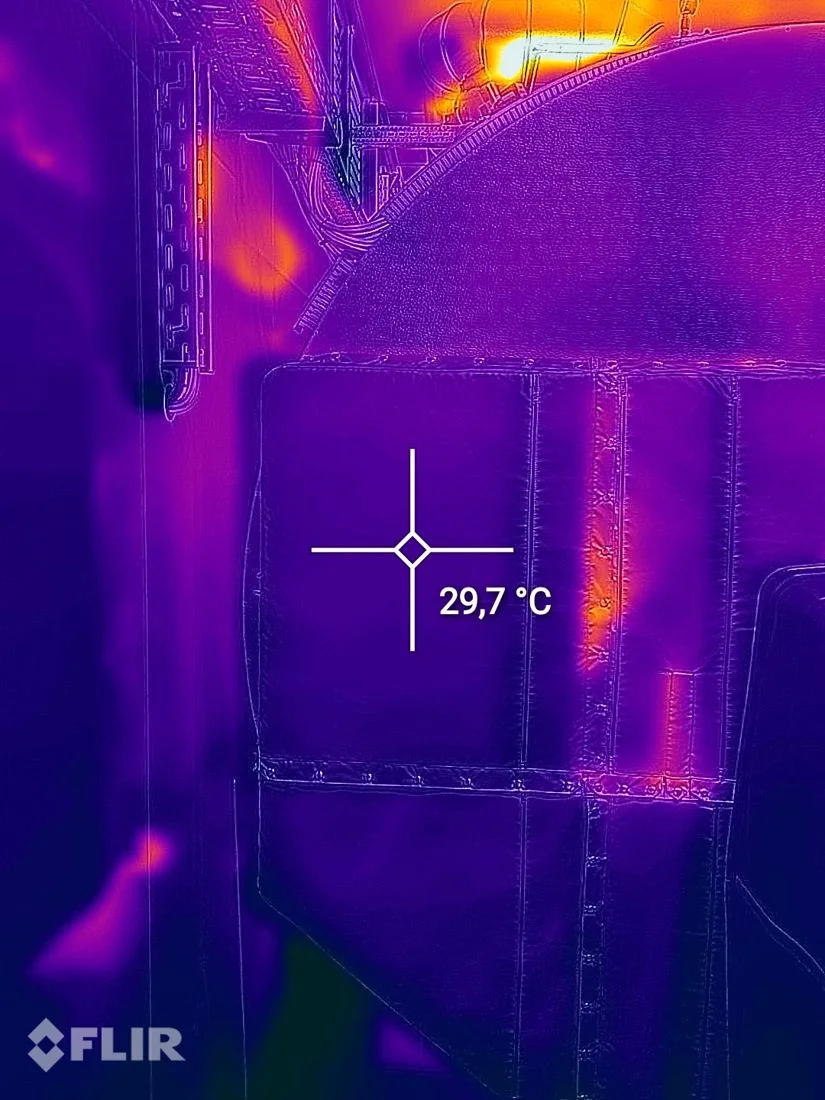
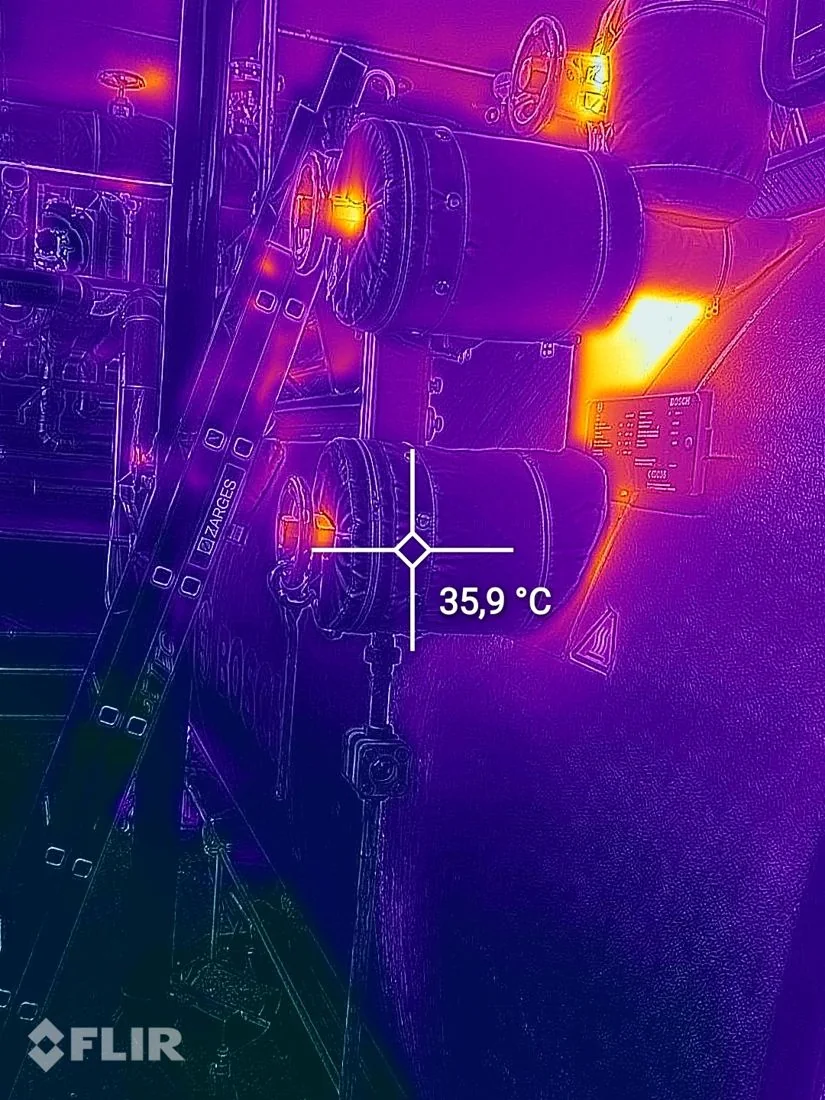
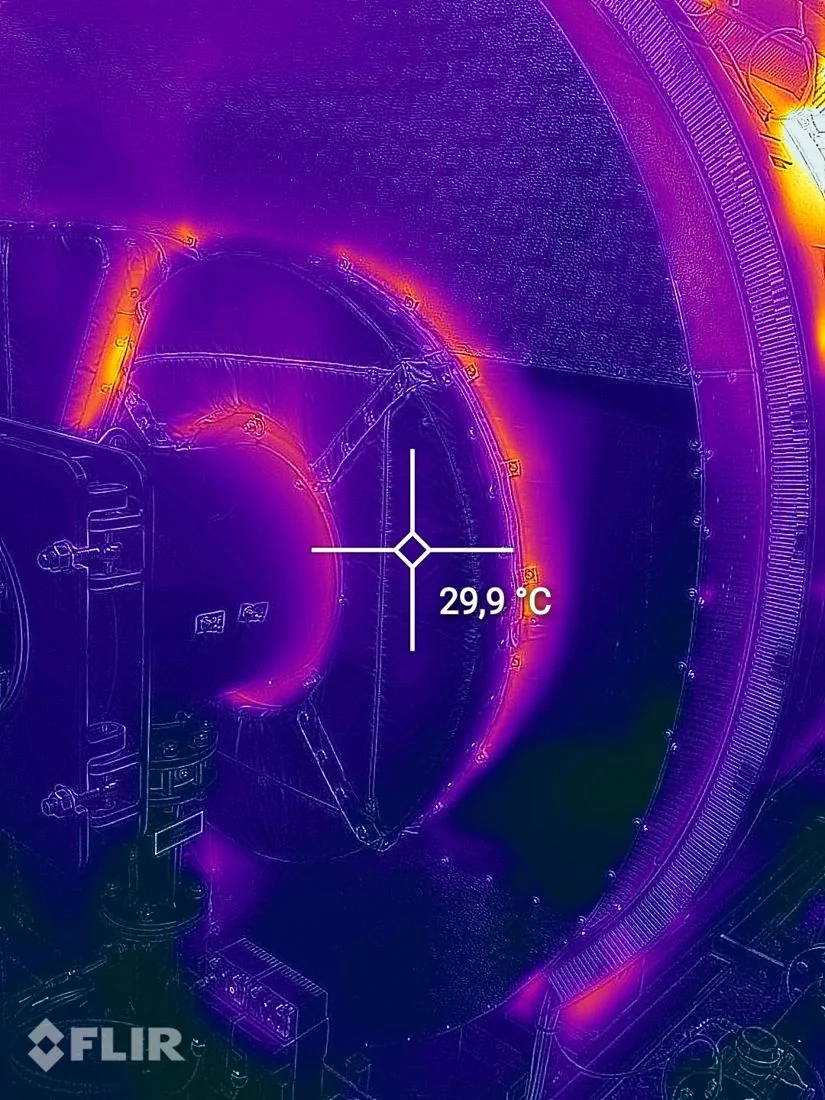
Same camera, same settings, same three locations so that the second visit is comparable to the first.
7,700 h/yr is near-continuous process duty. Move the slider to your own hours.
The part a heat-loss calculator normally leaves out. Count every time a panel has to come off — inspection, valve work, cleaning — not the number of boiler shutdowns. Cycle times are project assumptions; overwrite them with your own.
Carbon price left at zero unless your site is inside a trading scheme or has an internal price. UK ETS and EU ETS both apply to installations above the combustion threshold — carbon hub →