drag to compare
Insulatedouter face 40.0 °C
Barepeak 190 °C
Peak 190 °C · 1.4 kW bare ·
0.1 kW insulated · 40.0 °C outer face

Details · heat · surface · sections · calculate
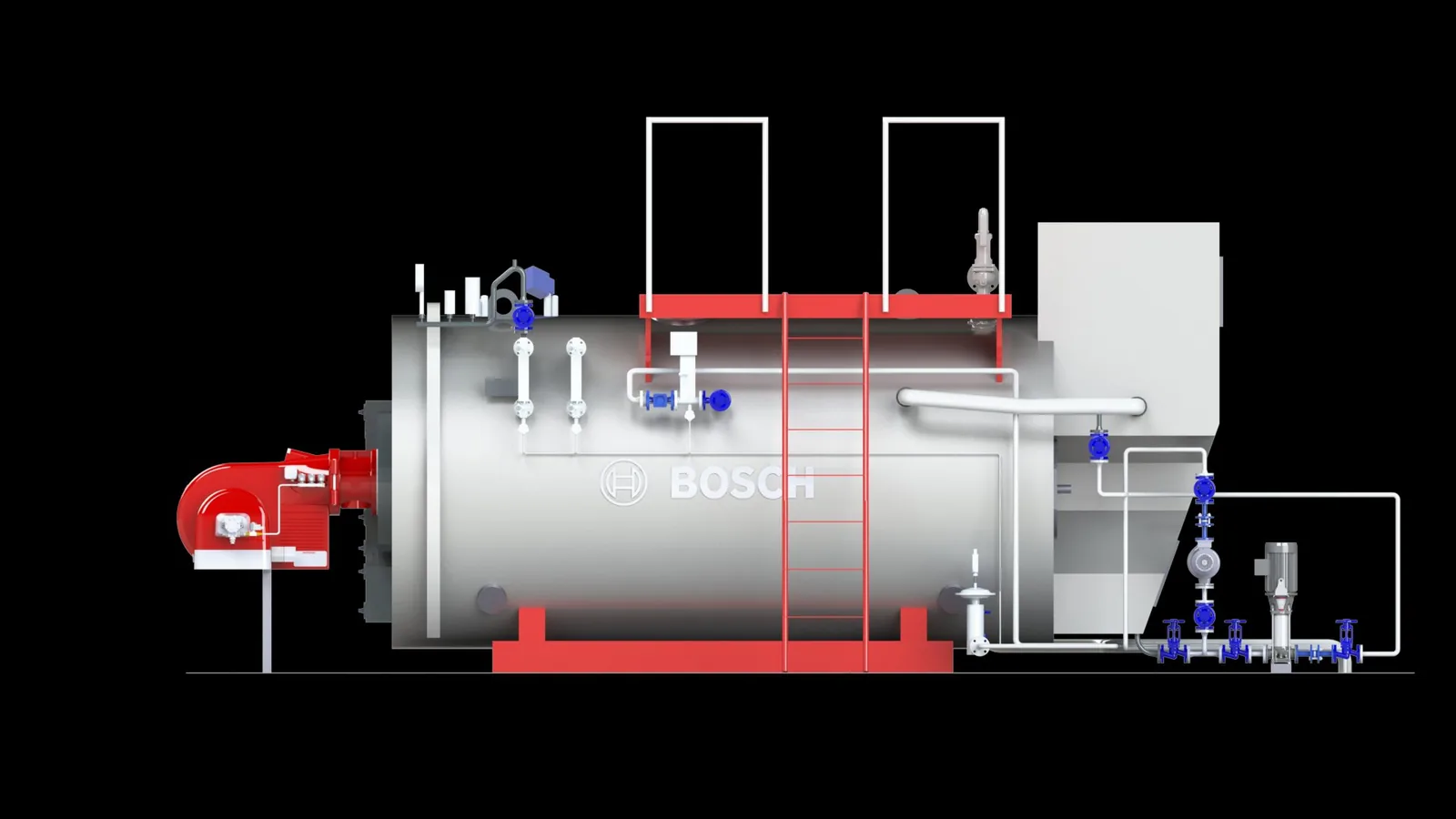
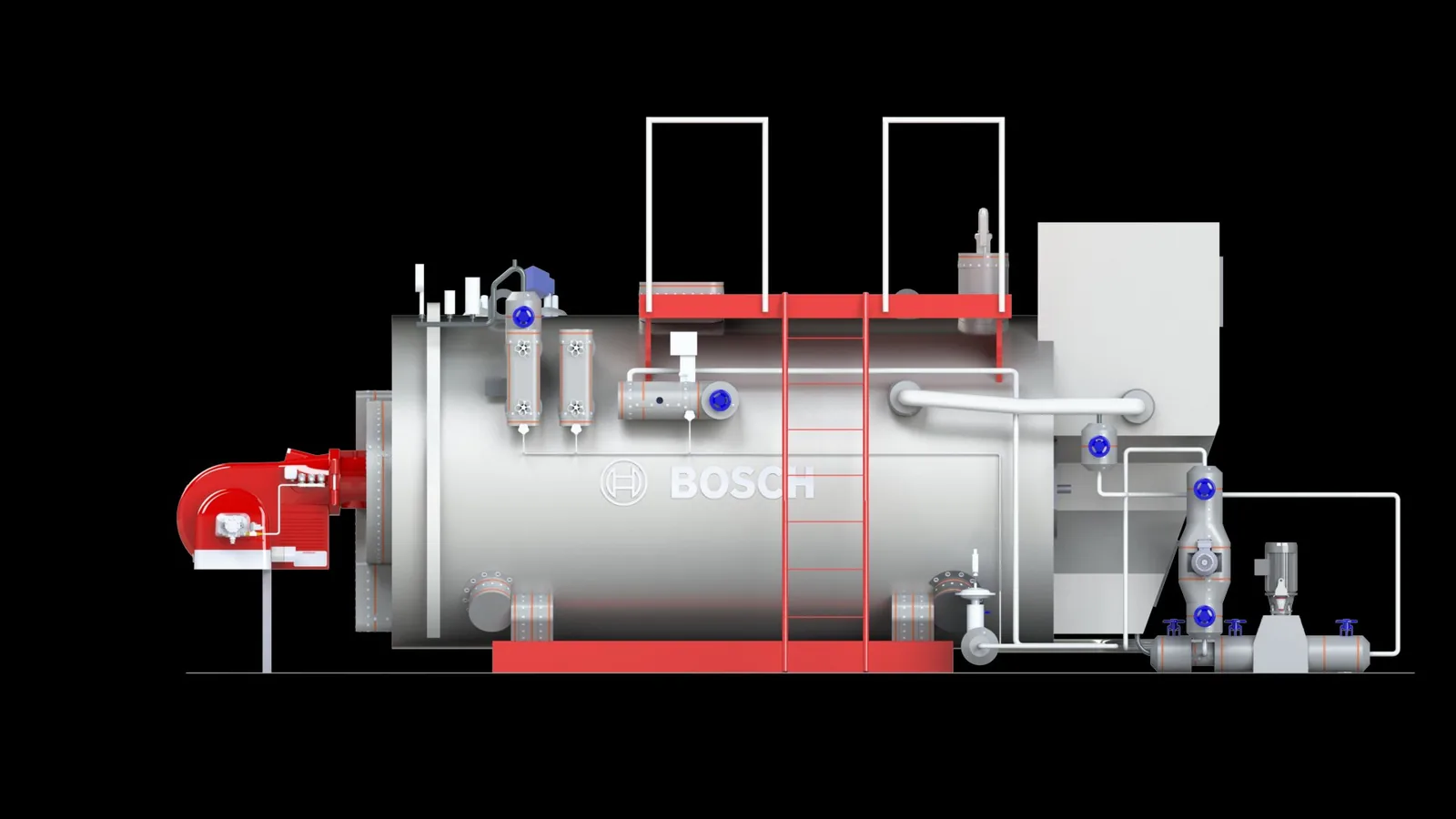
Peak surface temperature 190 °C and the 1.4 kW of this view are FLIR readings taken on a working bosch ul-s package boiler, with areas from the CAD model of the same equipment uplifted ×1.4 for bolts and irregular geometry. The area field opens on the value that reproduces that loss at that temperature, so the bare tile starts on the surveyed figure; where a view holds elements at different temperatures this comes out below the geometric area. Surface heat loss only, ISO 12241 steady state. Emissivity 0.90 bare and 0.85 on the insulated face; fuel at 94 % heat-supply efficiency and 185 kg CO₂e per MWh of fuel. Operating hours and energy price are example inputs for one boiler — put your own in. Figures are for one boiler.
On the surveyed bosch ul-s package boiler the hottest point of this view measures 190 °C bare, and the 1 element group(s) in it lose 1.4 kW. The largest single item in it is the steam valves at 1.4 kW.
With Inzonex Modular Insulation over the same area the calculated loss is 0.1 kW, which is 95.0 % lower. The reduction this survey publishes is 95 %. At 6,000 operating hours a year that is 8.0 MWh of heat retained.
Visible in this view: steam take-off and stop valves — 190 °C, bare cast bodies.
| This view | Bare | Insulated |
|---|---|---|
| Surface heat loss | 1.4 kW | 0.1 kW |
| Surface temperature | 190 °C | 40.0 °C |
| Heat retained / yr | — | 8.0 MWh |
| Fuel equivalent / yr | — | 8.5 MWh |
q = h(Ts − Ta) + εσ[(Ts+273.15)⁴ − (Ta+273.15)⁴], with h = 5.7 + 3.8v W/m²K. Conductivity is taken as λ = 0.031 + 0.000188 × mean layer temperature, W/mK, evaluated at the solved mean layer temperature. Certified λ curves differ between products.
With a 50 mm core the calculated outer surface is 40.0 °C. The design target for surfaces people work next to is 45 °C. The bare steel measures 190 °C over the same area on the FLIR survey.
Inputs: 50 mm core, air 28 °C at 0.5 m/s, emissivity 0.90 bare and 0.85 on the insulated face, bare surface 190 °C. Area, temperature and hours are editable in the calculator above.
| Calculation input | Value |
|---|---|
| Insulation thickness | 50 mm |
| Ambient air | 28 °C |
| Air speed | 0.5 m/s |
| Emissivity, bare / insulated | 0.90 / 0.85 |
| Area uplift for bolts | ×1.4 |
The insulation is made in separate sections around the hinged doors, the valves and the mountings. Each section can be removed separately for burner service or inspection and refitted afterwards. Safety devices and required clearances stay unobstructed.
No access-time saving is included in this calculation.
| Stays accessible | How |
|---|---|
| Hinged doors | own section |
| Valves and mountings | own section |
| Instruments | own section |
| Safety devices | left clear |
Reference case: one boiler, this view at 190 °C bare, 6,000 operating hours a year. The retained heat is valued at £424 a year at £50/MWh of fuel and avoids 1.6 t CO₂e.
Natural gas at £50/MWh, 94 % heat-supply efficiency and 185 kg CO₂e per MWh of fuel. Operating hours and fuel price are example inputs for one boiler; enter your own to recalculate the results.
| Per year | Reference case |
|---|---|
| Estimated energy cost saving | £424 |
| Heat retained | 8.0 MWh |
| Fuel equivalent | 8.5 MWh |
| Emissions avoided | 1.6 t CO₂e |
Figures are for one boiler and for this view only. The surface is treated as flat area: thermal bridges and fixings are not resolved separately.
The FLIR survey measured the steam valves at 190 °C bare — the hottest surface on the boiler.
Yes — with two-part removable covers shaped to the body. They cut ~95% of the loss yet pull off for inspection, with the stems left exposed.
On the surveyed Bosch the steam valves lost 1.43 kW bare, cut to 0.07 kW insulated — a 95% reduction.