
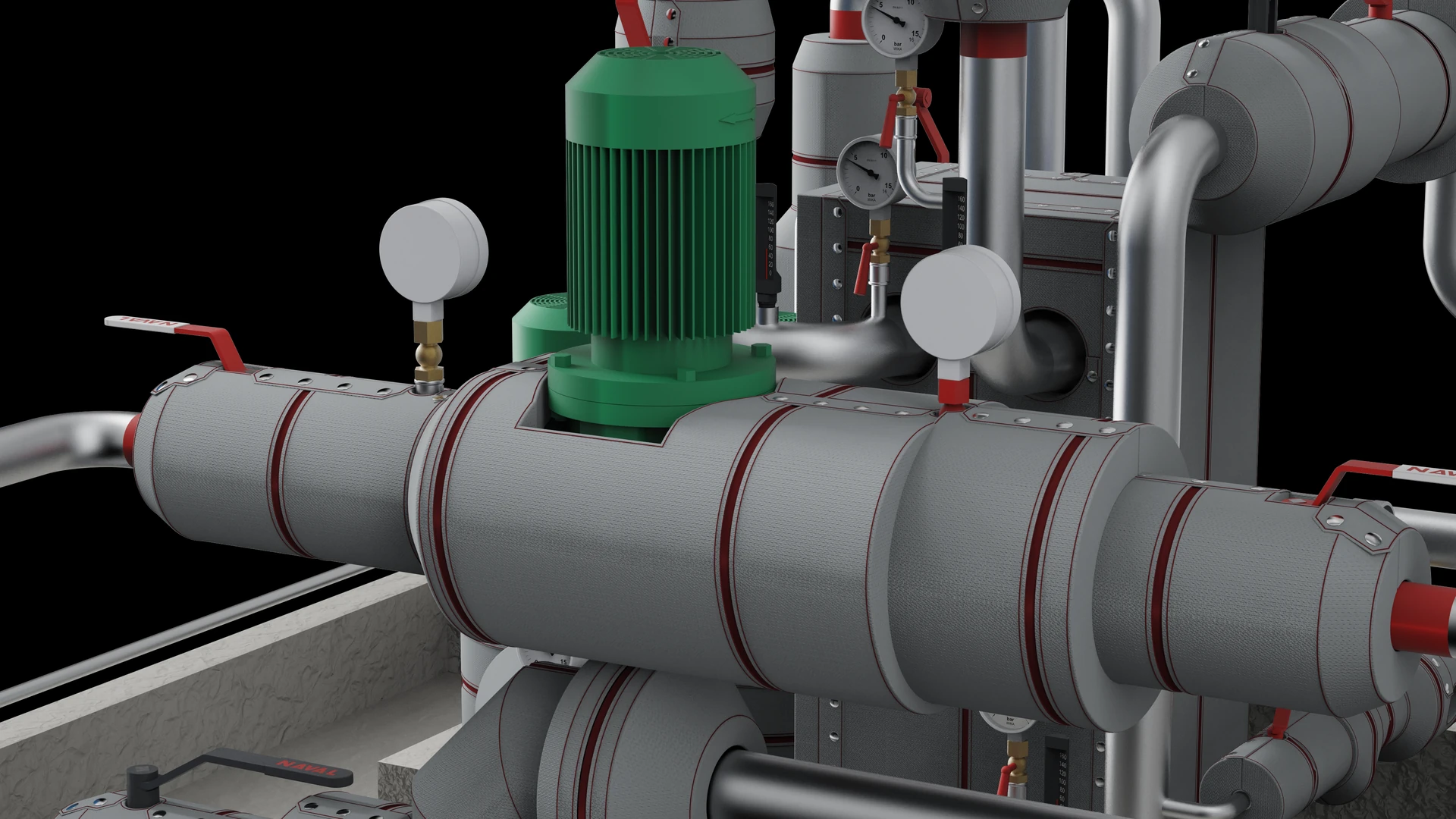
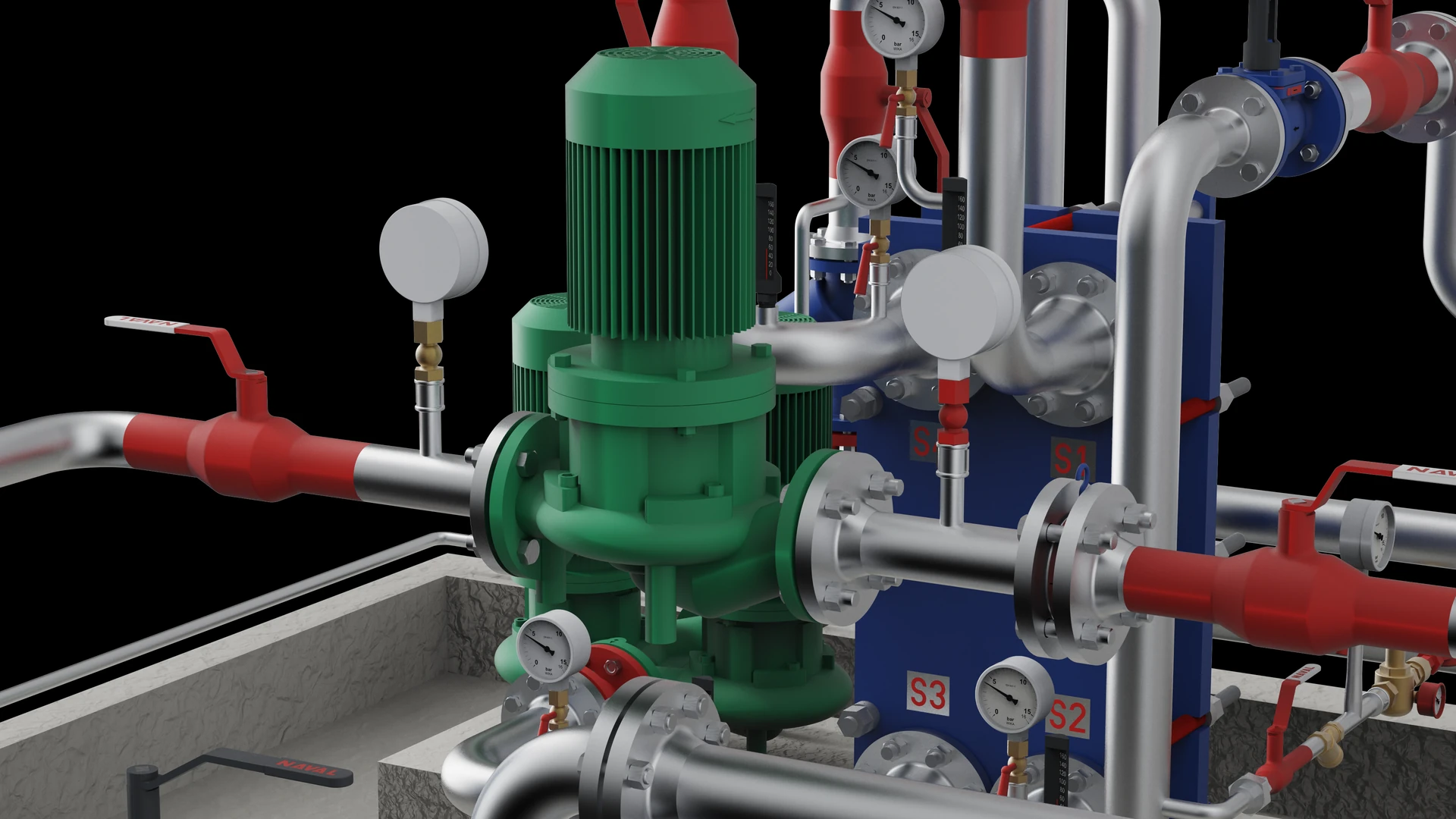
01 / Remote assessment
The equipment on this skid.
Press any element for its own before and after and its own calculator, or open the full explorer and pick it off the skid.
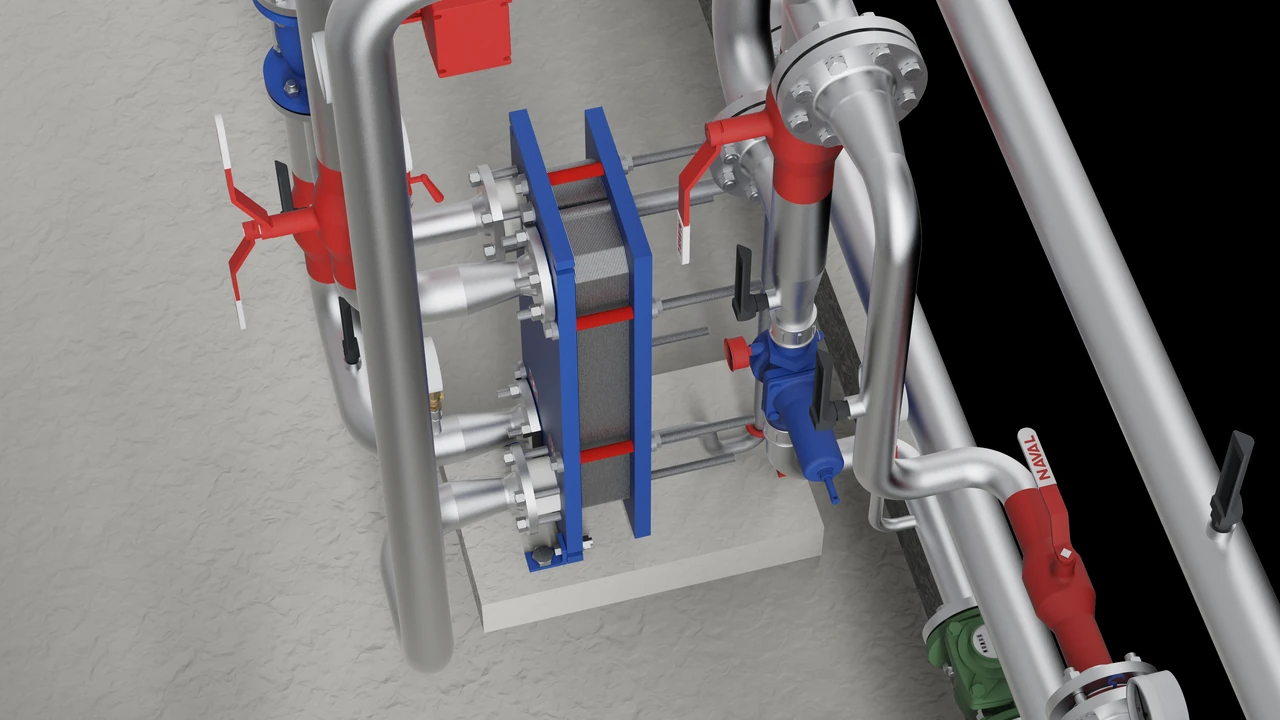
Plate heat exchangers
A plate pack runs hot on every face. Bare at 60 °C the 2 modelled here shed 5.7 kW.
Open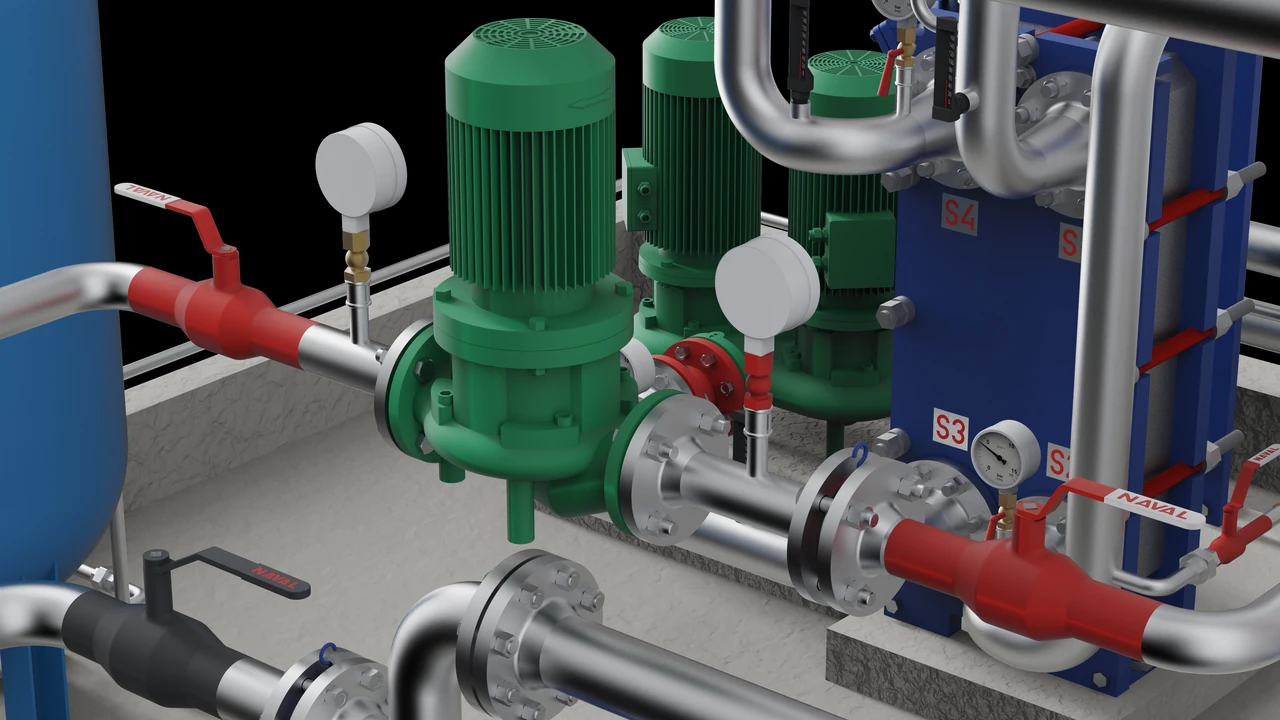
Pumps
The casing stays hot. The motor must not. Bare at 60 °C the 3 modelled here shed 1.4 kW.
Open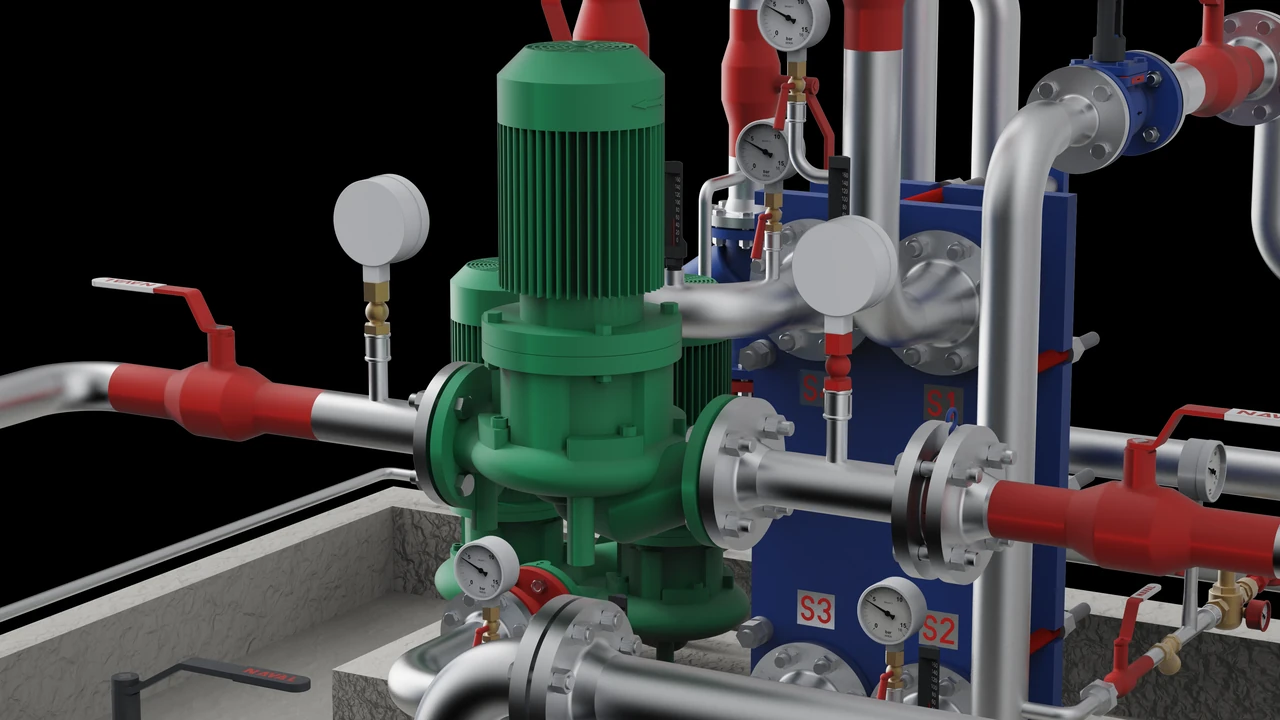
Ball valves
The smallest surfaces lose the most. Bare at 60 °C the 14 modelled here shed 1.8 kW.
Open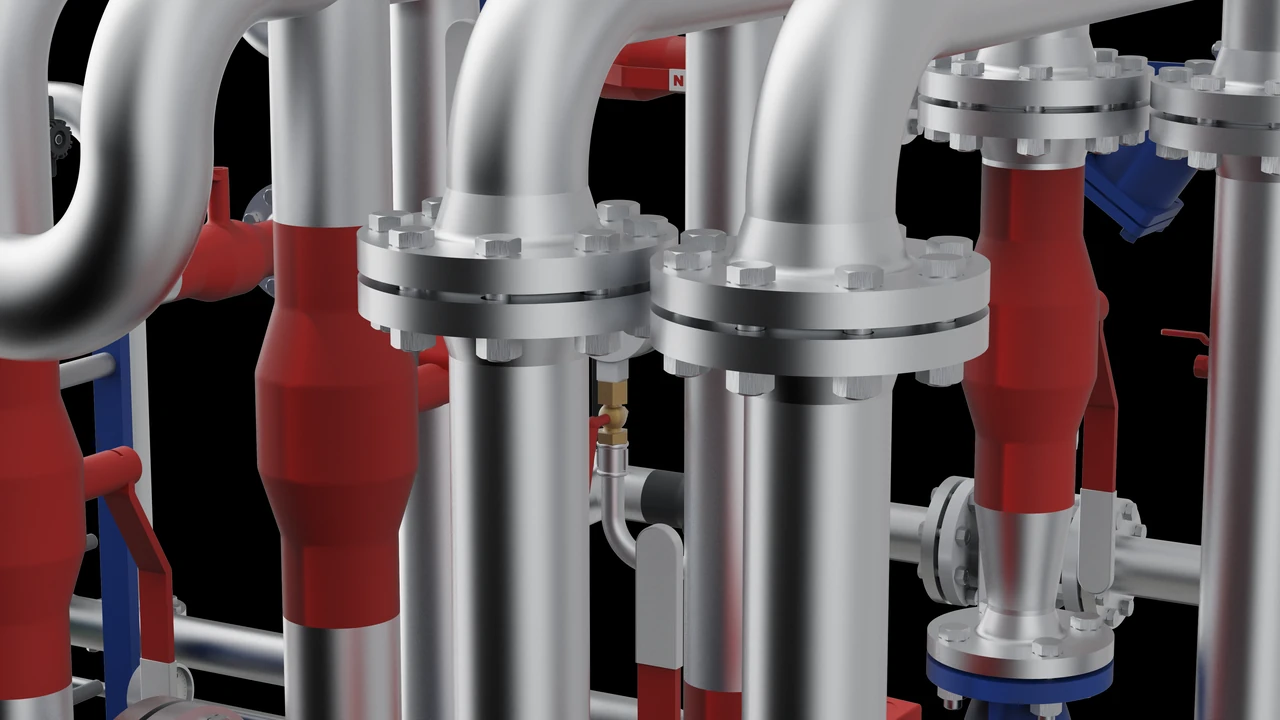
Flanged joints
Every joint is a fin the pipe did not ask for. Bare at 60 °C the 18 modelled here shed 1.9 kW.
Open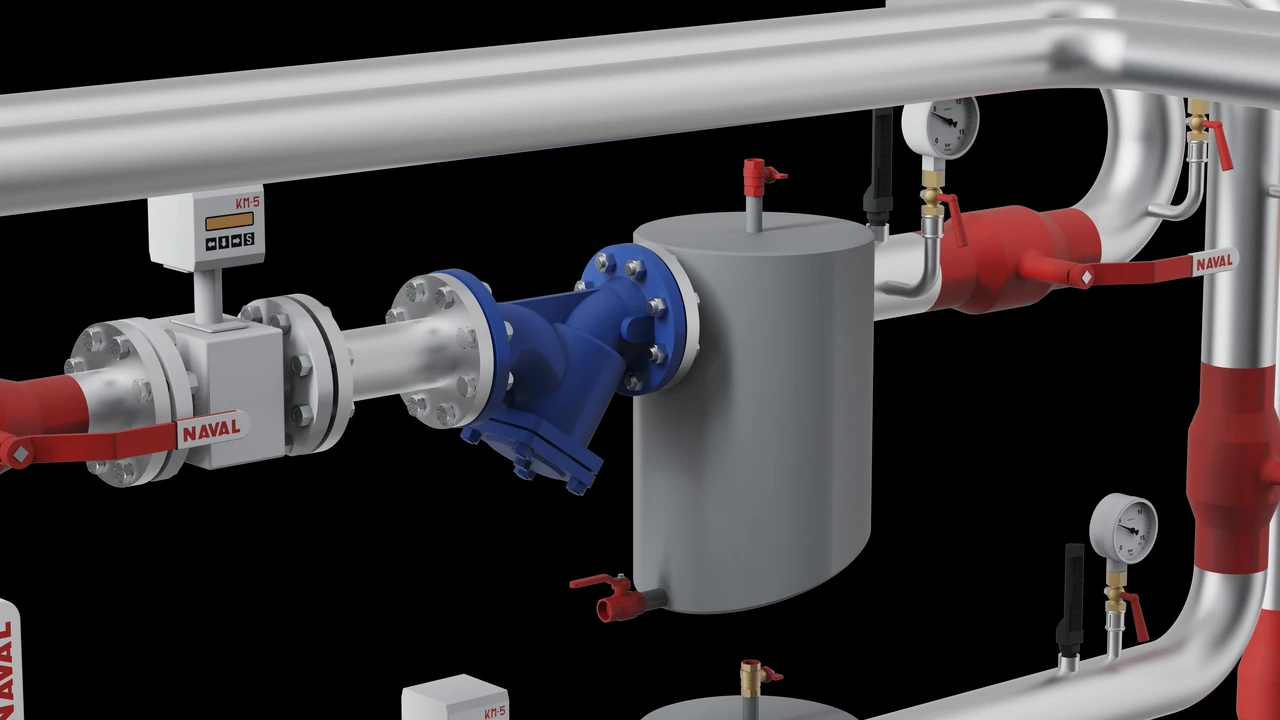
Y-strainers
A sieve in the line, and it is opened on a cycle. Bare at 60 °C the 3 modelled here shed 648 W.
Open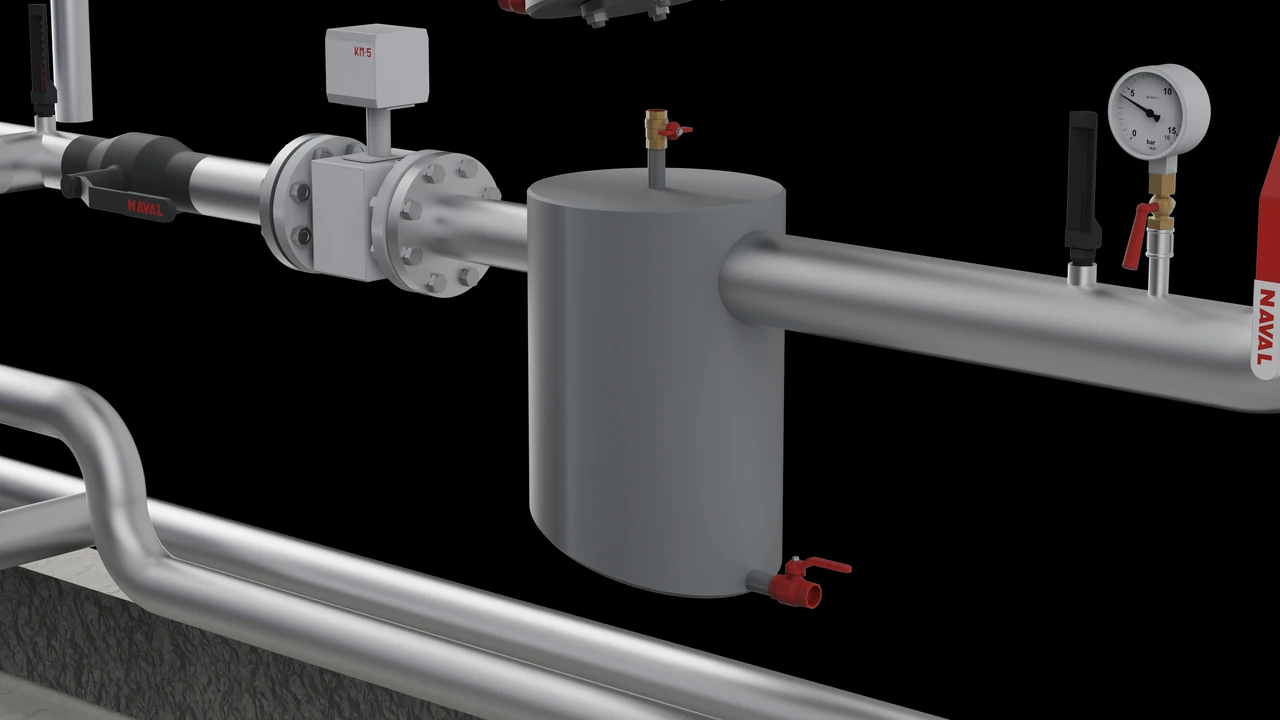
Dirt separator
A separator holds its charge at line temperature. Bare at 60 °C the 2 modelled here shed 1.6 kW.
Open02 / Tools
Your own plant.
03 / The whole skid
What the bare surfaces cost.
Defaults as modelled. Every row is editable on its own page.
| Equipment | Qty | Surface | Bare | Insulated surface | Insulated | Cut | Saving/yr |
|---|---|---|---|---|---|---|---|
| Plate heat exchangers | 2 | 60 °C | 5.7 kW | 23.5 °C | 349 W | 93.9 % | €2 865 |
| Pumps | 3 | 60 °C | 1.4 kW | 23.5 °C | 79 W | 94.3 % | €699 |
| Ball valves | 14 | 60 °C | 1.8 kW | 23.5 °C | 97 W | 94.6 % | €905 |
| Flanged joints | 18 | 60 °C | 1.9 kW | 23.5 °C | 101 W | 94.6 % | €936 |
| Y-strainers | 3 | 60 °C | 648 W | 23.5 °C | 34 W | 94.7 % | €327 |
| Dirt separator | 2 | 60 °C | 1.6 kW | 23.5 °C | 81 W | 94.7 % | €784 |
| Skid total | 42 | 13.0 kW | 741 W | 94.3 % | €6 517 |
Ambient 20 °C · 50 mm lamella at λ 0.038 W/m·K · outer surface emissivity 0.90 · outer surface calculated without clamping · boiler efficiency 0.90.
04 / Temperature against thickness
Temperature against thickness.
A hot-water circuit is designed around two numbers: what the water is held at, and how much insulation goes round it. Every row below is the whole room solved at that pair. Past 50 mm each further layer returns less, and the target column is the bare metal, not the module.
| Service | Thickness mm | Bare | Insulated | Cut | Insulated surface °C | Bare metal vs 45 °C target | Saving/yr |
|---|---|---|---|---|---|---|---|
| 50 °CDHW circulation, minimum | 30 | 9.1 kW | 877 W | 90.4 % | 24.1 | Above the 45 °C insulated-surface design target | €4 403 |
| same band | 50 | 9.1 kW | 555 W | 93.9 % | 22.7 | Above the 45 °C insulated-surface design target | €4 575 |
| same band | 80 | 9.1 kW | 358 W | 96.1 % | 21.8 | Above the 45 °C insulated-surface design target | €4 680 |
| 55 °CDHW circulation return | 30 | 11.0 kW | 1.0 kW | 90.7 % | 24.7 | Above the 45 °C insulated-surface design target | €5 323 |
| same band | 50 | 11.0 kW | 648 W | 94.1 % | 23.1 | Above the 45 °C insulated-surface design target | €5 525 |
| same band | 80 | 11.0 kW | 418 W | 96.2 % | 22.1 | Above the 45 °C insulated-surface design target | €5 647 |
| 60 °CHot water | 30 | 13.0 kW | 1.2 kW | 90.9 % | 25.3 | Above the 45 °C insulated-surface design target | €6 286 |
| same band | 50 | 13.0 kW | 741 W | 94.3 % | 23.5 | Above the 45 °C insulated-surface design target | €6 517 |
| same band | 80 | 13.0 kW | 478 W | 96.3 % | 22.4 | Above the 45 °C insulated-surface design target | €6 657 |
| 65 °CHot water, circulation | 30 | 15.0 kW | 1.3 kW | 91.2 % | 25.9 | Above the 45 °C insulated-surface design target | €7 288 |
| same band | 50 | 15.0 kW | 835 W | 94.4 % | 23.9 | Above the 45 °C insulated-surface design target | €7 549 |
| same band | 80 | 15.0 kW | 538 W | 96.4 % | 22.6 | Above the 45 °C insulated-surface design target | €7 707 |
Whole room: 42 items over 25.5 m². Lamella at λ 0.038 W/m·K, ambient 20 °C, 8,000 operating hours a year, fuel 60 €/MWh before boiler efficiency 0.90. No time to injury is calculated. Contact risk depends on material and duration. The module temperature is calculated, not capped at the 45 °C design target.
05 / What this circuit means
What it comes to.
At the modelled defaults, on this room.
- Outer surface at 50 mm
- 23.5 °CMeets the 45 °C design target
- Bare metal at 60 °C
- Above the 45 °C insulated-surface design targetContact risk depends on material and duration; no burn time is calculated
- Average payback
- Enter your installed cost to calculate payback.
06 / Questions
Questions.
What temperature should domestic hot water be stored at?
Storage and supply are normally held at 60 °C, and the circulation return is kept above 50 °C. Where the return leg is long, 65 °C is used. Those are the four bands solved on this page. The difference is not marginal: this room loses 9.1 kW at 50 °C and 15.0 kW at 65 °C from the same surfaces.
Can the temperature be lowered to save energy?
No. The band is a control band, not a comfort setting, so it is fixed by the system rather than by preference. Insulation reduces surface heat loss while the circuit maintains its required temperature. It does not eliminate every heat loss.
How much insulation is worth fitting?
On this room 30 mm cuts the loss to 1.2 kW, 50 mm to 741 W and 80 mm to 478 W. Each further layer returns less. 50 mm is the working default here rather than the thickest option.
Is the equipment safe to touch once insulated?
The bare-metal input is 60 °C. With 50 mm the modelled module settles at 23.5 °C. That is under our 45 °C insulated-surface design target, not a universal safe-contact guarantee. Material and contact duration also matter.
Which equipment on the skid loses the most?
At the modelled defaults plate heat exchangers 5.7 kW loses the most. Then flanged joints 1.9 kW, ball valves 1.8 kW, dirt separator 1.6 kW, pumps 1.4 kW, y-strainers 648 W. The order is not the order of size, because shape and orientation set it. Each family is solved separately rather than scaled from one figure.
07 / How the circuit was identified
How we read the circuit.
Read off the fittings on the render, not assumed. A KM-5 heat meter, red lever-operated NAVAL ball valves, a 0 to 16 bar gauge and an in-line dirt separator are all water-side. The steam side of the plant is a separate model and is not published here.
- Circuit
- Domestic hot water, 60 °C by default
- Valves
- NAVAL ball valves, read from the marking on the render
- Vessel
- Dirt separator, downstream of the Y-strainer
- Metering
- KM-5 heat meter upstream of the Y-strainer
- Excluded
- The blue buffer tank — not insulated, no figure on this page
08 / Deeper on each element
Instructions and specifics.
The pages above carry the before and after and the calculator. These say which type to order, how it is serviced and what goes wrong.
Plate heat exchangers
/ 01Heat exchanger typesThe first question is not the size. It is whether it can be opened.Open/ 02Cleaning a plate heat exchangerIt tells you it is fouled long before it stops working.Open/ 03Heat exchanger faultsAlmost every complaint about an exchanger is one of four things.OpenPumps
/ 04Circulation pump typesOn a hot-water circuit the choice is made three times over.Open/ 05Circulation pump faultsA pump that is running is not necessarily pumping.OpenBall valves
/ 06Ball valve typesFour choices, and only one of them is the size.Open/ 07Ball valve maintenanceThe valve you have never turned is the one that will not turn.OpenFlanged joints
/ 08Flange typesFive types cover almost everything in a plant room, and they are not interchangeable.Open/ 09Flange standards: PN, ANSI class and DINTwo flanges of the same bore, from two standards, will not meet.Open/ 10Flange gaskets and why joints leakThe metal does not seal. The gasket does, and it is the part with a life.Open09 / The rest of the circuit
What else is in the room.
Subjects rather than items on this skid: no figure of their own here, and the calculator takes your own geometry for any of them.
Plant rooms, heat networks and HIUs
One room makes the heat, and every flat above it gets a box on the wall.
OpenHot waterCorrosion under insulation
The metal you cannot see is the metal that fails.
OpenHot waterVessels in a plant room
Two blue tanks in a plant room, and they do opposite jobs.
OpenHot waterPipework and insulation thickness
Straight pipe runs lose heat too. Length, temperature and insulation determine how much.
OpenHot waterValves on a hot-water circuit
Four jobs, and a valve is bad at any job it was not built for.
Open