Steam crackers run at 850 °C and define the sector's footprint: fuel-fired furnaces dominate, with utilities and flares behind. Electric cracking and bio/circular feedstocks are the structural plays; furnace and steam efficiency is the running business. For the reporting desk that means: which frameworks bite, which KPI to disclose, and which completed measure to show. Here is the petrochemicals profile.
| Framework | Applies to petrochemicals? |
|---|---|
| EU ETS (if EU site) | Yes |
| CBAM (if exporting to EU) | No — chemicals/polymers named in the pre-2030 extension review |
| SECR (if large UK company) | Yes — energy, Scope 1+2, intensity ratio, efficiency actions |
| ESOS (if large UK undertaking) | Yes — audit by 5 Dec 2027 (Phase 4) + public action plan |
| CSRD / ESRS E1 (if large EU company) | Yes — actions (E1-3), targets (E1-4), energy (E1-5), Scope 1-3 (E1-6) |
| Customer SBTi / CDP requests | Sector-independent — arrives with the RFQ |
The intensity ratio your sector benchmarks against: ≈1 t CO2/t high-value chemicals (steam cracking; IEA). SECR requires an intensity metric of your choice; ESRS E1-5 wants energy per net revenue; CBAM (where in scope) uses exactly t CO2 per tonne of product. Reporting the same physical KPI everywhere keeps the numbers reconcilable — and auditors happy.
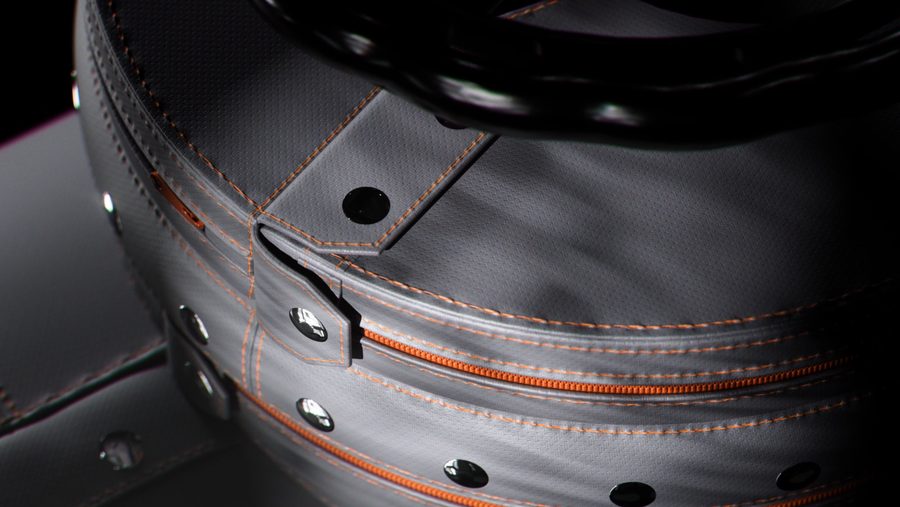
Boilers, kilns, heat exchangers, valves and steam lines lose energy continuously. Inzonex makes Inzonex Modular Insulation — snap-fastened modules engineered per temperature tier, not generic off-the-shelf jackets:
Every tonne you stop emitting is a tonne you don't have to report: cutting heat loss is a measurable, auditable Scope 1 reduction that flows straight into EU ETS, CBAM and your ESG / CSRD disclosures — not an offset, an actual emission cut.
~90% of petrochemicals CO2 is fuel-side — the share efficiency measures can touch. Heat-loss surveys typically recover 2–5% of fuel use, i.e. 1.8–4.5% of this sector's total CO2, at up to-2-year payback. Worked example at a 800,000 t HVC/yr site (≈800,000 t CO2/yr at the benchmark intensity): an insulation programme is worth 14,400–36,000 t CO2e/yr — a complete, verifiable entry for SECR disclosure 4, an ESOS progress update, ESRS E1-3 and the tender CRP, plus €1,152,144+ off the carbon bill where ETS/CBAM applies.
Generate exact figures for your own kW finding: Carbon Savings Certificate → · sector decarbonization pathway: Petrochemicals →
