Food-safety auditors do not read your energy report — they look at the state of the plant. Insulation shows up on their side of the clipboard as building fabric: clause 4.4 territory. This page lists what gets flagged and what to do about it.
| Typical audit finding | Why it is flagged | Removable-cover answer |
|---|---|---|
| Wet / stained lagging in washdown zones | Moisture ingress → CUI + microbial growth | Sealed-skin covers; unclip to dry & inspect |
| Exposed or shedding fibre near lines | Foreign-body contamination risk | Fibre fully enclosed in engineered skins |
| Voids behind metal cladding | Pest harborage, cannot inspect | No voids — cover follows the component |
| Bare hot components (deferred re-lag) | Burn risk + energy + condensation | Refits in minutes, nothing stays bare |
| Rust staining through jacket | Active CUI underneath | Routine unclip = actual inspection, not paint-over |
Food and beverage plants wash. Water finds every jacket seam, open fibre soaks, and hot steel under wet insulation corrodes — CUI is a hygiene problem wearing an engineering hat: DNV puts 40–60% of pipework maintenance cost at its feet. Meanwhile every hygiene inspection that needs the surface opened runs into the access problem: cut-and-re-lag, or sheet-metal work. So inspections get skipped, lagging stays wet, and the finding writes itself.
Per-vertical hot spots: dairy — pasteurizers, CIP, hot-water sets; brewing — kettle, mash tun, steam headers (brewery explorer); laundry — ironers & tunnel washers; general food — CIP skids, process tunnels, sterilizer lines.
Related: access-hours calculator · touch-temperature safety · materials & skins
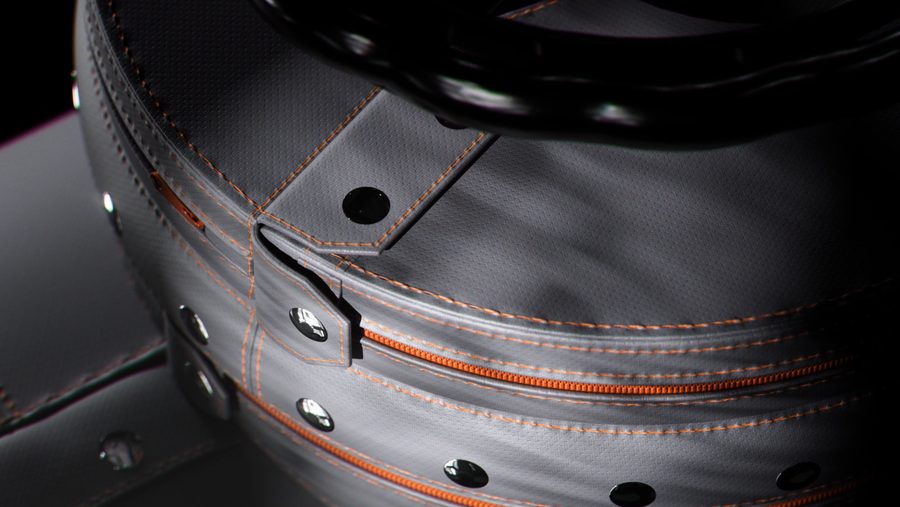
Inzonex makes modular removable insulation — structured, fitted covers with snap-button fasteners, magnets where applicable, a functional zipper, fibreglass inserts and a replaceable insulation core, tiered by temperature (needle mat / wired mat / silica), surfaces held at ≤45 °C:
