A single, current reference for the standards that govern touchable hot surfaces across US, EU and UK — and the temperature at which an industrial surface becomes a burn hazard. Built for EHS officers and plant engineers who need the rule, the number, and the fix in one place.
There is no single global hot-surface law — the requirement depends on where the plant is. This table consolidates the governing references and what each actually demands.
| Jurisdiction | Governing reference | What it requires | Note |
|---|---|---|---|
| 🇺🇸 US (federal) | OSHA General Duty Clause 29 U.S.C. §654(a)(1) | No numeric limit — must protect from recognised burn hazards | Cites ASTM C1055 (60°C) as accepted practice |
| 🇺🇸 US (state) | California Title 8 §3308 | Hot pipes/surfaces in reach must be covered/insulated or guarded | Concrete state requirement |
| 🌐 US (industry) | ASTM C1055 / C1057 | 60°C (140°F) → 2nd-degree burn in ~5 s; basis for insulation design | De-facto US benchmark |
| 🇪🇺 EU | EN ISO 13732-1 (replaces withdrawn EN 563) | Burn threshold by material × contact time (e.g. metal ~70°C at 1 s, ~43°C prolonged) | Current EU standard |
| 🇬🇧 UK | HSE guidance + EN ISO 13732-1; PUWER reg. for guarding | Risk-based; ~43–48°C for sustained contact | Duty to control contact-burn risk |
| 🏭 Inzonex spec | Design target | Outer surface ≤45°C | At/below sustained-contact threshold |
References: OSHA General Duty Clause · California Title 8 §3308 · ASTM C1055 · EN ISO 13732-1 · CENELEC Guide 29.
Burn risk is not a single number — it depends on how long skin stays in contact. ISO 13732-1 defines the threshold curve; ASTM C1055 sets the US design benchmark at 60 °C. The shorter the contact, the higher the tolerated temperature.
| Contact time | Bare-metal burn threshold | Real-world contact |
|---|---|---|
| 1 second | ≈70°C | Brief accidental brush |
| 10 seconds | ≈60°C | ASTM C1055 burn benchmark (2nd-deg ~5 s @60°C) |
| 1 minute | ≈51°C | Grip / leaning contact |
| ≥10 minutes (sustained) | ≈43°C | Prolonged contact — the strict threshold |
Values for smooth uncoated metal, indicative, per EN ISO 13732-1 / CENELEC Guide 29 Annex A — consult the standard for the full material × contact-time matrix (coated metal, ceramics and plastics tolerate higher temperatures).
Process equipment — steam lines, valves, flanges, headers, HRSG casing, exhaust ducting — routinely runs 150–550 °C bare, far above every threshold above. A bare 250 °C valve causes an instant deep burn. Two compliant routes exist: guard the surface (blocks contact only) or insulate it (blocks contact and recovers the heat).
Inzonex removable covers are engineered to hold the outer surface at ≤45 °C — at or below the ~43 °C sustained-contact threshold — so the surface is safe even for prolonged contact, while the heat that was escaping is kept in the process. Because the covers are removable, they refit after every inspection instead of being cut off and binned like fixed lagging.
Both routes satisfy the duty of care, but only one also recovers the heat. For hot process equipment the economics and the maintenance story favour insulating to ≤45 °C.
| Criterion | Guard / cage | Insulate to ≤45 °C (Inzonex) |
|---|---|---|
| Burn hazard removed | Yes (blocks contact) | Yes (surface ≤45°C) |
| Heat loss recovered | No | Yes — up to 96% less loss |
| CO₂ / energy saving | None | Direct Scope 1 cut |
| Inspection access | Often blocks it | Removable — unclips in seconds |
| Net cost | Pure cost | Pays back <2 yr (often 9–11 mo) |
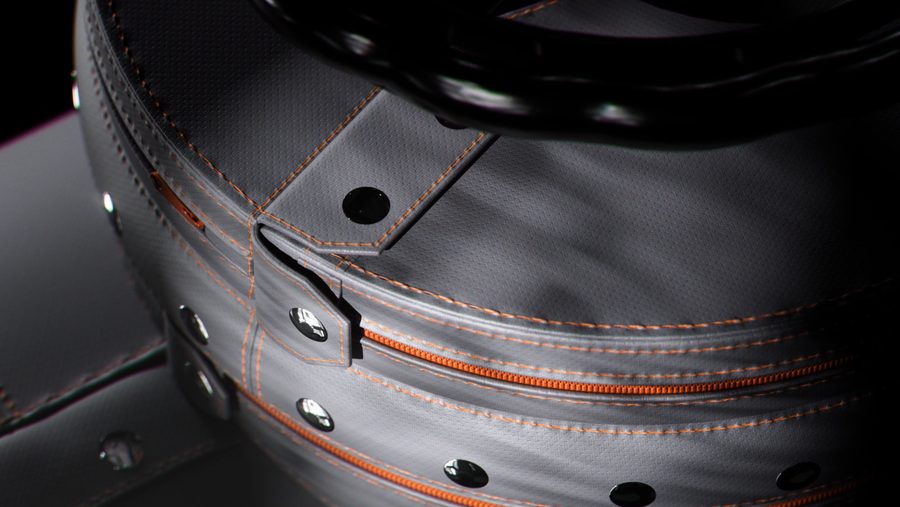
Inzonex makes modular removable insulation — engineered covers with snap-button closures, cores tiered by temperature (needle mat / wired mat / silica), surfaces held at ≤45 °C:
Tell us the surface temperature and equipment — we’ll show whether it exceeds the burn threshold and what it takes to bring it to ≤45 °C.
