Inzonex Insulation Hubpowered by inzonex.co.uk
Insulation Hub → Corrosion under insulation
Maintenance · Integrity · CUI

Corrosion Under Insulation (CUI): Causes, Temperature Range & Prevention

For maintenance managers and chief engineers, corrosion under insulation is the threat you cannot see until it fails. The fix is not less insulation — it is insulation you can open and inspect.

TL;DR. CUI is water trapped against hot steel under the jacket, corroding out of sight. It is worst from about −12 to 175 °C (API 583). A leak or wet zone under fixed lagging runs hidden until shutdown; removable covers unclip in seconds so it is caught at routine checks — removable insulation is the answer to CUI, not the cause.

What CUI is, and why it stays hidden

Corrosion under insulation attacks the pipe or vessel wall beneath the insulation and weatherproofing, where you cannot see it during operation. Moisture — rain, wash-down, a weeping flange, a small steam leak or simple condensation — gets past a damaged jacket and soaks the wool, holding water against hot metal. On carbon steel that means wall-thinning and pitting; on austenitic stainless it can mean chloride stress-corrosion cracking. The insulation is not the culprit — trapped, invisible water is.

The maintenance trap: with fixed lagging, the only way to look underneath is to cut it off and re-lag afterwards. Because that is costly, inspections get deferred — and CUI grows in exactly the lines nobody opens.

The scale of it: a widely-cited petrochemical estimate puts CUI at 40–60% of total pipework maintenance cost, and DNV attributes more than 20% of all major oil-and-gas accidents in the EU over 35 years to it. CUI is not a corner case — it is one of the largest, most under-managed integrity costs in process plant.

The CUI temperature window

CUI is worst where water can stay liquid against the steel. API 583 puts the carbon-steel window at roughly −12 °C to 175 °C; risk peaks where the surface sits warm-and-wet, and cyclic/intermittent service is the worst case because it repeatedly wets and dries.

CUI-prone window ≈ −12 to 175 °C (API 583)-20°50°100°150°200°250°300°Relative CUI risk vs surface temperature (°C)

Indicative risk profile; window per API 583 / NACE SP0198. Stainless chloride-SCC risk concentrates ~50–175 °C. Always assess to your inspection standard.

Fixed lagging vs removable covers for CUI

The single biggest lever on CUI is whether the insulation can be opened. If inspection is destructive, it is skipped; if it unclips, it happens.

For CUI managementFixed laggingRemovable cover (Inzonex)
Inspect for CUI / leaksCut off & destroyedUnclip in seconds, refit
Re-used after inspectionNo — re-lagged at costYes — same cover refits
Hidden leak foundOnly at shutdown (lagging intact)At any periodic check
Moisture ingressWet wool stays trapped on steelHydrophobic cores option; opens to dry
Inspection cost / downtimeHigh (strip + re-lag)Low (open + close)

The Inzonex CUI solution: detect it in time, stop the loss

Conventional insulation is passive — it hides the surface and gives nothing back. Inzonex builds the opposite: insulation designed so CUI is caught early and the heat loss is eliminated, by combining inspectable hardware with smart monitoring.
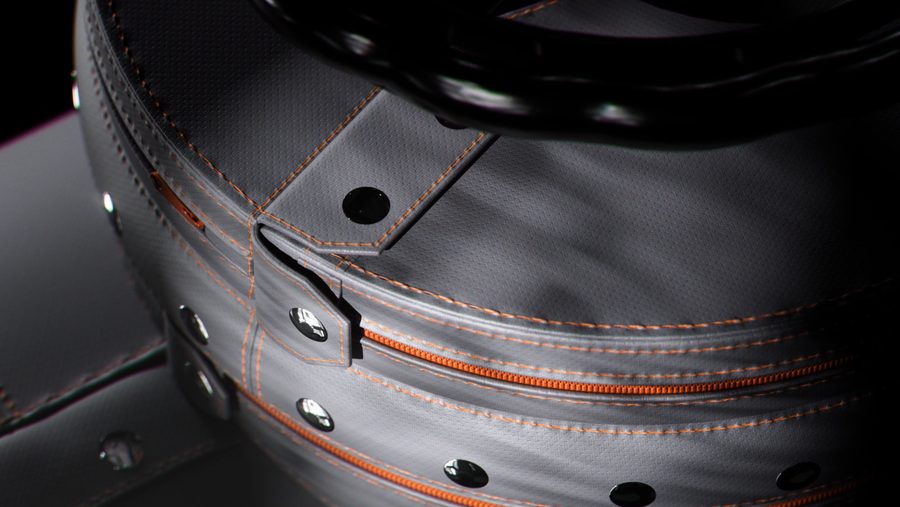
Inzonex removable modular insulation on industrial equipment
From the people who publish this data

Components that get opened need covers that come off.

Inzonex makes patented modular removable insulation — engineered covers with snap-button closures, cores tiered by temperature (needle mat / wired mat / silica), surfaces held at ≤45 °C:

  • Up to 96% less heat loss from covered components
  • 6× faster maintenance access than standard insulation jackets and metal cladding/boxes — unclips, refits, survives the cycle
  • Typical payback up to 2 years (hot, frequently-opened gear: 9–11 months)
FAQ

Questions on this topic

What is corrosion under insulation (CUI)?
CUI is corrosion of pipe or vessel walls hidden beneath the insulation, where water trapped against hot metal attacks the steel out of sight. It is one of the most expensive integrity problems in process plants precisely because it is not visible during normal operation.
Why does CUI happen?
Moisture — rain, wash-down, steam leaks or condensation — gets through a damaged jacket and soaks the insulation, holding water against the hot surface. On carbon steel this drives general/pitting corrosion; on stainless it can drive chloride stress-corrosion cracking. Insulation does not cause CUI; trapped water that cannot dry out and cannot be seen does.
At what temperature is CUI worst?
In the window where water stays liquid against the metal — roughly −12 °C to 175 °C for carbon steel per API 583, with risk peaking around 50–120 °C. Above ~175 °C the surface usually runs dry; cyclic and intermittent service is worst because it repeatedly wets and dries (see chart).
Won’t a steam leak or wet spot go unnoticed under a cover?
Under fixed lagging, yes — a leak can run until the next shutdown because the lagging is intact and no one opens it. That is exactly why removable covers matter: they unclip in seconds for a periodic visual check and refit, so a leak or wet zone is caught between turnarounds instead of after a failure. Removable insulation is the answer to this risk, not its cause.
How much does CUI cost?
A great deal — and most of it is hidden. One widely-cited petrochemical estimate puts CUI at 40–60% of total pipework maintenance cost, and DNV attributes more than 20% of all major oil-and-gas accidents in the EU over the past 35 years to CUI. The spend is dominated by lost production and emergency repair, not the metal itself, so catching a wet zone early at a routine inspection is far cheaper than the forced outage it prevents.
How do you prevent CUI?
Keep water out and let trapped water dry: sound weatherproof jacketing, correct vapour management, hydrophobic cores (e.g. aerogel) on critical lines, and — critically — inspectable insulation so wet zones and jacket damage are found and fixed. Removable covers make that inspection routine instead of destructive.
Fixed lagging vs removable covers for CUI — which is better?
Removable, for any line you ever need to inspect. Fixed lagging is cut off and binned to look underneath, so inspections are skipped to save cost — and CUI grows unseen. Removable covers unclip and refit, so inspection actually happens (see comparison).
How does Inzonex insulation detect CUI before it fails?
Two ways, built into the product. First, the covers unclip in seconds so wet zones and leaks are found at routine walk-downs instead of at shutdown. Second, paired with Inzonex’s AI thermal-imaging audit, surface hot-spots and temperature anomalies under the insulation are flagged automatically — the signatures of trapped moisture and early CUI — so issues surface while they are cheap to fix. The same cover then eliminates the heat loss (up to 96%). Detection and energy recovery in one product.

Make CUI inspection routine, not destructive

Inzonex removable covers unclip for inspection and refit — so wet zones and leaks are found between turnarounds, and the cover survives the cycle.
