"Insulation saves energy" is a slogan. Here it is as arithmetic: per line, per valve and per plant, with every assumption stated (€0.05/kWh, 8000 h/yr, 82% boiler efficiency, ASTM C680).
| System | Standing loss removed | Fuel saved /yr | € saved /yr | CO2 avoided /yr |
|---|---|---|---|---|
| DN50 steam line at 150 °C (per 100 m + fittings ≈ 110 m eq.) | 23.2 kW | 227 MWh | €11,339 | 42 t |
| DN100 process line at 250 °C (per 100 m + fittings ≈ 110 m eq.) | 78.6 kW | 767 MWh | €38,329 | 140 t |
| DN150 header at 300 °C (per 100 m + fittings ≈ 110 m eq.) | 141.2 kW | 1,378 MWh | €68,898 | 252 t |
50 mm stone wool vs bare; valves/flanges counted as equivalent length per survey practice. Full per-size tables: data library →
Across audited steam- and heat-using plants, bare and degraded insulation typically hides 2–5% of total site fuel — concentrated in components that were stripped for maintenance and never re-insulated. That's why the highest-yield energy-savings programme in most plants is not a new technology: it's a survey, a set of removable covers, and the discipline they enable. ESOS and ISO 50001 audits flag exactly this first.
Book the saving into your reporting: Carbon Savings Certificate → · the full initiative menu: 12 decarbonization initiatives →
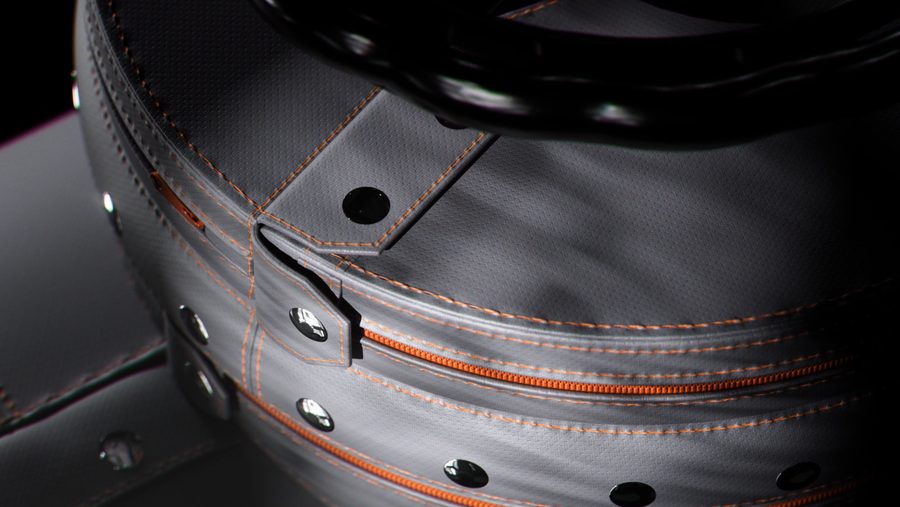
Inzonex makes modular removable insulation — engineered covers with snap-button closures, cores tiered by temperature (needle mat / wired mat / silica), surfaces held at ≤45 °C:
