Inzonex Insulation Hubpowered by inzonex.co.uk
Insulation Hub → Capital business case
Owners · Boards · CFOs · Capital allocation

The Capital Business Case for Industrial Insulation

Most decarbonization spending is a cost. Insulating hot equipment is the rare exception: it pays for itself, then keeps paying — and the return rises as carbon prices climb. For a board, it is the highest-confidence energy capex on the table.

TL;DR. Insulation cuts heat loss up to 96%, so fuel, CO₂ and carbon-allowance cost all fall together. Payback is typically under 2 years; net abatement cost is below zero — the cheapest tonne of CO₂ on the curve, cheaper than CCS (€80–135/t) or e-fuels (~€360/t). It is a no-regret capex that improves as CBAM/ETS prices rise and de-risks costly CUI failures.

Insulation is a capital decision, not a maintenance line

Boards rightly scrutinise decarbonization capex because most of it destroys value per tonne abated. Insulation inverts that. A bare hot surface is a permanent, metered cash leak: the boiler burns extra fuel every hour to replace heat lost to ambient, and you pay a rising carbon price on the resulting CO₂. Closing that leak returns more cash than it costs — so the relevant question is not “can we afford it?” but “why are we still paying to heat the air?”

The cheapest tonne of CO₂ you will ever abate

On the marginal abatement cost curve, insulation sits at the far-left — the only measure here with a net-negative cost per tonne, because the recovered fuel exceeds the cover cost. Every other lever costs real money per tonne.

Cost per tonne CO₂ avoided — insulation is the only net-negative option€0 / tInsulation(net-negative)saves moneyWaste-heatrecovery~€0–20/tFuel switchvariesCCS€80–135/tE-fuels≈€360/t

CCS €80–135/t and e-fuel ≈€360/t: Swedish industrial MACC case study (Frontiers in Energy Research, 2020); efficiency measures net-negative across published MACCs (IEA, McKinsey).

A hedge that grows with the carbon price

Because the saving is denominated in tonnes of CO₂ avoided, its value rises automatically as EU-ETS free allocation phases out and CBAM ramps to full liability by 2034. The same insulated line is worth more every year — on top of the fuel it saves.

Annual carbon cost avoided per 100 m line (128 t CO₂/yr) as carbon price rises€9,5652026 · €75/t€12,1152028 · €95/t€14,6662030 · €115/t€16,5792032 · €130/t€18,4922034 · €145/tIllustrative EU carbon-price path; base €75/t = Q1 2026 CBAM reference. On top of the fuel saving, every year.

Insulate now vs do nothing vs big-ticket abatement

Capital lensInsulate nowDo nothingCCS / e-fuels
Up-front capitalLow, per-componentDefer — bare surface keeps losingHigh capex (CCS/e-fuel)
Net cost per t CO₂Cost-negativeRising fuel + carbon bill€80–360 / t
Payback<2 yearsNever (pure loss)10 yr+ / none
Carbon-cost exposureFalls (less fuel burned)Grows with ETS/CBAMFalls (captured)
Time to valueWeeksYears
Asset integrity / CUIInspectable, de-riskedCUI grows unseen → outage riskUnaffected
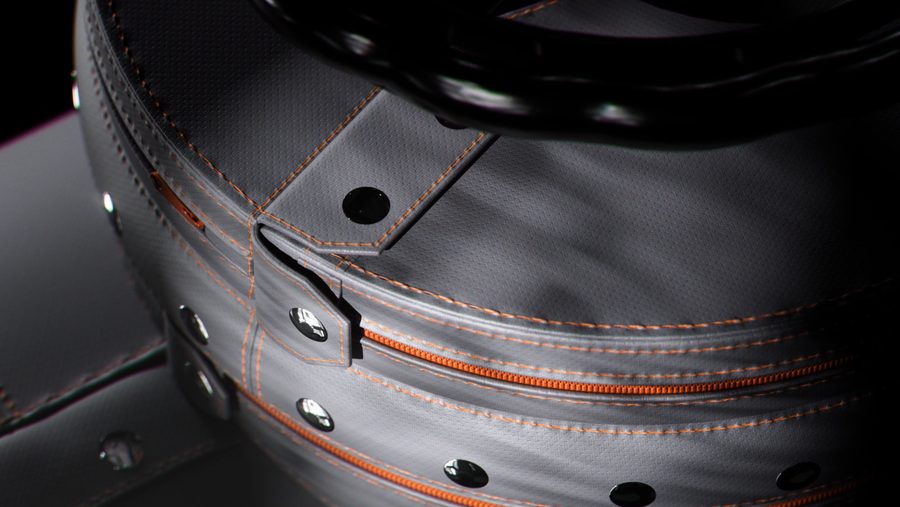
Inzonex removable modular insulation on industrial equipment
From the people who publish this data

Components that get opened need covers that come off.

Inzonex makes patented modular removable insulation — engineered covers with snap-button closures, cores tiered by temperature (needle mat / wired mat / silica), surfaces held at ≤45 °C:

  • Up to 96% less heat loss from covered components
  • 6× faster maintenance access than standard insulation jackets and metal cladding/boxes — unclips, refits, survives the cycle
  • Typical payback up to 2 years (hot, frequently-opened gear: 9–11 months)
FAQ

Questions on this topic

Why should an owner or CFO care about insulation specifically?
Because it is one of the very few decarbonization measures that makes money. A bare hot surface burns fuel around the clock to replace heat it loses to air; insulating it cuts that loss up to 96%, so fuel spend, CO₂ and carbon-allowance cost all fall together. Payback is typically under two years, after which it is pure margin — it behaves like a high-IRR efficiency capex, not a compliance cost.
What is the return on insulating hot equipment?
On a single 100 m line at 250 °C, insulation recovers about 696,890 kWh/yr of fuel (~€34,845/yr, ~128 t CO₂/yr) versus bare — computed to ASTM C680. Across a plant’s bare valves, flanges and lines the recovered fuel is typically 2–5% of site fuel spend, at a payback under two years, giving an IRR most efficiency projects cannot match.
Isn’t it cheaper to just wait?
No — waiting is the expensive option. Every month a surface runs bare it burns fuel and emits CO₂ you pay a rising carbon price on; the ‘saving’ from deferring the capex is dwarfed by the recurring loss. Doing nothing is a guaranteed, growing cash outflow with no payback — the only option in the comparison that never turns positive.
How does insulation protect us against carbon cost (CBAM/ETS)?
Every tonne of CO₂ you stop emitting is a tonne you no longer buy an allowance for. At the Q1 2026 CBAM reference ~€75/t, a single 100 m line avoids roughly €9,565/yr in carbon cost on top of the fuel saving — and as EU-ETS free allocation phases out and CBAM ramps to full liability by 2034, that hedge grows every year (see chart). Insulation is one of the few capexes whose return improves as carbon prices rise.
How does this compare to CCS or fuel switching as a use of capital?
It beats them on every capital metric. Insulation sits at the far-left of the marginal abatement cost curve — net-negative €/t — while CCS runs €80–135/t and e-fuels ≈€360/t. It also reduces the heat demand that any later heat-pump, fuel-switch or CCS project must serve, shrinking the size and cost of those projects. It is the no-regret first allocation of decarbonization capital.
What is the risk of NOT insulating, beyond energy?
Asset-integrity and safety exposure. Bare or wet surfaces drive corrosion under insulation — industry attributes 40–60% of pipework maintenance cost and >20% of major EU oil-&-gas accidents (DNV) to CUI — meaning unplanned outages and emergency capex. Hot surfaces are also a burn-injury and regulatory liability. Removable, inspectable insulation converts those tail risks into a routine, budgeted line.
Why removable insulation rather than conventional lagging, financially?
Conventional lagging is destroyed every time maintenance opens it, so each turnaround re-buys and re-fits it. Removable covers unclip in seconds and refit — up to 6× faster maintenance access than standard insulation jackets and metal cladding/boxes — and are re-used across many cycles. You pay once and keep the surface insulated and touch-safe (≤45 °C) instead of re-lagging or running bare. Lower whole-life cost, not just lower energy.

Put a number on the capital case

See the fuel, € and CO₂ a removable cover recovers across your hot equipment — and how the carbon-cost hedge compounds.