For sustainability and ESG leaders under CSRD, SECR and CBAM, insulating hot equipment is the single cheapest way to cut Scope 1 — it is cost-negative, deploys in weeks, and the reduction is reported and auditable, not offset.
Scope 1 covers CO₂ from fuel combusted on site. Every bare hot valve, flange, header and line loses heat to ambient around the clock; the boiler burns extra fuel to replace it. That replacement fuel is Scope 1 emissions you are paying for and reporting. Insulate the surface and the loss — and the fuel, and the CO₂ — drop together:
kg CO₂ saved/yr = (heat loss avoided, kW) × hours × (fuel emission factor ÷ boiler efficiency) — heat loss to ASTM C680; factor 0.183 kg/kWh (gas, DESNZ 2024); efficiency ~82%.
The hotter the surface, the larger the Scope 1 saving. Below: CO₂ avoided per 100 m of DN100 line with 50 mm of mineral wool versus bare, computed to ASTM C680.
| Surface temp | Bare loss (100 m) | Insulated loss | Scope 1 CO₂ saved |
|---|---|---|---|
| 120 °C | 35.9 kW | 4.0 kW | 57 t/yr |
| 180 °C | 57.5 kW | 6.9 kW | 90 t/yr |
| 250 °C | 82.6 kW | 11.2 kW | 128 t/yr |
| 350 °C | 118.5 kW | 18.5 kW | 178 t/yr |
| 450 °C | 154.4 kW | 28.2 kW | 225 t/yr |
Per 100 m DN100, 50 mm stone wool, 8000 h/yr, gas at 0.183 kg CO₂/kWh ÷ 82% boiler efficiency. Your line length, fuel and thickness scale the result — size it in the calculator.
On the marginal abatement cost curve, energy-efficiency measures sit at the far-left — they pay for themselves. Insulation is the clearest example: the recovered fuel returns more than the cover costs, so the cost per tonne avoided is below zero. Capital-heavy options sit far to the right.
| Scope 1 measure | Abatement cost | Payback | Complexity |
|---|---|---|---|
| Insulation / steam-system efficiency | Net-negative (saves more than it costs) | <2 yr (often 9–11 mo) | ★☆☆☆☆ |
| Waste-heat recovery | Low — often net economic benefit | 3–5 yr | ★★★☆☆ |
| Fuel switch (gas→bio/electric) | Moderate–high, varies | 5–10 yr | ★★★★☆ |
| CCS (industrial) | €80–135 / t CO₂ | 10 yr+ | ★★★★★ |
| E-fuels | ≈ €360 / t CO₂ | — | ★★★★★ |
Right-hand anchors: CCS €80–135/t and e-fuel ≈€360/t from a Swedish industrial MACC case study (Frontiers in Energy Research, 2020); efficiency measures are net-negative across published MACCs (McKinsey, IEA). Insulation cost shown qualitatively — it is site-specific but consistently cost-saving.
Both reduce reported Scope 1, but the economics are opposite ends of the curve. Insulation also lowers the heat demand that any later capital measure must supply — so doing it first shrinks everything downstream.
| Insulate to ≤45 °C | CCS / e-fuels | |
|---|---|---|
| Up-front cost | Low (cover per component) | High capex |
| Net abatement cost | Cost-negative | €80–360 / t |
| Heat / fuel saved | Yes — up to 96% per component | No (CCS adds energy load) |
| Time to deploy | Weeks | Years |
| Counts as Scope 1 cut | Yes (less fuel burned) | Yes (captured) |
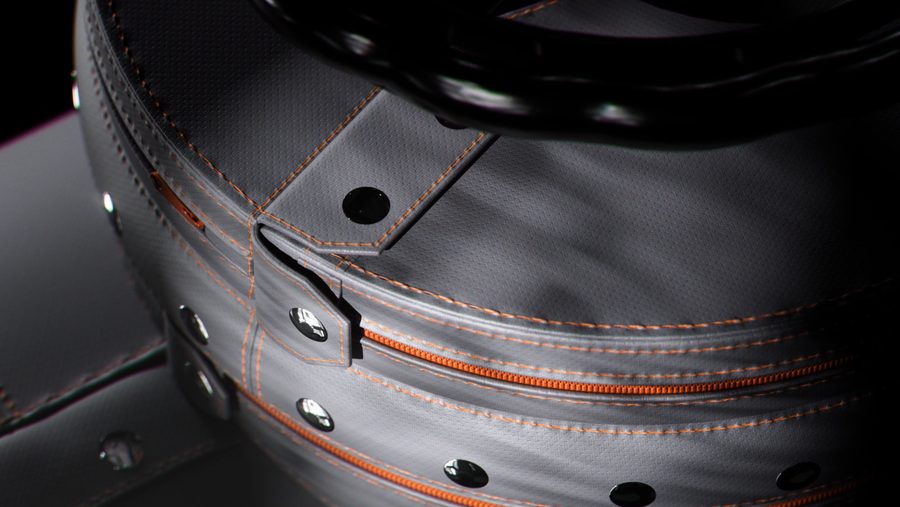
Inzonex makes modular removable insulation — engineered covers with snap-button closures, cores tiered by temperature (needle mat / wired mat / silica), surfaces held at ≤45 °C:
Enter a surface temperature, fuel and area — see the kWh, € and t CO₂/yr insulation removes from your Scope 1.
