Inzonex Insulation Hubpowered by inzonex.co.uk
Insulation Hub → Steam system heat loss
Utilities · Steam · energy efficiency

Steam System Heat Loss: How Much Your Distribution Network Wastes

For the utilities manager who runs the steam network, the biggest hidden loss is not one component — it is the whole distribution system: every bare main, header, valve and flange leaking heat around the clock.

TL;DR. A bare 100 m DN100 steam main at 16 bar (~204 °C) loses ~30 kW continuously; valves and flanges add more. Across a site, bare steam components waste 2–5% of plant fuel. Removable insulation recovers up to 96% of that, holds surfaces at ≤45 °C, and unclips for valve/trap access.

Where a steam system loses heat

Steam distribution loss is cumulative and network-wide: long runs of main and header, plus the high-loss hotspots — valves, flanges, strainers, pumps and unlagged tie-ins that are routinely left bare because fixed lagging is awkward to fit and cut off for maintenance. Those bare fittings punch above their length: a single bare DN100 valve can lose as much heat as several metres of bare pipe.

Computed: heat loss by steam pressure

The higher the pressure, the hotter the steam and the larger the loss. Below: heat loss per 100 m of DN100 main, bare vs 50 mm mineral wool, at standard saturated-steam temperatures (ASTM C680).

Heat loss per 100 m steam main — bare vs 50 mm insulated (kW)bareinsulated5065 bar / 159°C59710 bar / 184°C66816 bar / 204°C741025 bar / 226°C831140 bar / 252°C
PressureSteam tempBare loss (100 m)InsulatedLoss cutCO₂ saved/yr
5 bar g159 °C49.9 kW5.8 kW88%79 t/yr
10 bar g184 °C58.9 kW7.1 kW88%92 t/yr
16 bar g204 °C66.1 kW8.3 kW87%103 t/yr
25 bar g226 °C74.0 kW9.6 kW87%115 t/yr
40 bar g252 °C83.3 kW11.3 kW86%129 t/yr

Per 100 m DN100, 50 mm stone wool, 8000 h/yr, gas 0.183 kg CO₂/kWh ÷ 82% efficiency. Valves/flanges add discrete losses on top — quantify your network in the calculator.

Bare / fixed-lagged vs removable insulation

The steam network needs constant access — valves operated, traps checked, flanges broken. That is why fixed lagging gets cut off and not replaced, leaving permanent bare spots. Removable covers refit after every intervention.

Per steam main / valveBare or fixed-laggedRemovable insulation
Heat held in the steamLost continuouslyUp to 96% retained
Surface temperature150–250 °C — burn hazard≤45 °C touch-safe
Inspection / valve accessLagging cut offUnclips in seconds
Re-used after maintenanceNoYes — refits
Fuel & CO₂WastedRecovered (Scope 1 cut)
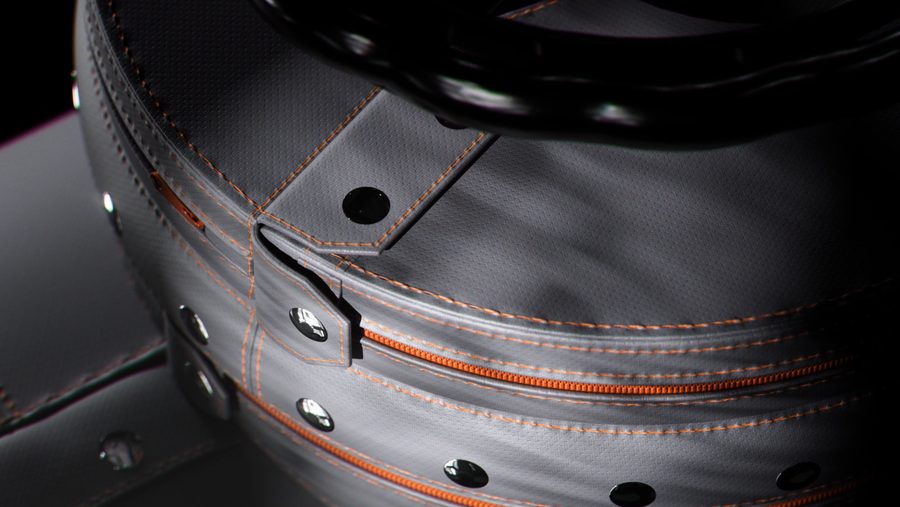
Inzonex removable modular insulation on industrial equipment
From the people who publish this data

Components that get opened need covers that come off.

Inzonex makes patented modular removable insulation — engineered covers with snap-button closures, cores tiered by temperature (needle mat / wired mat / silica), surfaces held at ≤45 °C:

  • Up to 96% less heat loss from covered components
  • 6× faster maintenance access than standard insulation jackets and metal cladding/boxes — unclips, refits, survives the cycle
  • Typical payback up to 2 years (hot, frequently-opened gear: 9–11 months)
FAQ

Questions on this topic

How much heat does a steam system lose?
More than most plants realise, because the loss is spread over the whole network — mains, headers, valves, flanges, traps and unlagged sections. A single bare 100 m DN100 main at 16 bar (~204 °C) loses on the order of 30+ kW continuously; across a site’s bare components the total is typically 2–5% of plant fuel. See the computed table by pressure.
Why insulate steam lines if they are already lagged?
Much fixed lagging is missing, damaged or stripped at valves and flanges — and those bare spots dominate the loss because heat escapes fastest at the hottest, most-disturbed points. Valves and flanges are the components most often left bare, yet a single bare DN100 valve can lose as much as several metres of pipe.
How much CO₂ and fuel does insulating steam lines save?
It scales with pressure (temperature). At 16 bar, 50 mm of mineral wool on 100 m of DN100 recovers roughly 90%+ of the bare loss — tens of kW, tens of tonnes of CO₂ a year per 100 m. Size your network with the heat-loss calculator.
Steam traps vs insulation — which matters more?
Both, and they are complementary: failed steam traps waste live steam, while bare surfaces waste heat through the wall. A proper steam survey covers traps and insulation condition; fixing traps without insulating (or vice-versa) leaves money on the table. Removable covers also let you reach traps and valves without cutting lagging.
What is the fastest way to find steam-system losses?
A walk-down survey: thermal imaging or simple touch-temperature on mains, headers, valves and flanges flags bare and damaged sections; the calculator then quantifies kW, € and CO₂ per item so you can prioritise. Bare valves and flanges are almost always the top hits.
Does a hot steam line need a guard for burns too?
A 200 °C bare steam line is well above every burn threshold. Insulating it to ≤45 °C solves the burn hazard and the heat loss in one step — see hot-surface standards.

Quantify your steam-system loss

Enter pressure, pipe size and length — see the kW, € and t CO₂/yr your bare steam network is losing, and what insulation recovers.