Inzonex Insulation Hubpowered by inzonex.co.uk
Insulation Hub → Heat loss by climate
Engineering · Heat loss · Climate

Heat Loss by Climate: How Ambient Temperature & Wind Change Bare-Surface Losses

An identical bare hot surface does not lose the same amount of heat everywhere. Colder air and — above all — wind push the loss far higher, which means the case for insulating is strongest in exactly the climates that feel harshest.

TL;DR. The same bare 250 °C surface loses ~4.9 kW/m² in calm, mild air but up to ~2.5× that in a cold, windy climate. Wind dominates: still→10 m/s roughly triples the loss, while −40 °C of ambient swing adds only ~10%. So windy-mild Reykjavik loses more than calm-cold Moscow — and insulation pays back fastest where the weather is worst.

Two effects stack: temperature difference and wind

Bare-surface heat loss is governed by the surface-to-ambient temperature difference (ΔT) and the surface heat-transfer coefficient (how fast that heat is carried away). Climate moves both:

Bare 250 °C surface at 0 °C ambient — heat loss vs wind (W/m²)5.1 kW/m²Still air10.3 kW/m²Breeze 5 m/s15.1 kW/m²Wind 10 m/sWind roughly triples the loss from still air — the dominant climate driver (ASTM C680 / ISO 12241).

The counterintuitive result: windy-mild beats calm-cold

Because wind outweighs temperature, the harshest heat-loss climates are not the coldest — they are the windiest. A mild but exposed maritime site (Reykjavik, Amsterdam, the UK coast) loses more from a bare surface than a bitterly cold but sheltered continental site. Below: typical-winter loss for representative climates, sorted, with the excess over a calm-20 °C baseline.

Bare 250 °C surface — typical-winter heat loss by climate (kW/m², excess vs calm-20 °C)7.0 kW · +42%Singapore (2 m/s)7.3 kW · +50%Milan (1.8 m/s)7.8 kW · +59%Los Angeles (2.5 m/s)8.7 kW · +77%Riyadh (3.5 m/s)9.0 kW · +83%Dubai (4 m/s)9.5 kW · +93%Moscow (3.5 m/s)9.9 kW · +101%London (4.5 m/s)10.0 kW · +105%Calgary (4 m/s)10.4 kW · +113%Amsterdam (5 m/s)11.2 kW · +128%Murmansk (5 m/s)12.0 kW · +146%Reykjavik (6.5 m/s)Note: windy-mild Reykjavik & Amsterdam lose MORE than calm-cold Moscow — wind outweighs temperature.

Climate severity bands (A–D)

Grouping the 24-zone matrix by how much extra heat a bare surface loses gives four practical bands. Most of industrial Europe and North America sits in C–D — the bands where insulation pays back fastest.

Severity bandExcess heat lossTypical climateExamples
A — Benign< +55%Warm & sheltered (tropical, calm Mediterranean)Singapore, Milan
B — Moderate+55 to +85%Mild but exposed, or hot-dry windyMadrid, Dubai, Houston
C — Severe+85 to +110%Cold continental or windy-temperateMoscow, London, Berlin
D — Extreme> +110%Cold AND windy, or windy maritimeReykjavik, Murmansk, Amsterdam

The 24-zone matrix (representative rows)

Bare 250 °C reference surface, per m², computed to ASTM C680 / ISO 12241. "Still" and "@10 m/s" bracket the wind range; "excess" is versus a calm-20 °C baseline (4.9 kW/m²).

Climate (city)KöppenWinter TTyp. windLoss still (kW/m²)Loss @10 m/sExcess · band
SingaporeAf24 °C2 m/s4.913.8+42% · A
HoustonCfa2 °C3.5 m/s5.115.0+80% · B
DubaiBWh14 °C4 m/s5.014.3+83% · B
MadridCsa-2 °C3 m/s5.215.2+73% · B
MoscowDfb-22 °C3.5 m/s5.416.2+93% · C
LondonCfb-1 °C4.5 m/s5.215.1+101% · C
BerlinDfb-8 °C3.8 m/s5.215.5+92% · C
CalgaryDfc-24 °C4 m/s5.416.3+105% · C
AmsterdamCfb-4 °C5 m/s5.215.3+113% · D
ChicagoDfa-16 °C4.5 m/s5.315.9+111% · D
MurmanskDfc-27 °C5 m/s5.416.4+128% · D
ReykjavikCfc-8 °C6.5 m/s5.215.5+146% · D

Range across all 24 zones: from +42% (Singapore) to +146% (Reykjavik). Full open dataset (all zones × wind levels) published as CSV with methodology — size your own site in the calculator. Ambient = representative winter-design normals; wind shown parametrically. Method is standard C680; the contribution is the systematic, citable multi-zone comparison.
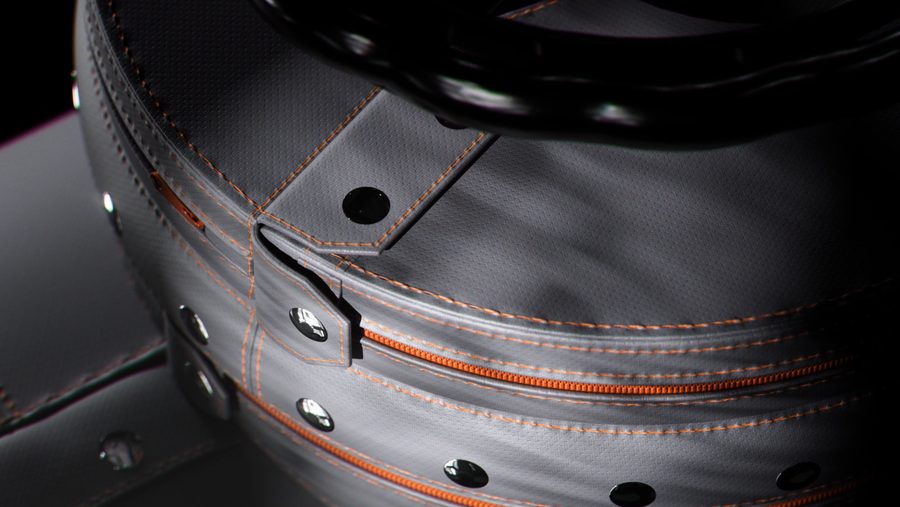
Inzonex removable modular insulation on industrial equipment
From the people who publish this data

Components that get opened need covers that come off.

Inzonex makes patented modular removable insulation — engineered covers with snap-button closures, cores tiered by temperature (needle mat / wired mat / silica), surfaces held at ≤45 °C:

  • Up to 96% less heat loss from covered components
  • 6× faster maintenance access than standard insulation jackets and metal cladding/boxes — unclips, refits, survives the cycle
  • Typical payback up to 2 years (hot, frequently-opened gear: 9–11 months)
FAQ

Questions on this topic

Does climate really change how much heat a surface loses?
Yes — substantially. The same bare 250 °C surface loses about 4.9 kW/m² in calm, mild conditions but over twice that in a cold, windy climate. Two effects stack: colder ambient air means a larger temperature difference (ΔT) to drive the loss, and wind raises the surface heat-transfer coefficient. In our 24-zone matrix the worst climates lose up to ~2.5× more than the benign baseline.
Which matters more for heat loss — cold or wind?
Wind, by a clear margin. Dropping the ambient from +20 °C to −20 °C raises the loss of a 250 °C surface by only ~10% (the surface is so hot that ΔT barely changes). But going from still air to 10 m/s of wind roughly triples the loss. That is why windy-mild sites like Reykjavik and Amsterdam lose more than calm-cold Moscow (see the zone chart) — a result most people find counterintuitive.
How much more does a cold, windy site lose than a warm one?
On the parametric matrix, a benign warm/calm climate is the baseline; a cold-and-windy maritime climate (e.g. Reykjavik, 6.5 m/s) loses about 2.4–2.5× as much from the same bare surface. That means a bare valve or line in northern/coastal Europe is wasting far more fuel — and is a far stronger insulation case — than the identical component in a sheltered inland plant.
How is this calculated?
Heat loss is computed with the standard ASTM C680 / ISO 12241 method: a combined surface coefficient (forced convection that rises with wind speed, plus linearised radiation at emittance 0.8) multiplied by the surface-to-ambient temperature difference, for a bare 250 °C reference surface. Ambient temperatures are representative winter-design normals for each zone; wind is shown parametrically (still / 5 / 10 m/s) and at a typical zone value. The method is standard — what we add is the systematic, citable multi-zone comparison.
Does my specific region change the payback on insulation?
Yes — favourably, almost everywhere outside the warm-and-calm band. Because cold and (especially) windy sites lose more heat from every bare surface, the fuel and CO₂ an insulation cover recovers is larger there, so payback is faster in exactly the climates that feel least forgiving. Size it for your site, ambient and wind in the heat-loss calculator.
Why don’t bare-surface heat-loss figures usually mention climate?
Most published loss figures assume a single still-air, mild-ambient condition, so they understate the loss for any cold or windy site — which is most industrial Europe and North America. Ignoring wind in particular can underestimate the real loss (and the saving from insulating) by 2–3×. Our matrix makes the climate dependence explicit so the business case is honest for your location.
Where does this leave the case for removable insulation?
Stronger the harsher the climate. Wind and weather are also what damage and wet conventional lagging — and a wet, wind-stripped jacket loses heat like a bare surface and drives CUI. Removable covers seal the surface, hold it touch-safe (≤45 °C), recover up to 96% of the loss, and unclip for inspection so weather damage is caught and refitted rather than left open.

Find the heat loss for your climate

Enter your surface temperature, ambient and wind — the calculator returns the real kW, fuel and CO₂ a removable cover recovers at your site.
