For design engineers, “how thick?” is an economics question, not a guess. Economic thickness is the point where the total cost — energy + insulation — is lowest.
Insulation does not save heat linearly. Conductive resistance grows with the log of the radius ratio, so the biggest cut comes from the first layers; beyond that, each millimetre buys less. Computed for a DN100 line at 250 °C (stone wool, ASTM C680):
| Thickness | Heat loss | Loss cut vs bare | Saved (100 m) |
|---|---|---|---|
| 0 mm | 826 W/m | 0% | 0 €/yr |
| 25 mm | 177 W/m | 79% | 31 644 €/yr |
| 50 mm | 112 W/m | 86% | 34 845 €/yr |
| 75 mm | 86 W/m | 90% | 36 088 €/yr |
| 100 mm | 72 W/m | 91% | 36 759 €/yr |
| 125 mm | 64 W/m | 92% | 37 184 €/yr |
| 150 mm | 58 W/m | 93% | 37 480 €/yr |
Per metre / per 100 m, gas at 0.05 €/kWh ÷ 82% efficiency, 8000 h/yr (ASTM C680). The economic optimum also depends on installed insulation cost and carbon price — run your case.
The total-cost curve is U-shaped: energy cost dominates on the thin side, material cost on the thick side. The minimum is the economic thickness.
| Too thin | Economic thickness | Too thick | |
|---|---|---|---|
| Heat loss | High — money out the door | Near-minimum | Marginally lower |
| Insulation cost | Lowest | Balanced | Highest |
| Total lifetime cost | High (energy dominates) | MINIMUM | Higher (material dominates) |
| When it is right | Never for hot service | Most industrial service | Space/CO₂-critical, high carbon price |
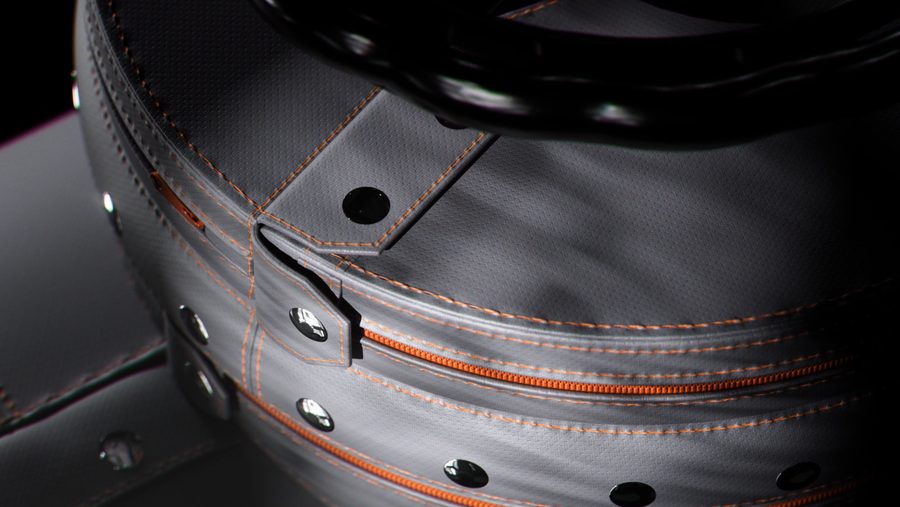
Inzonex makes modular removable insulation — engineered covers with snap-button closures, cores tiered by temperature (needle mat / wired mat / silica), surfaces held at ≤45 °C:
Enter temperature, pipe size, fuel and carbon price — see heat loss and savings by thickness, and where the economic optimum lands.
