
Heat-loss reduction planning cap, with retained heat shown in kW or MW.
HRSG unit · HP and IP lines
Removable HRSG insulation built around the parts you inspect
Inzonex removable HRSG insulation is designed around Upper and Lower HP / IP line support flanges and metal bellows while keeping each component accessible for inspection. See the scope in 3D, then calculate the electrical, fuel and CO₂ impact.
Metal bellows, not fabricHP and IP kept separateTemperature and count editableGas price and cost blank
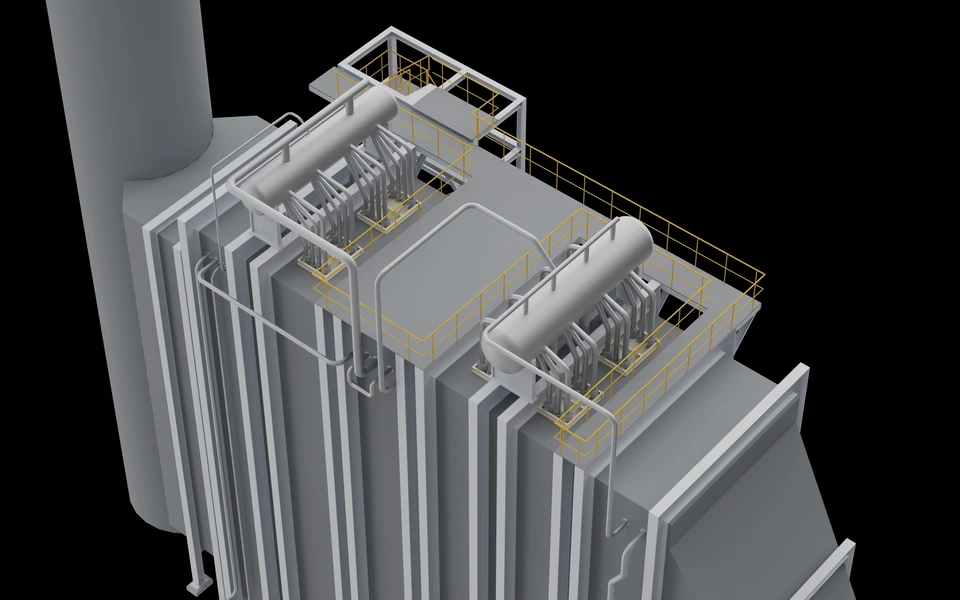
Inzonex Modular Insulation benefits
Benefits that operations and management can both use
The reduction percentage is only the starting point. The calculator translates it into plant impact and leaves commercial assumptions with the operator.
The outside-surface model flags when insulation thickness needs review.
Insulation access during outages, compared with standard insulation jackets and metal cladding or boxes.
Metal bellows, flange and fasteners remain reachable without destroying the insulation.
Before and after
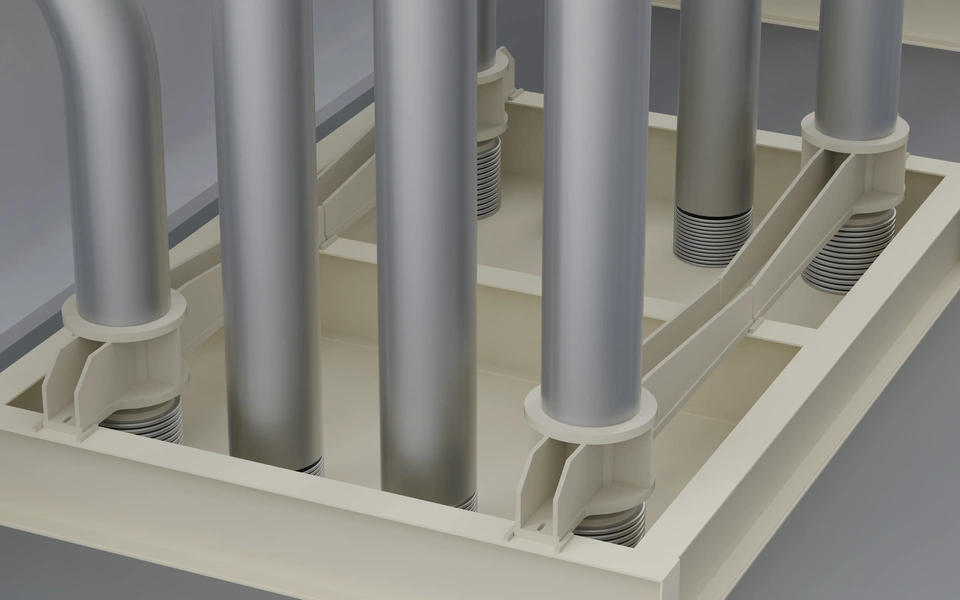
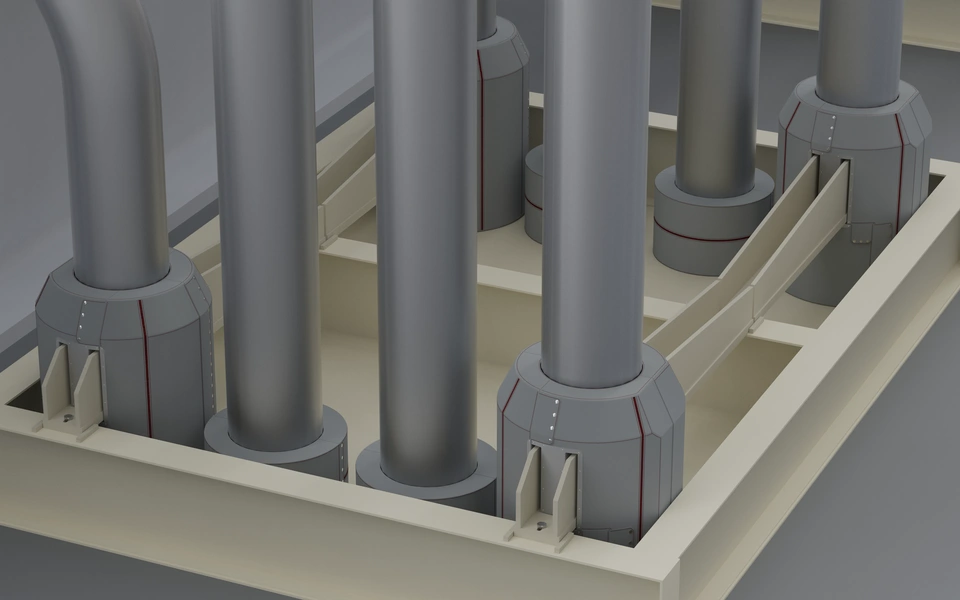
The same Upper HP line detail
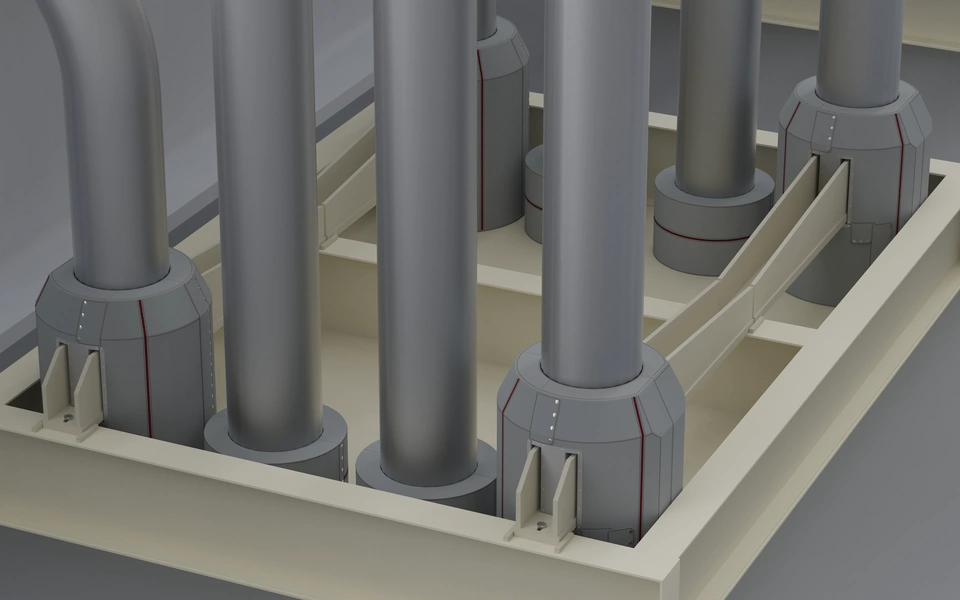
The selected scope is the support flange together with the metal bellows directly below it.
Anonymised field case
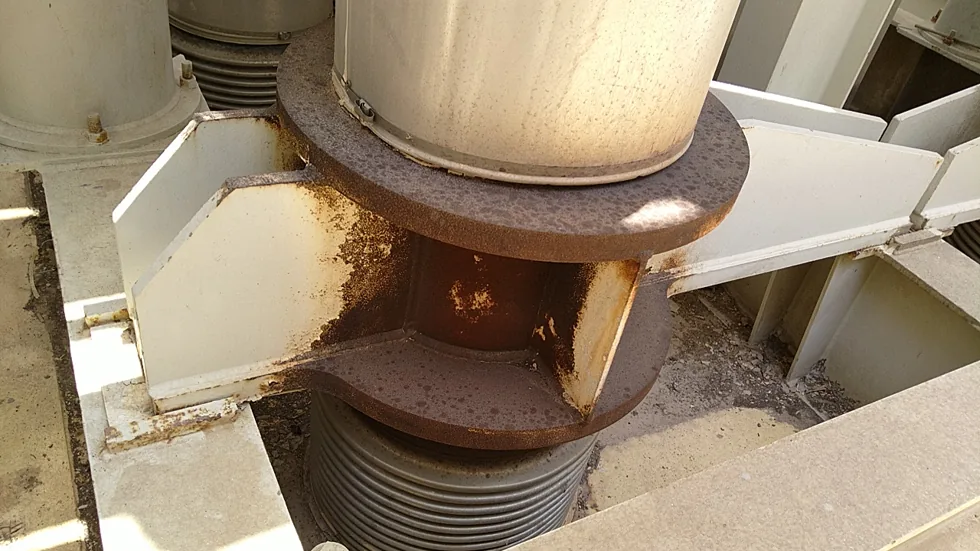
Support flange + metal bellows on an Upper HP line
Client and site identity are intentionally removed. The component geometry, measured survey evidence and calculation boundary remain visible so the case can be checked on its engineering merits.


What was measured and modelled
One field reference, with the assumptions separated
The field photographs document the bare component. The heat-loss model uses the entered process temperature, measured geometry, 27.7 °C ambient and 3.1 m/s wind. The insulated surface temperature is calculated, not presented as a thermography measurement.
1.04 m²measured support-flange area
1.14 m²developed metal-bellows area
47.17 → 1.89 kWbare to public planning residual at 460 °C
40.8 °Cmodelled outer surface with 100 mm basis
Condition boundary. Surface corrosion is visible, but no single corrosion mechanism is assigned without sampling. The practical insulation benefit is repeatable access: the module can be removed for inspection and refitted without rebuilding metal cladding.
Your savings
Build your HRSG scope, then see the total
Start with one area. Use + Add another HRSG element for a different HP or IP line, temperature or quantity; every row is calculated separately and then summed once.
01 · Selected HRSG elements
02 · Plant operating case
Editable
h/yr
Plant efficiencies and carbon factors
38% GT and 55% CCGT are editable planning inputs. Use plant heat-rate data where available.
03 · Your commercial inputs
No tariff, installed cost or payback is assumed. Payback appears only after both inputs are entered.
Reference results in HTML
Four separate HP / IP line starting points
These are reference values for one element at 8,000 operating hours. They remain visible without JavaScript; the calculator replaces them when the operator changes temperature, quantity or plant inputs.
| HRSG area | Reference | Bare kW | With Inzonex kW | Heat retained MWhth/yr | Steam-cycle MWhe/yr | CO₂ t/yr |
|---|---|---|---|---|---|---|
| Upper HP lineSupport flange with metal bellows | 460 °C | 47.17 | 1.89 | 362.3 | 99.3 | 36.5 |
| Upper IP lineMetal bellows | 180 °C | 4.67 | 0.19 | 35.9 | 9.8 | 3.6 |
| Lower HP lineMetal bellows | 420 °C | 5.16 | 0.21 | 39.6 | 10.9 | 4.0 |
| Lower IP lineMetal bellows | 200 °C | 1.94 | 0.08 | 14.9 | 4.1 | 1.5 |
Plant conversion basis: editable 38% GT and 55% CCGT net efficiency; same-output CO₂ pathway uses 0.202 t CO₂/MWh fuel. Commercial values remain blank until entered by the operator.
Insulation thickness
Residual heat loss and outside surface by thickness
The chart follows the first element in Your savings. It uses the same Oman reference weather inputs, component geometry, convection and radiation as the total calculation.
—
This chart shows the physics-model residual. The headline savings total keeps the public “up to 96%” planning cap, so the two values are intentionally not presented as the same result.
What the result means
One calculation, four management views
The interface keeps engineering heat loss and plant-level outcomes connected without counting the same benefit twice.
Thermal energy no longer rejected from the selected hot surface.
The steam-cycle output associated with that retained HRSG heat.
Indicative operational CO₂ avoided in the same-output, lower-gas pathway.
Shown only after the operator enters a rate and installed cost.
HP and IP line details
Open the exact part you want to understand
Each page explains the component, reference temperature, calculation boundary and link back to Your savings.
Upper HP line
Support flange with metal bellows
The HP detail includes the support flange and the corrugated metal bellows directly below it.
Open explanation and calculation →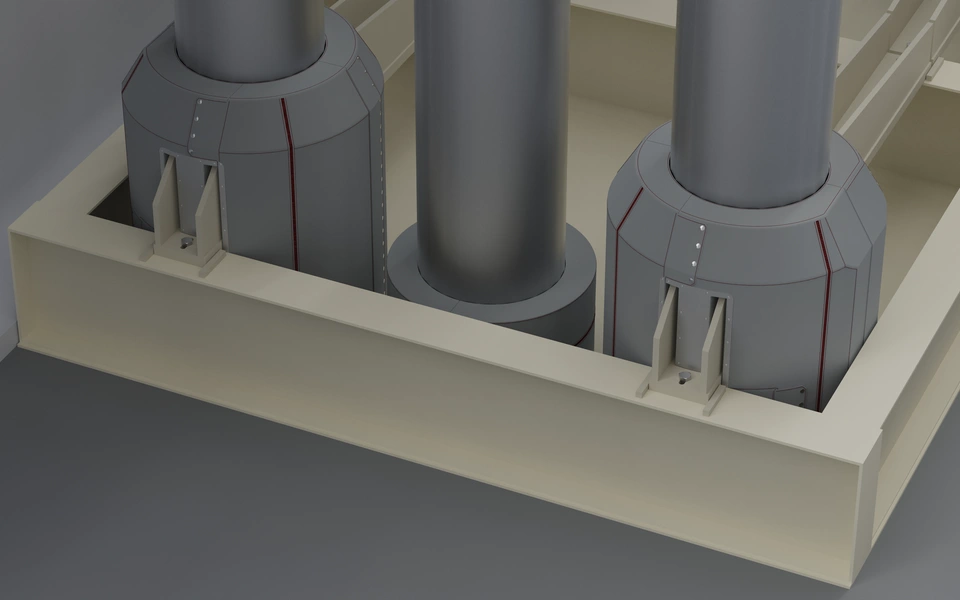
Upper IP line
Metal bellows
A separate IP-line calculation with its own reference duty and metal-bellows geometry.
Open explanation and calculation →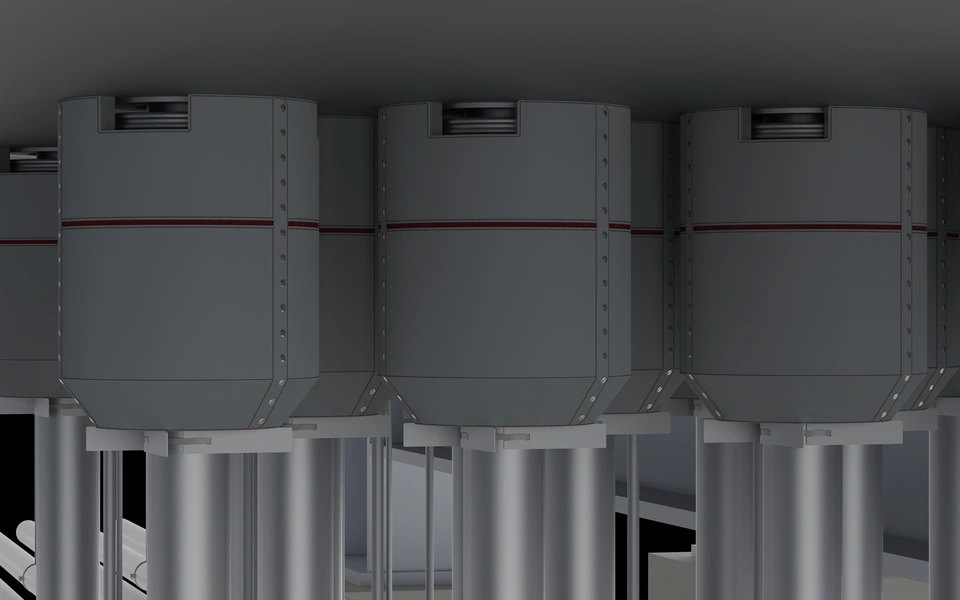
Lower HP line
Metal bellows
The hot lower HP detail is calculated separately from both upper lines.
Open explanation and calculation →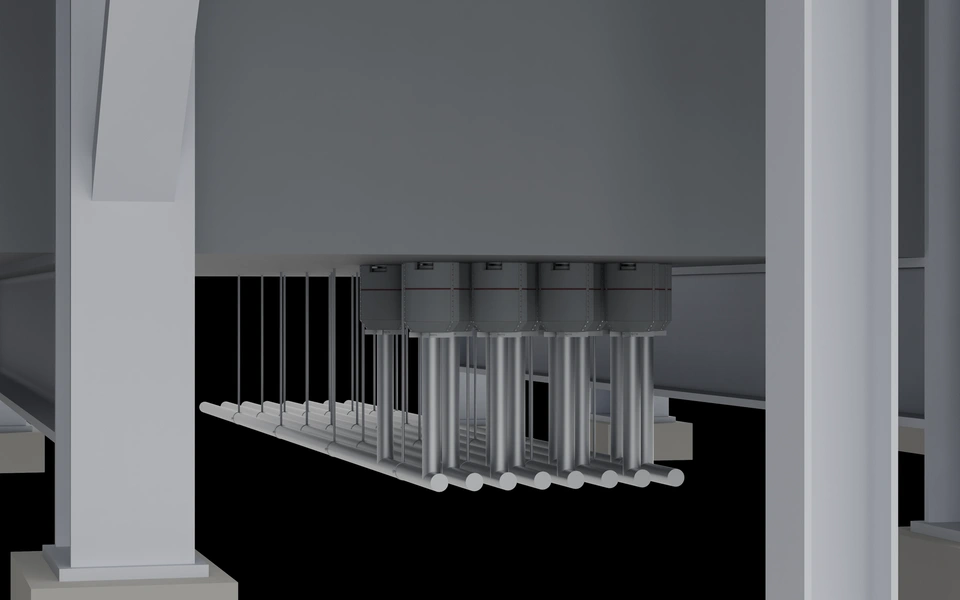
Lower IP line
Metal bellows
The lower IP detail starts from its own line duty and smaller metal-bellows geometry.
Open explanation and calculation →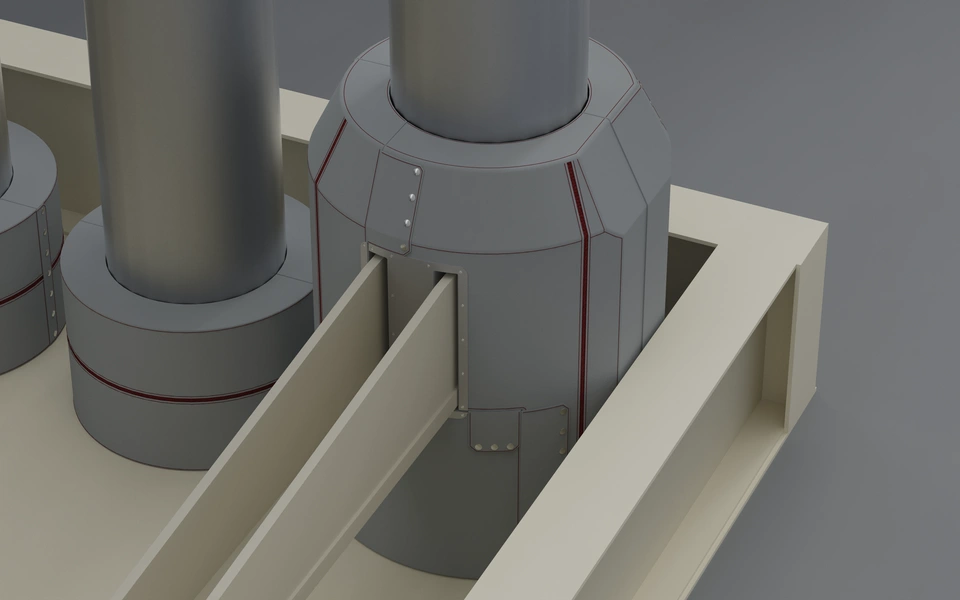
Upper HP line
Removable module fastening detail
The fastening view explains how the insulation opens, closes and returns to the same position.
Open explanation and calculation →Questions answered
What changes the result
Why are HP and IP lines separate?
They operate at different duties. Each line keeps its own reference temperature and geometry, while temperature and number of similar elements remain editable.
Why does metal-bellows geometry matter?
A corrugated metal surface has more developed area than a flat outline. Pitch and depth therefore change the exposed area and heat-loss result.
What does up to 96% mean?
It is the public planning cap for heat-loss reduction. The useful plant results are shown alongside it: heat retained, electrical equivalent, fuel, gas, CO₂ and optional commercial value.
Is the component metal or fabric?
The HRSG component is a metal bellows. Inzonex Modular Insulation is the removable external insulation fitted around the metal component and adjoining support flange.
How is the outside-surface target checked?
The model solves heat conduction through the insulation against outdoor convection and radiation. If the result exceeds 45 °C, it asks for a thickness review.
Does insulation prove a fixed service-life extension?
No. Lower thermal exposure and easier inspection can support equipment care, but any quantified life extension needs material, stress, cycling, drainage and inspection-history data.
Method and reporting boundary
Useful numbers, with assumptions visible
Same output · less gas
The electrical output stays unchanged. Retained HRSG heat becomes a lower fuel requirement.
More electrical output
Retained heat becomes additional steam-cycle electricity. Fuel saving is not added.
Commercial values
Energy rate and installed cost stay blank until entered by the operator.
Detailed HRSG model · outdoor convection and radiation · editable temperature and count · public heat-loss reduction capped at up to 96%.