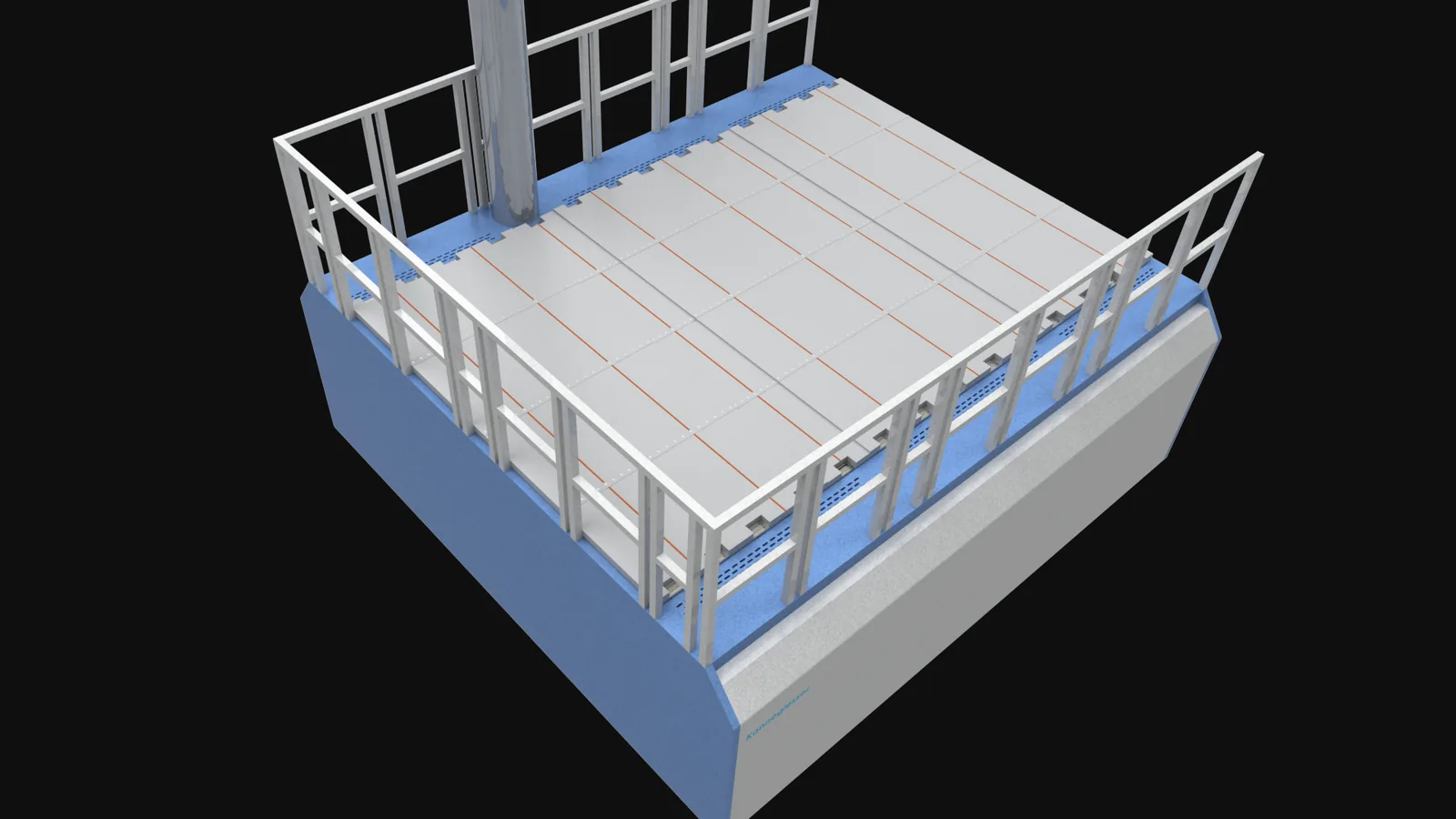

Not hot enough to notice, big enough to matter
A flatwork ironer roof sits at about 66 °C. Nobody flags it: it is cooler than a steam main, cool enough to touch briefly, and it looks like part of the machine rather than a thermal problem.
Then you measure the area. It is a single continuous plate the full width and length of the machine, and heat loss scales with area every bit as hard as it scales with temperature. At 66 °C that roof sheds 16.33 kW — more than a whole tumbler dryer, more than most of the valve sets in the boiler house, all of it from the one surface nobody looks at.
Insulated, the same roof holds 0.86 kW: a 94.7 % cut, outer surface at or below 45 °C.
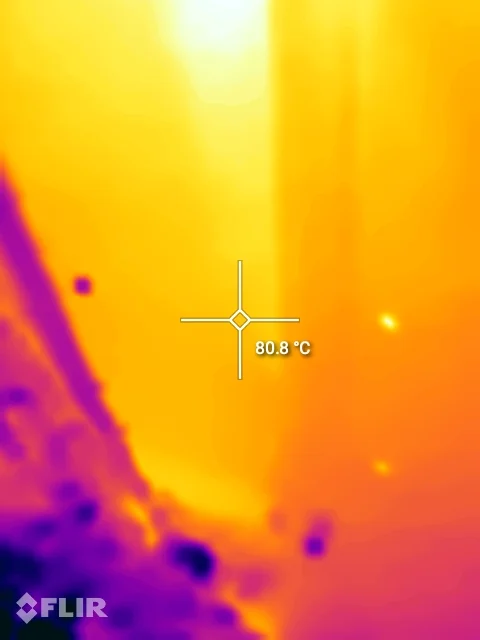
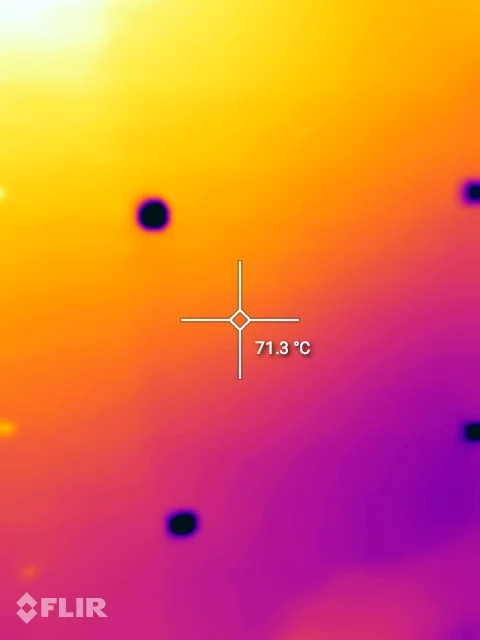
Measured on a UK laundry, 25 May 2026, FLIR S62 Pro. A roof panel averages 67.5 °C across the whole frame and a bolted panel peaks at 66.7 °C — confirmation, on a different machine at a different site, of the ~66 °C used above. The 30 m² roof area is from the machine on this page.
Model inputs: ISO 12241 steady state, air velocity 0.5 m/s giving hconv = 5.7 + 3.8v = 7.6 W/m²K, ambient 28 °C, ε 0.90 bare / 0.85 on the panel, 50 mm mineral-wool core with λ solved at the converged mean temperature. Fuel from heat via 88 % boiler efficiency; CO₂ via GHG Protocol Scope 1 natural gas.
The roof, solved
| Input | Value |
|---|---|
| Surface temperature, bare | 66 °C |
| Ambient | 28 °C |
| Air velocity | 0.5 m/s |
| Core | 50 mm mineral wool |
| Bare loss | 16.33 kW |
| With Inzonex panels | 0.86 kW |
| Panel outer surface | ≤45 °C |
| Reduction | 94.7 % |
Radiation is roughly half of it. At 66 °C over a large flat plate the infrared term is comparable to the convective one, which is why a still-air textbook figure understates the roof and why the model carries radiation explicitly.
| At 5,500 h/yr | Value |
|---|---|
| Heat not lost | 85 MWh |
| Gas avoided at 88 % boiler efficiency | 97 MWh |
| CO₂ avoided 0.185 kg/kWh | 18 t |
| Surface, insulated | ≤45 °C |
Per ironer, single-shift duty. Everything here is editable in the calculator.
The access problem, in minutes
Every one of these surfaces is opened on a schedule. What changes with the panel is not whether it opens — it is what opening costs.
| Conventional cladding, per access | |
|---|---|
| Unscrew or cut the sheet panels | |
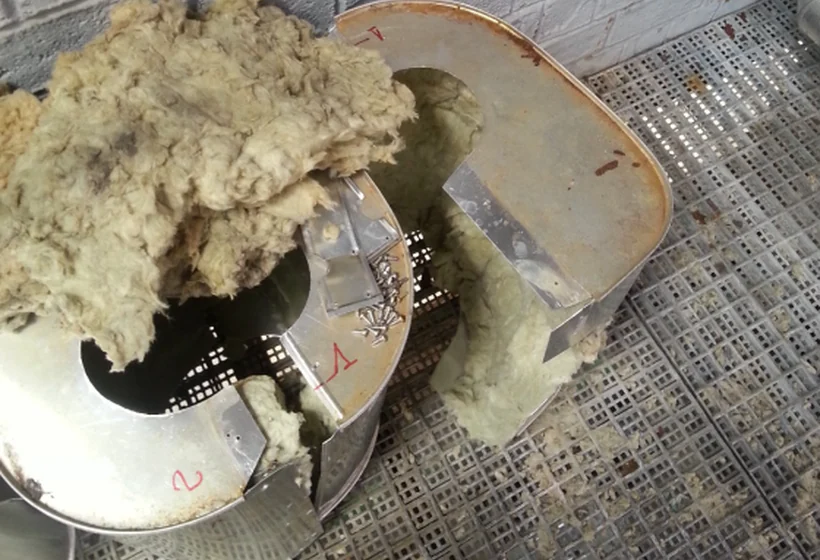
| Dig out the wool — settled and degraded by heat and vibration | |
| Rebuild the wool, cut and fasten new sheet | |
| Cycle per access | 10+ min* |
| Inzonex cycle, per access | |
|---|---|
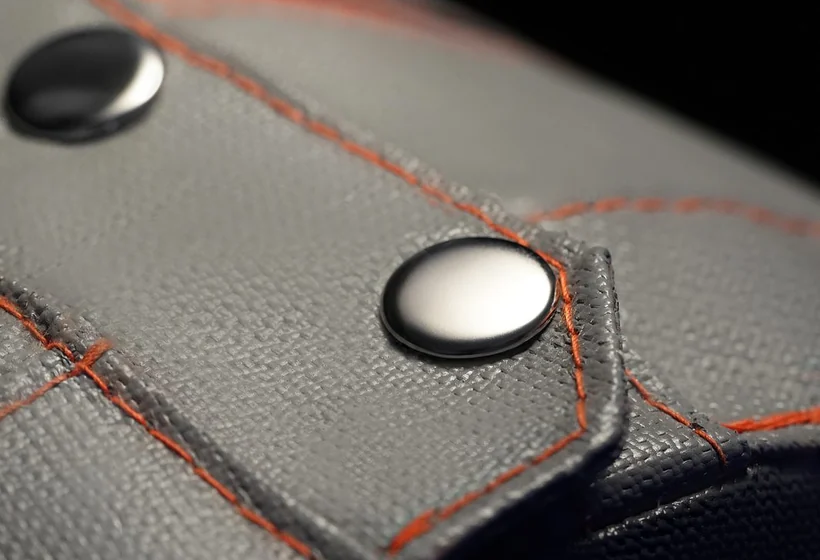
| Release the snap buttons by hand — no tools | |
| Lift the section clear | |
| Snap the same section back | |
| Cycle per access | ~1.5 min* |
*Access-cycle assumptions, not timed trial results — treat them as inputs to check against your own crew, not as measured performance. Cut sheet and compacted wool are scrapped, so conventional access also carries a material cost every time. The panel is designed to come off and go back on; nothing is consumed.
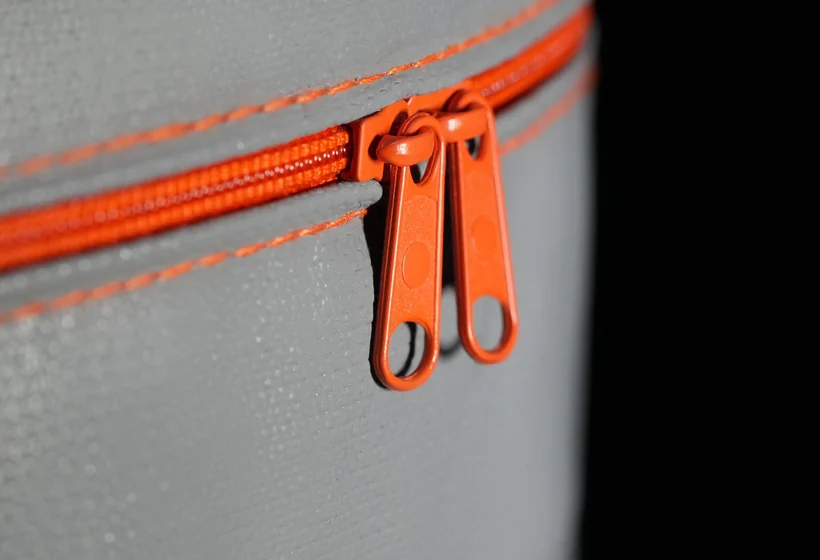
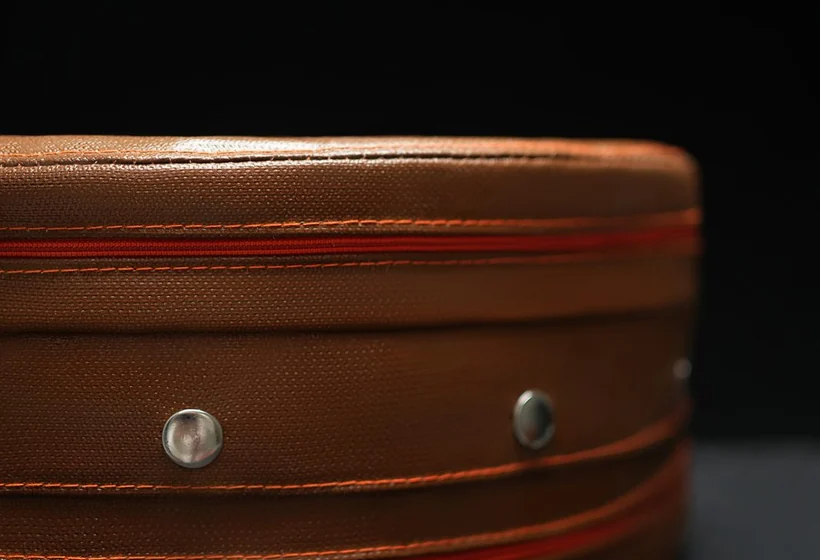
Weight, over the whole set
A sheet-metal casing has to span every surface these panels span. Same job, same surfaces — the difference is what a technician lifts.
| Outer layer, whole set | Weight | Basis |
|---|---|---|
| Steel sheet 0.6 mm lightest gauge used | 147 kg | 7850 kg/m³ + Z275 zinc |
| Steel sheet 0.8 mm common on plant — basis | 196 kg | same, 0.8 mm |
| Steel sheet 1.0 mm walked-on / wind-loaded runs | 246 kg | same, 1.0 mm |
| Inzonex outer fabric | 16.5 kg | our spec |
About 12× lighter on the 0.8 mm basis. The mineral-wool core is identical in both systems — it is the outer layer, and only the outer layer, that the design can change. That is what a technician lifts, at height, next to a live boiler.
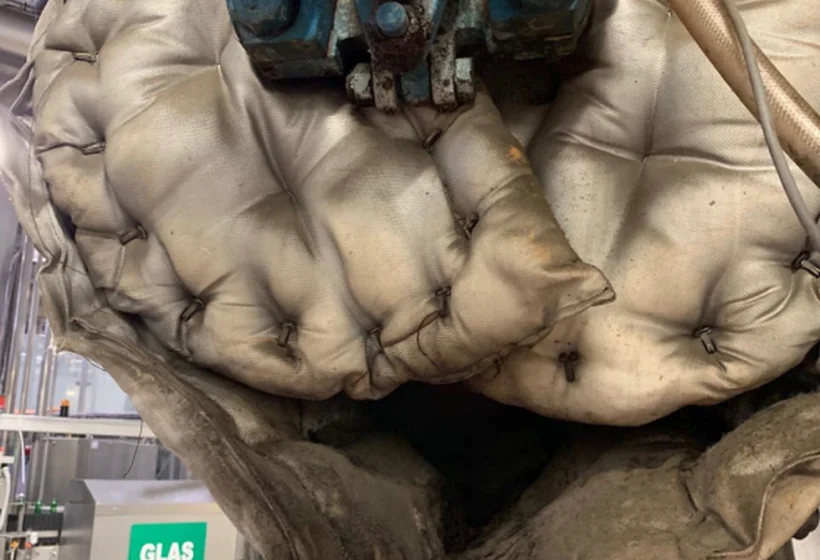
Insulated the way the roof is built
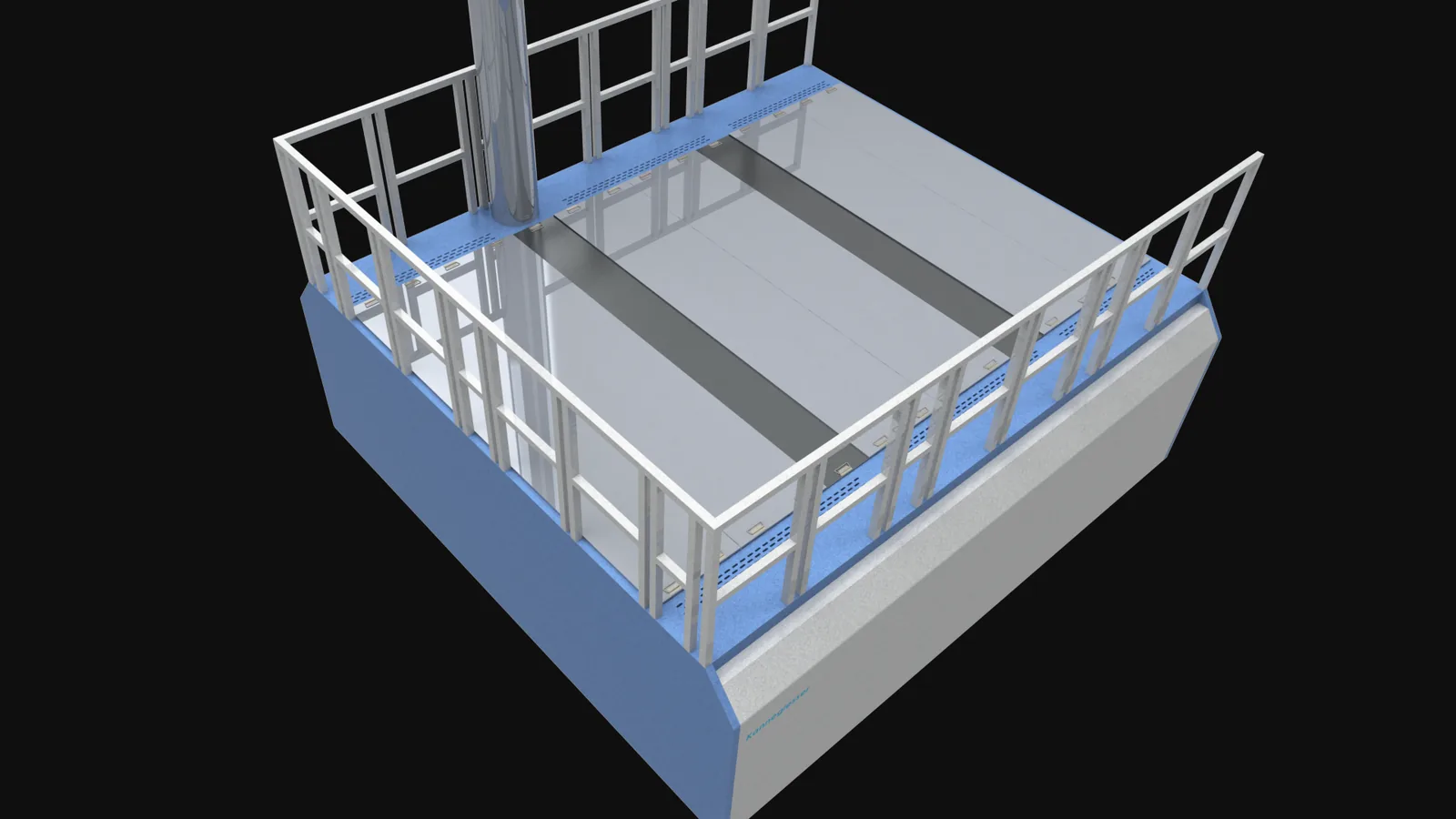
The reason an ironer roof is bare is structural, not thermal. The roof is not one plate — it is a run of lift-off panels, because the machine has to be opened along its length for belt, tape and roll work. Insulate it as a single blanket and the first maintenance visit destroys it.
So the roof is insulated panel by panel: each lift-off panel gets its own panel, fixed to that panel. The insulation lifts with the panel it belongs to and refits exactly, because it never spans a joint it would have to be cut across. Nothing is removed to get in, and nothing is consumed getting out.
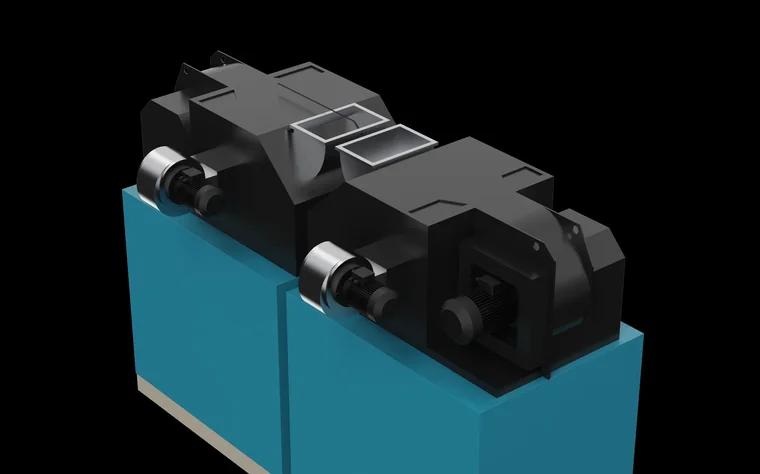
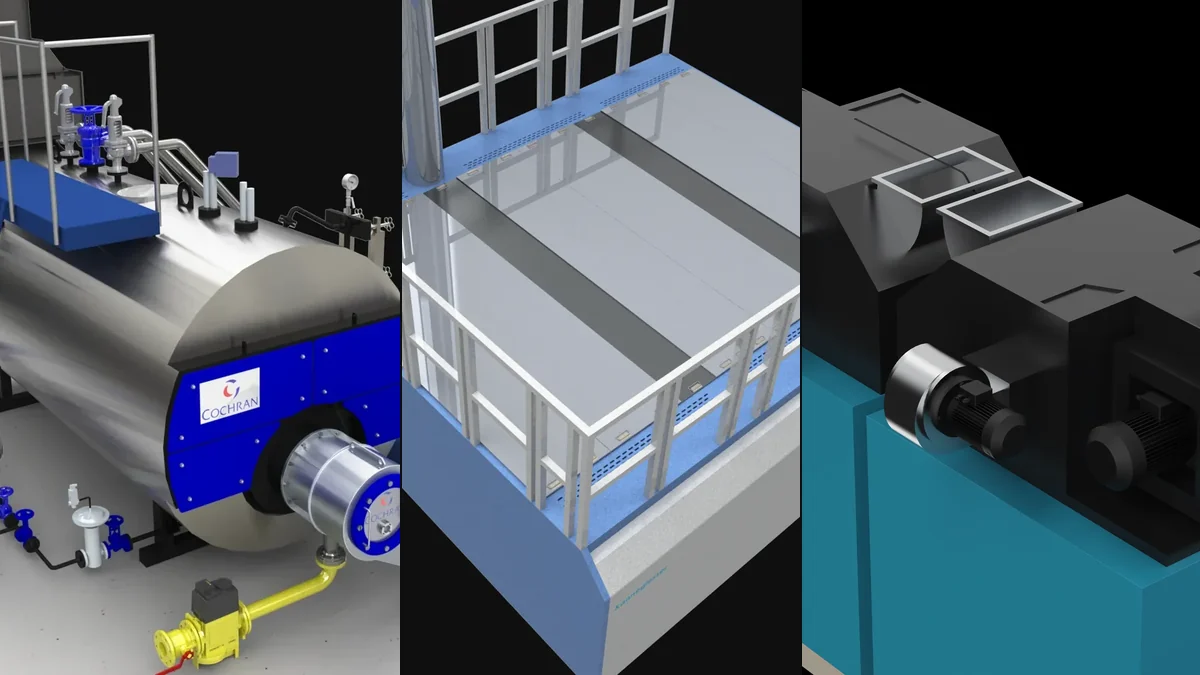
That is what the last three views on this model show — the roof detail, a single panel, and the lift-off edge where one panel ends and the next begins.
Where 15.5 kW actually goes
Heat off the roof does not leave the building. It goes into the finishing hall, every hour the line runs — 15.5 kW per ironer, five three-kilowatt fan heaters that nobody switches off, radiating downward onto the people working the folder.
| Consequence | What it looks like |
|---|---|
| Fuel | The boiler raises the steam that replaces this heat. |
| Working conditions | The roof is a large warm plate overhead; the feed and folder stations sit directly under it. |
| Contact | 66 °C over a broad flat surface at working height. |
66 °C is the awkward temperature
It is below the band where a surface announces itself. ISO 13732-1 puts bare metal at this level in the range where contact is tolerable for seconds and injurious beyond that — so the roof reads as "warm" to a hand placed on it briefly, and burns someone who leans. Insulated to ≤45 °C that ambiguity disappears.
Hall temperature itself depends on ventilation and building fabric and is not modelled here. On a boiler room the same team measured about 6 °C cooler after panelling — a different room type, quoted as direction, not as a number to expect. That measurement →
5,500 h/yr is single-shift flatwork duty. Efficiency 0.88 converts roof heat back to gas at the boiler that raised the steam.
The part a heat-loss calculator normally leaves out. Count every time a panel has to come off — inspection, valve work, cleaning — not the number of boiler shutdowns. Cycle times are project assumptions; overwrite them with your own.
Carbon price left at zero unless your site is inside a trading scheme or has an internal price. UK ETS and EU ETS both apply to installations above the combustion threshold — carbon hub →