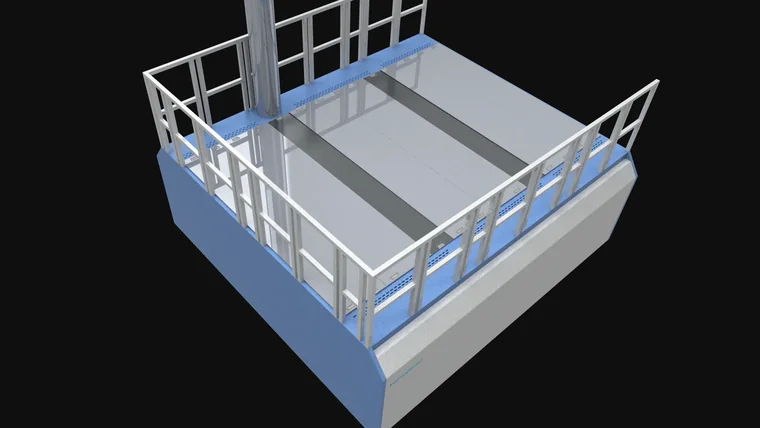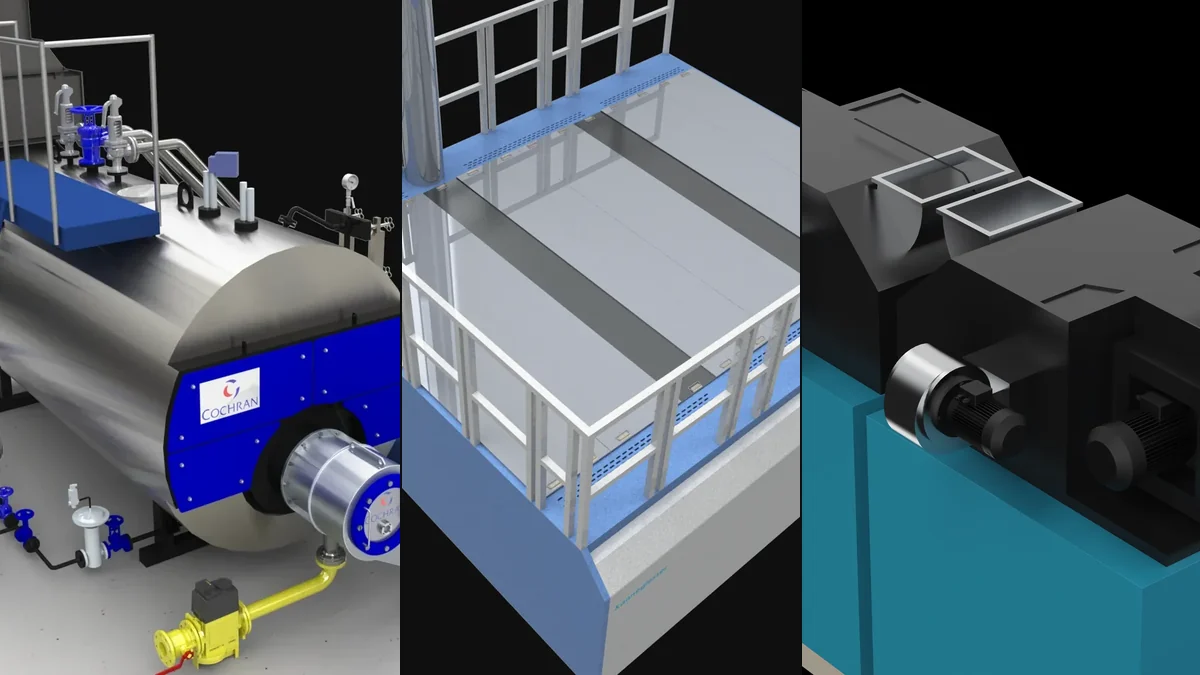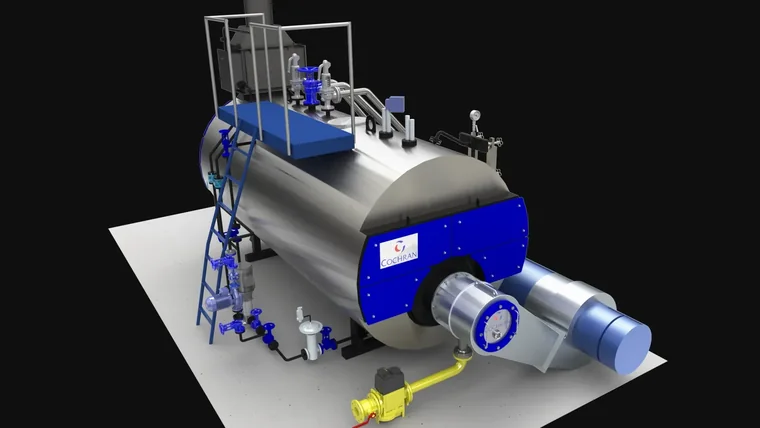
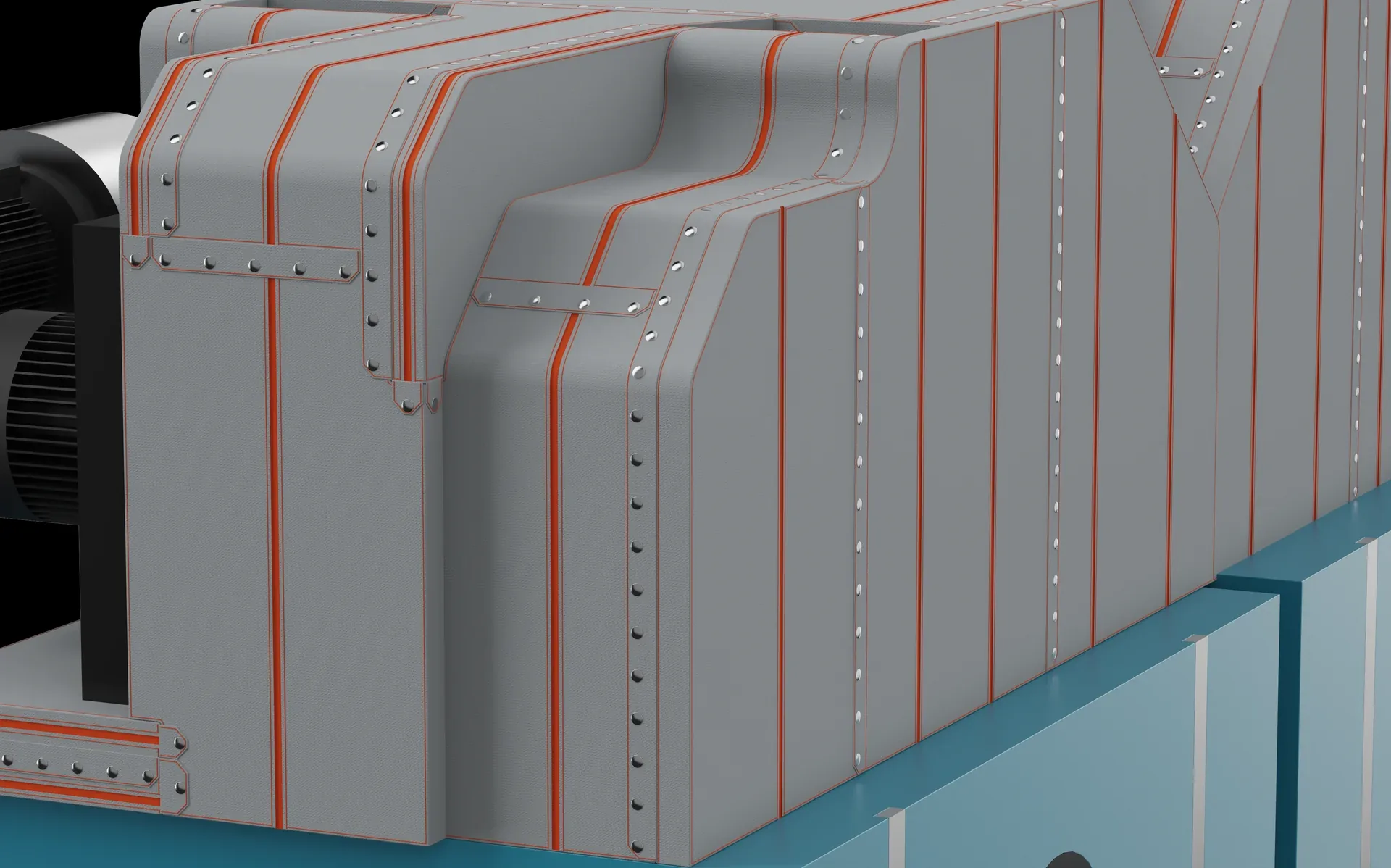

The top of the dryer is hot
The drum is not the problem. The heat sits in the top of the machine, and it leaves through those surfaces — bare, all shift, at 84 to 120 °C.
That is 9.77 kW per dryer, continuously. Panelled: 0.46 kW, surface ≤45 °C.
Surface temperatures from a FLIR survey of Kannegiesser tumblers; heat loss per ASTM C680 with a ×1.40 roughness factor on the developed area. Direct-fired, so surface heat is taken one-for-one against gas.
Loss by surface
| Surface | Bare | Loss saved | Share |
|---|---|---|---|
| Back | 120 °C | 3.57 kW | 38 % |
| Top | ~115 °C | 2.32 kW | 25 % |
| Front | 84 °C | 1.99 kW | 21 % |
| Sides | 100 °C | 1.43 kW | 15 % |
| Total ≈7.4 m² | — | 9.31 kW | 100 % |
Back, front and sides are measured; the top is estimated at 115 °C and flagged for confirmation on site.
| At 7,340 h/yr | Value |
|---|---|
| Heat not lost | 68 MWh |
| Gas avoided | 68 MWh |
| CO₂ avoided 0.20 kg/kWh | 14 t |
| Surface, panelled | ≤45 °C |
Per dryer. Set the count in the calculator.
The access problem, in minutes
Every one of these surfaces is opened on a schedule. What changes with the panel is not whether it opens — it is what opening costs.
| Conventional cladding, per access | |
|---|---|
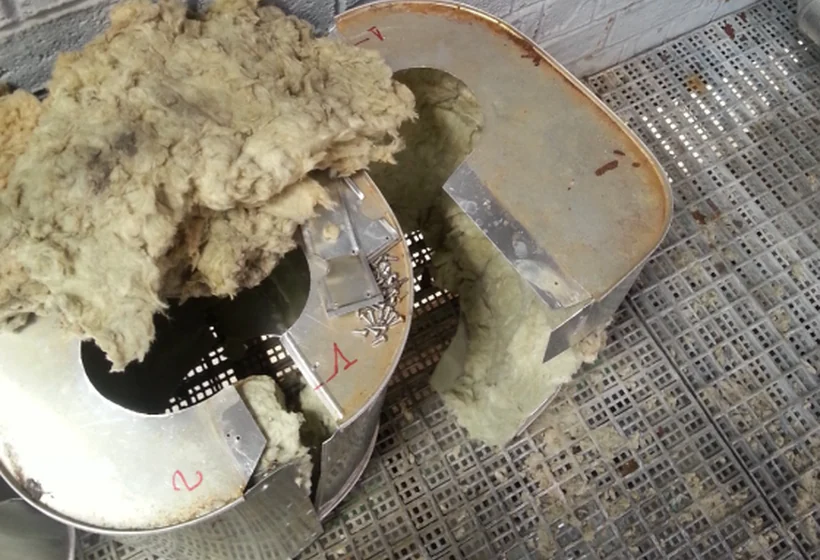
| Unscrew or cut the sheet panels | |
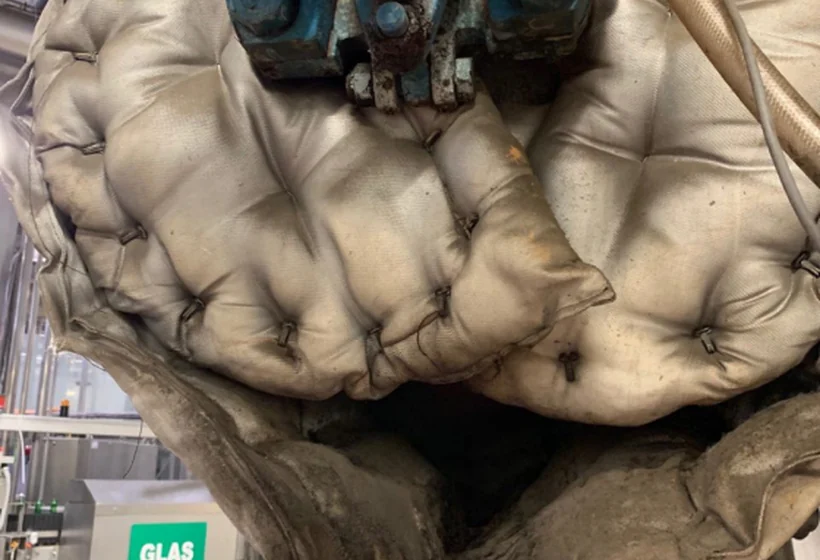
| Dig out the wool — settled and degraded by heat and vibration | |
| Rebuild the wool, cut and fasten new sheet | |
| Cycle per access | 10+ min* |
| Inzonex cycle, per access | |
|---|---|
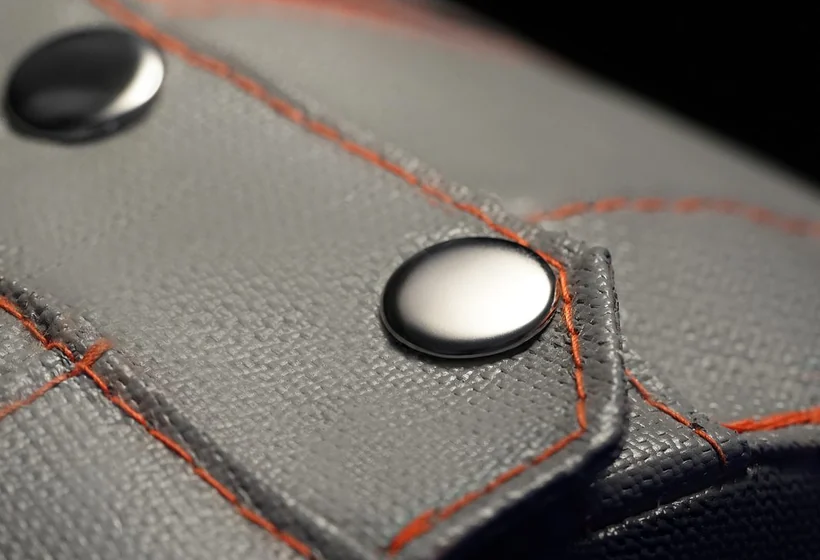
| Release the snap buttons by hand — no tools | |
| Lift the section clear | |
| Snap the same section back | |
| Cycle per access | ~1.5 min* |
*Access-cycle assumptions, not timed trial results — treat them as inputs to check against your own crew, not as measured performance. Cut sheet and compacted wool are scrapped, so conventional access also carries a material cost every time. The panel is designed to come off and go back on; nothing is consumed.
Weight, over the whole set
A sheet-metal casing has to span every surface these panels span. Same job, same surfaces — the difference is what a technician lifts.
| Outer layer, whole set | Weight | Basis |
|---|---|---|
| Steel sheet 0.6 mm lightest gauge used | 36 kg | 7850 kg/m³ + Z275 zinc |
| Steel sheet 0.8 mm common on plant — basis | 48 kg | same, 0.8 mm |
| Steel sheet 1.0 mm walked-on / wind-loaded runs | 61 kg | same, 1.0 mm |
| Inzonex outer fabric | 4.1 kg | our spec |
About 12× lighter on the 0.8 mm basis. The mineral-wool core is identical in both systems — it is the outer layer, and only the outer layer, that the design can change. That is what a technician lifts, at height, next to a live boiler.
Where 9.3 kW actually goes
Heat lost from a bare casing does not leave the building. It goes into the finishing hall, every hour the line runs. Per dryer that is 9.3 kW — three three-kilowatt fan heaters, never switched off. On a line of six tumblers, 56 kW.
A laundry is the worst room to add that to. It is already fighting heat and moisture from the washers, the ironer and the steam mains, and the extraction that removes them costs fan power and, in winter, replaces tempered air. The casing loss is the part of that load nobody specified and nobody meters.
| Consequence | What it looks like |
|---|---|
| Fuel | The burner regenerates the heat the casing just threw away. |
| Working conditions | Hall temperature climbs across the shift; the aisle between machines is the hottest place to stand. |
| Contact burns | Casing at 84–120 °C at chest height, along the walkway. |
Touch-safe is a number, not an adjective
ISO 13732-1 sets contact-burn thresholds by surface and material. Bare painted steel at 120 °C injures on contact in well under a second; at 84 °C it takes only a few seconds — long enough to feel safe, short enough to burn. Panelled to ≤45 °C the same panel can be held indefinitely.
The one figure not modelled here is the hall's own temperature: it depends on ventilation rate, building fabric and how many machines run at once. On a boiler room the same team measured about 6 °C cooler after panelling — a different room type, quoted as direction, not as a number to expect. That measurement →
It heats a hall that is already hot
There is no insulation on these machines today — that is what the survey found, and it is what the thermograms below show. The heat has nowhere to go but into the room the operators work in.
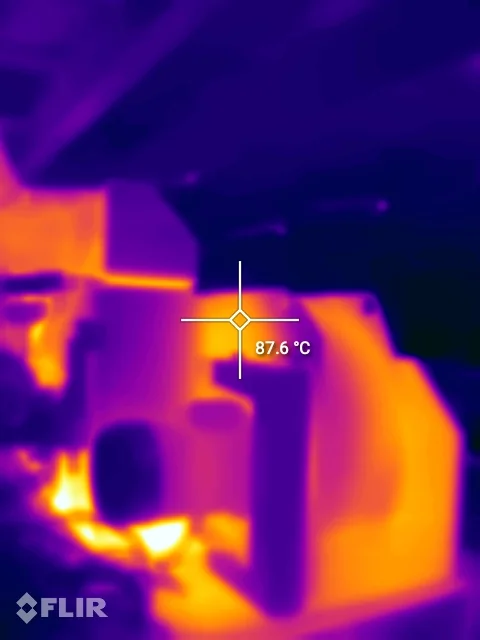
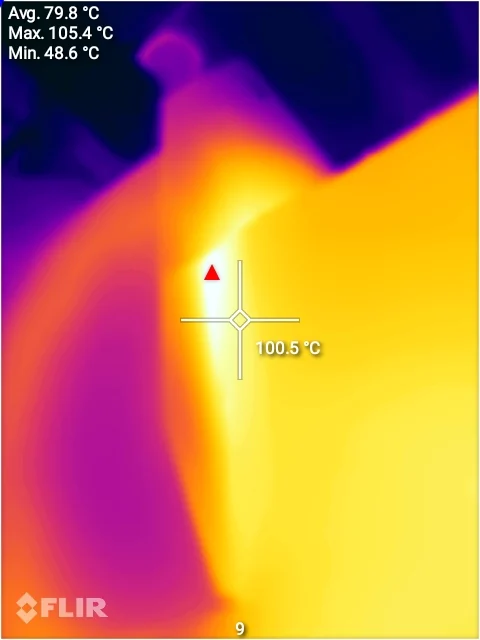
Each dryer puts 9.3 kW into the hall continuously; the surveyed site ran 14 of these burner and combustion-chamber modules on its tumbler line. That load raises the ambient temperature the whole shift, on top of the heat and moisture the washers and the ironer already put there — and the ventilation that carries it back out costs fan power all year and tempered make-up air in winter. Insulating the casing is the only one of those numbers you can change without touching the process.
The drive side still matters more than its 1.43 kW suggests: it is the surface that decides whether the insulation is still there in year three. Panels that unclip by hand get refitted; anything needing a drill does not.
| Per dryer | Bare | Panelled |
|---|---|---|
| Hottest surface | 120 °C | ≤45 °C |
| Heat into the hall | 9.3 kW | 0.5 kW |
| Access to the drive side | unobstructed | unclip by hand |
| Consumed per access | — | nothing |
7,340 h/yr is the duty of the surveyed machine. Efficiency is set to 1.00 because a direct-fired dryer's surface heat comes straight off the burnt gas — drop it below 1 if you want burner losses counted too.
The part a heat-loss calculator normally leaves out. Count every time a panel has to come off — inspection, valve work, cleaning — not the number of boiler shutdowns. Cycle times are project assumptions; overwrite them with your own.
Carbon price left at zero unless your site is inside a trading scheme or has an internal price. UK ETS and EU ETS both apply to installations above the combustion threshold — carbon hub →