CalculatorBrewery › Boiler house & utilities
Real result · Cochran steam boiler

The utilities room others leave bare — fully insulated

Boiler houses are full of hot, awkward, access-heavy surfaces that blanket suppliers and rigid cladding skip. Here is one we covered end-to-end with Inzonex modular insulation — removable in minutes, surface ≤45 °C, FLIR-verified.

Surface ≤45 °C touch-safe Up to ~96% less heat loss Payback <2 years FLIR-verified on site
Measured surface temperature · FLIR on site
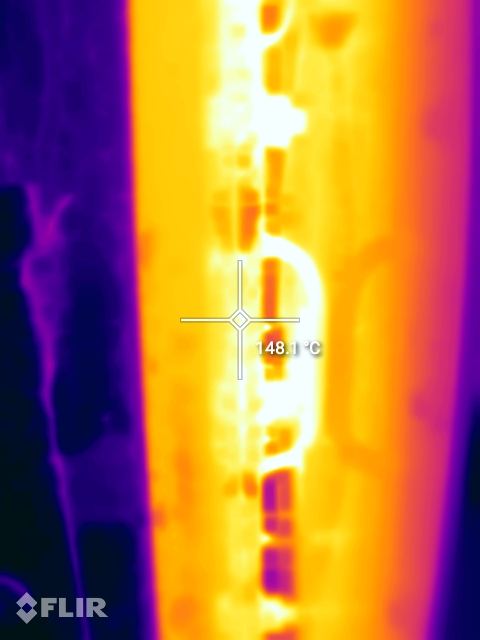
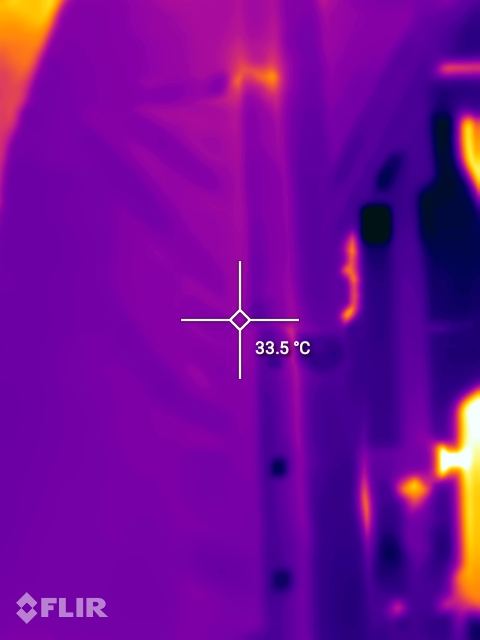
148.1°C33.5°C
Bare boiler surface under the protective guard vs. the same surface under Inzonex modular insulation — touch-safe and stops the heat loss.

Before & after

Before
After
Cochran steam boiler — rear shell & reversal door
Before
After
Cochran steam boiler — economizer
🔬 FLIR thermal — measured surface drop
FLIR thermal — bare boiler surface 148.1°C
Bare surface — 148.1 °C
FLIR thermal — insulated surface 33.5°C
Insulated surface — 33.5 °C

Heat loss from uninsulated boiler fittings: the numbers

Brewery support systems (compressed air, cooling water, hot-water recirculation) run hot and lose heat continuously across distribution, return, valve stations, heat exchangers and the boiler house itself. A 60°C hot-water return line uninsulated in a cool plant room loses 100+ W/m² to ambient; over a full year at 50 m of piping, that is 30+ MWh of waste. The boiler house itself radiates from the door, economizer, safety valves, manifolds, water-level columns, feed-water pump and burner flange — together totalling 25+ kW bare on a mid-size steam boiler, running continuously. ASTM C680 + ISO 12241 steady-state method calculates loss from convection (~8 W/m²·K) and radiation (~2 W/m²·K on oxidised steel), totalling about 10 W/m²·K in still air. At 148°C bare, a boiler door radiates roughly 2,700 W alone.

Removable insulation (50 mm mineral-wool modular panels) cuts that loss by 95%, bringing the surface to ~35°C (touch-safe per ASTM C1055 / EN ISO 13732-1, ≤45°C), while letting crews remove covers in minutes for inspection. Unlike rigid lagging (cut off and abandoned), modular insulation is reinstalled every time—so the boiler house stays insulated over its 10+ year lifecycle, recovering €20,000–30,000/year in fuel and CO₂.

Why boiler doors are usually left bare

It is not that these surfaces can't be insulated — it's that conventional insulation looks bad and is hard to remove, so crews cut it off and never refit it. That is exactly the problem Inzonex was designed to solve.

Conventional insulation jackets

  • Held on with straps, wire or velcro
  • Those fasteners pull the fabric into creases and dents
  • Slow and awkward to remove for service — so they get cut off
  • Look unprofessional → the door, economizer and valves are left bare

Inzonex modular insulation

  • Snap-button fasteners + functional zipper + structural inserts
  • Clean, uniform, professional shape — no creases or dents
  • Off and back on in minutes, refits exactly
  • So these surfaces finally stay insulated (and keep saving fuel)

What we insulated

The whole hot side of the boiler house — the geometry blanket suppliers and rigid cladding cannot cover cleanly. Every item is removable for service in minutes.

Front & rear boiler doorsUnclip in a minute for servicing and door opening.
EconomizerLarge hot rear-of-boiler surface — major loss when bare.
Feed-water & CR pumpsInsulated up to the motor; ≤45 °C, fewer burn risks.
Safety / pressure-relief valvesCovered up to the spring, access preserved.
Manholes & hatchesBare hot faces — closed off, lower ambient.
Valves & flangesThe most numerous bare hot surfaces in the room.
Water-level columnsBodies insulated, sight section left open both sides.
Burner mounting flangeHot face covered; the more you insulate, the cooler the hall.

Get this for your boiler house

Send a photo or your boiler model — we reply with potential savings, payback and a fixed quote. Free, ASTM C680 method.

Request a quote →
← Back to the brewery heat-loss map