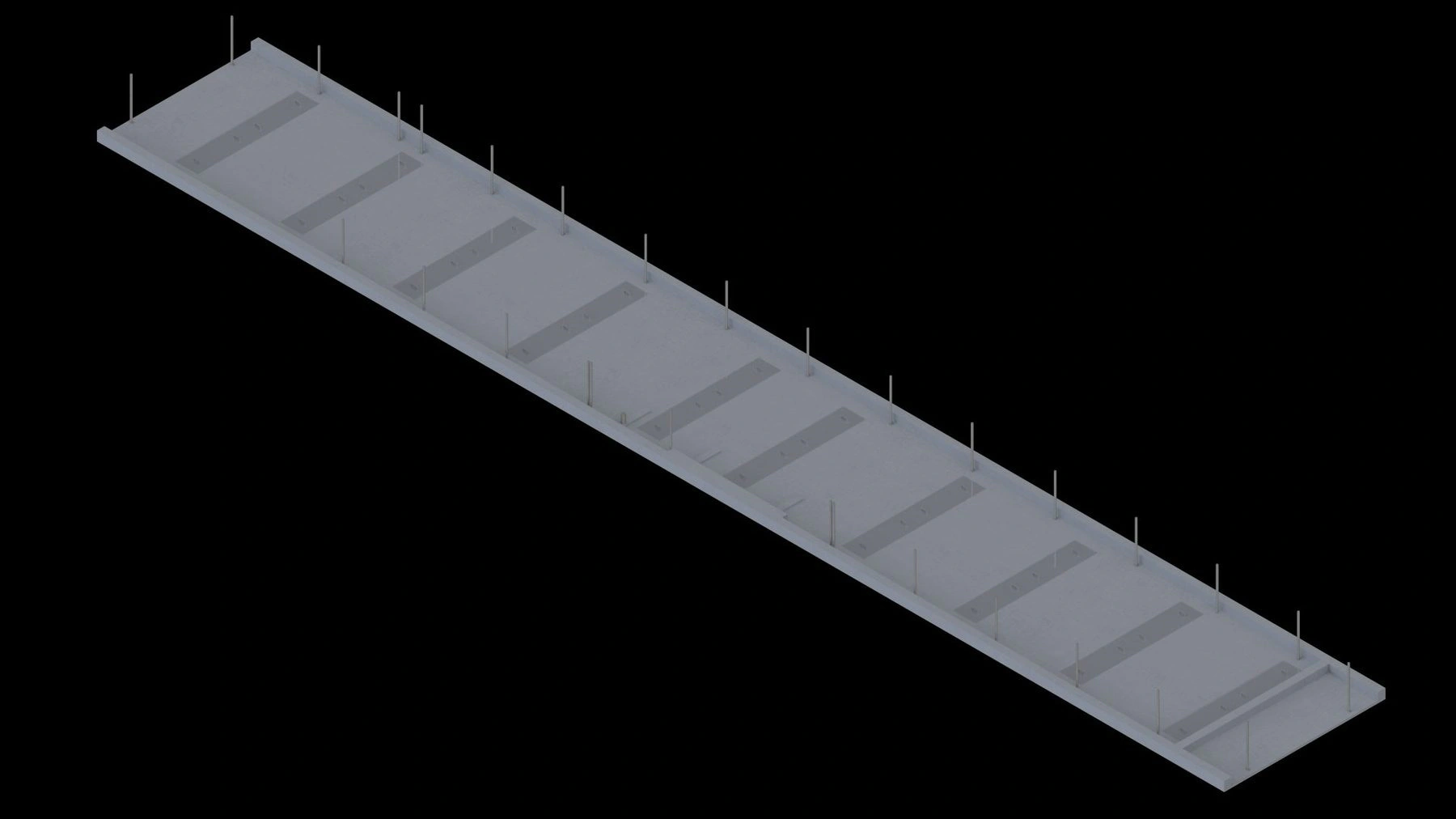
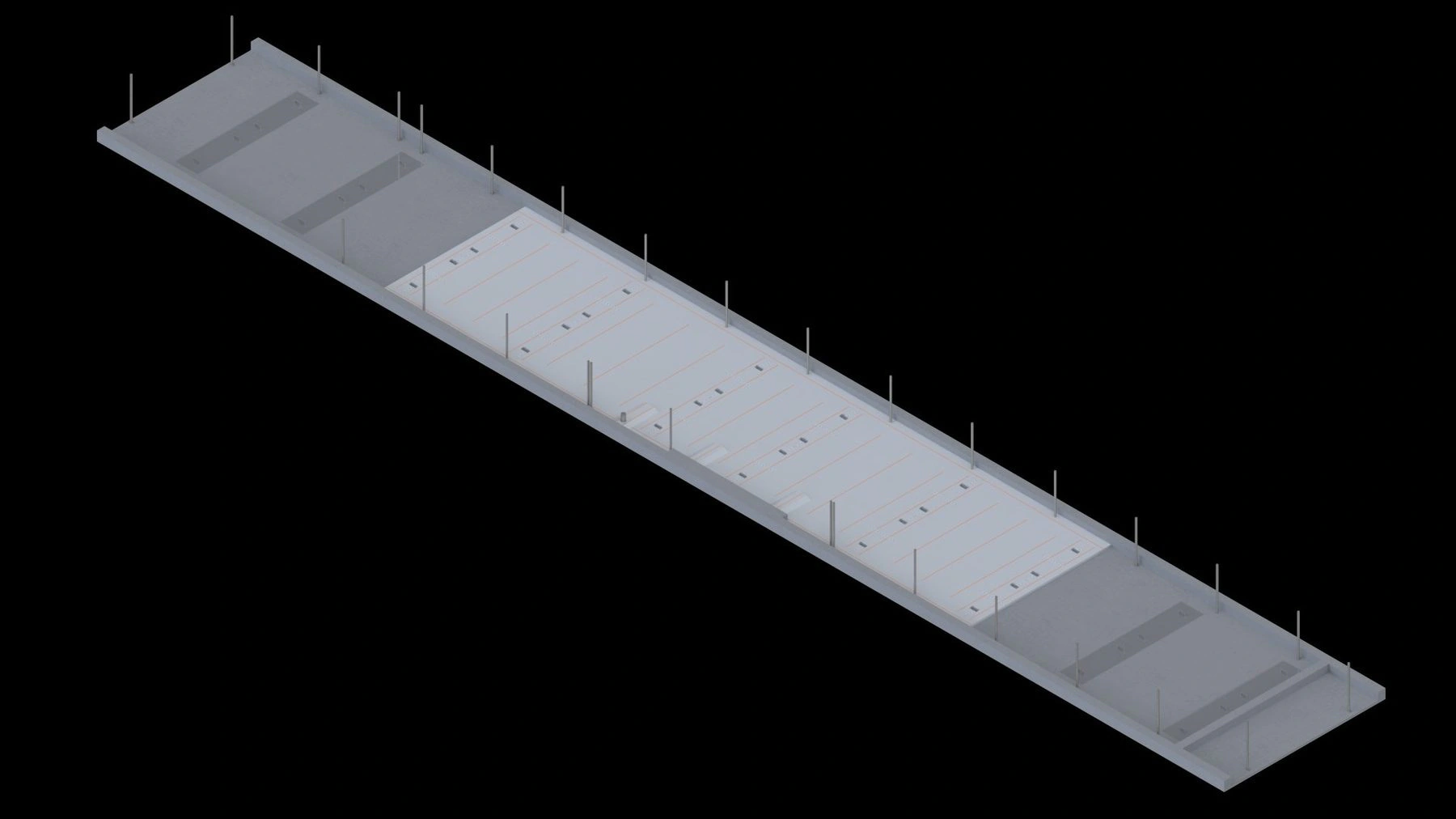
The calculation covers surface heat loss only: convection and radiation from the shell, with conduction through the insulation. Heat carried away as vapour is a separate loss and is not included. Emissivity is 0.90 bare and 0.85 on the insulated face. Cost uses fuel at 94 % heat-supply efficiency and 185 kg CO₂e per MWh of fuel. The surface is treated as flat area: thermal bridges, fixings, dome curvature and gaps are not resolved separately.
Tunnel pasteurizer roof holds its heating and holding zones hot while bottles run through. While it is working the shell is at about 62 °C. On the inputs above the calculated surface loss is 36.5 kW.
With Inzonex Modular Insulation over the same area the calculated loss is 1.9 kW, which is 94.7 % lower. At 5,521 operating hours a year that is 191.1 MWh of heat retained.
The calculation covers surface heat loss only. Heat carried away as vapour is a separate loss and is not included. The 3D model is the kettle geometry; all five vessels are calculated on the same starting area, each at its own surface temperature.
| Per machine | Bare | Insulated |
|---|---|---|
| Surface heat loss | 36.5 kW | 1.9 kW |
| Surface temperature | 62 °C | 27.2 °C |
| Heat retained / yr | — | 191.1 MWh |
| Fuel equivalent / yr | — | 217.1 MWh |
q = h(Ts − Ta) + εσ[(Ts+273.15)⁴ − (Ta+273.15)⁴], with h = 5.7 + 3.8v W/m²K. Conductivity is taken as λ = 0.031 + 0.000188 × mean layer temperature, W/mK, evaluated at the solved mean layer temperature. Certified λ curves differ between products.
With 50 mm of mineral wool the calculated outer surface is 27.2 °C. The design target for surfaces people work next to is 45 °C. The calculated heat released into the brewhouse falls from 36.5 kW to 1.9 kW.
Inputs: 50 mm mineral wool, air 25 °C at 0.5 m/s, emissivity 0.90 bare and 0.85 on the insulated face, bare surface 62 °C. Area, temperature and hours are editable in the calculator above.
| Calculation input | Value |
|---|---|
| Insulation thickness | 50 mm |
| Ambient air | 25 °C |
| Air speed | 0.5 m/s |
| Emissivity, bare / insulated | 0.90 / 0.85 |
| Operating hours | 5,521 h/yr |
The insulation is made in separate sections around the access doors, the instruments and the service points. Each section can be removed separately for inspection or maintenance and refitted afterwards. Vents, safety devices and required clearances stay unobstructed.
No access-time saving is included in this calculation.
| Stays accessible | How |
|---|---|
| Access doors | own section |
| Instruments | own section |
| Service points | own section |
| Vents and safety devices | left clear |
Reference case: one machine, 70 m², 62 °C bare surface, 5,521 operating hours a year. The retained heat is valued at £21,711 a year at £100/MWh of fuel and avoids 40.2 t CO₂e.
Natural gas at £100/MWh, 88 % heat-supply efficiency and 185 kg CO₂e per MWh of fuel. Enter the site's area, temperature, operating hours and fuel price to recalculate the results.
| Per year | Reference case |
|---|---|
| Estimated energy cost saving | £21,711 |
| Heat retained | 191.1 MWh |
| Fuel equivalent | 217.1 MWh |
| Emissions avoided | 40.2 t CO₂e |
The surface is treated as flat area: thermal bridges, fixings, curvature and gaps are not resolved separately.
The calculation uses the air speed and temperatures you enter, convection, thermal radiation and conduction through mineral wool. The inputs and assumptions are shown on this page.
The insulation is divided into removable sections around hatches, instruments and other service points. This calculator does not include maintenance-time savings.
No. It calculates surface heat loss. Room temperature also depends on ventilation, the building and other process heat sources.
